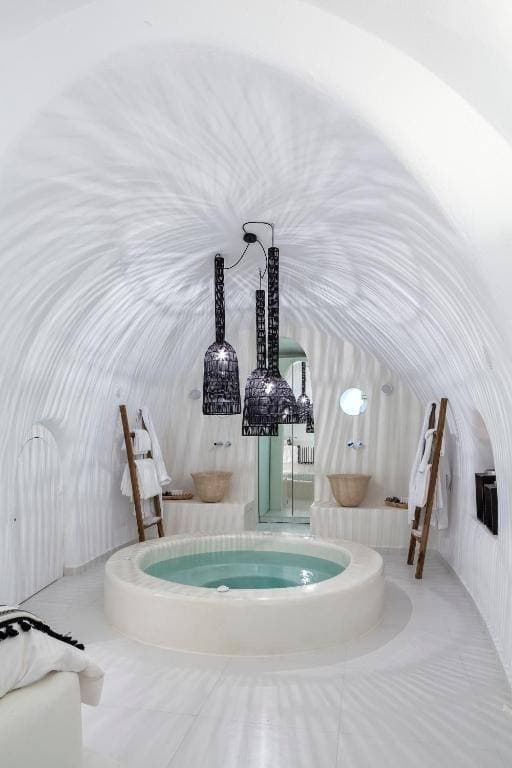
50m²
Honeymoon Suite
Cave suite with caldera-facing veranda, designed for couples and milestone trips.
View room
Food & Wine
By Fanis Kafouros, Owner since 2006 · Published · Updated
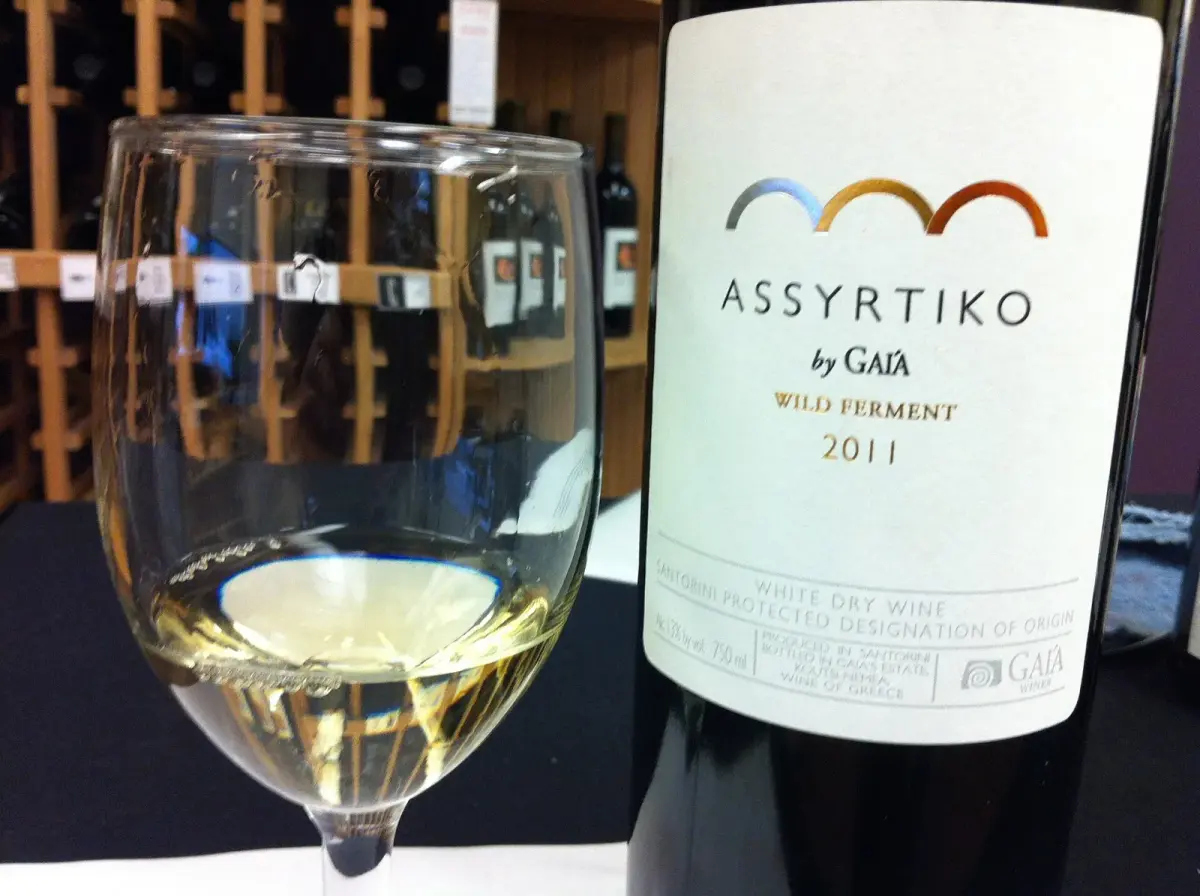
You'll hear about Assyrtiko before your plane touches down. The hotel concierge will recommend it with dinner. The couple at the next table will already be drinking it. By your second evening, you'll get it.
Short answer: Assyrtiko is Santorini's signature white grape. It grows in volcanic pumice that kept phylloxera off the island, trained low in basket-shaped kouloura vines against the wind, and some vines are more than two centuries old. The wine is dry, sharp with acidity and salty-mineral, with citrus and stone fruit. You'll find it in three styles: fresh dry Assyrtiko, oak-aged Nykteri and sweet Vinsanto.
You'll hear about Assyrtiko before your plane touches down. The hotel concierge will recommend it with dinner. The couple at the next table will already be drinking it. By your second evening, you'll get it.
The volcanic soil, the ancient vines, the wind, the salt air, all of it shows up in the glass.
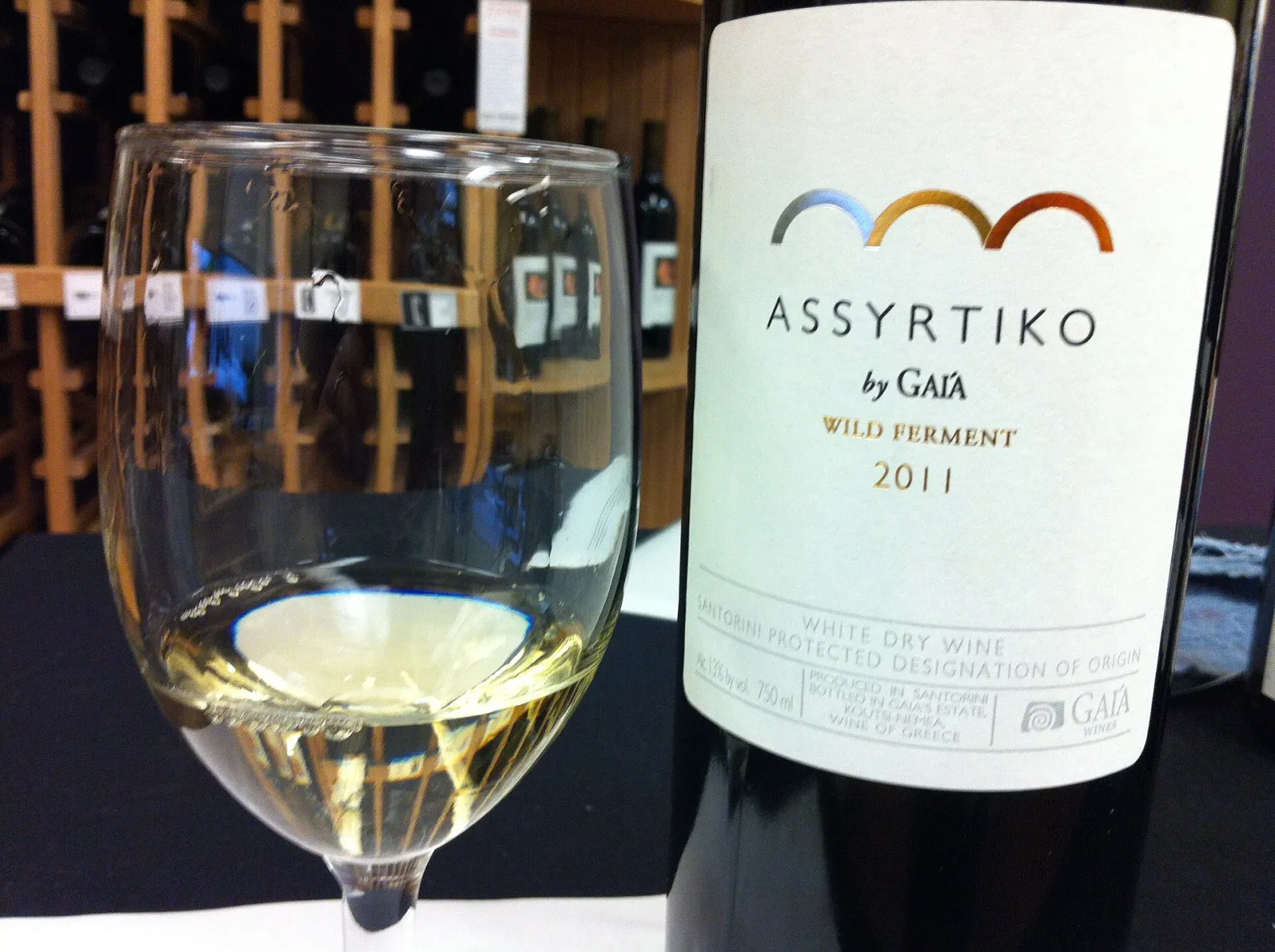 Photo: Agne27, CC BY-SA 3.0, via Wikimedia Commons
This guide covers why the Assyrtiko grape is different, how it tastes, the three wine styles it produces, which producers make the best bottles, and how to bring some home. If you're building a wine tasting trip on Santorini, start here. For the full picture, our complete food and wine guide goes all the way from Assyrtiko to tomatokeftedes.
Most wine grapes grow in neat rows on trellises. Assyrtiko doesn't. Most vineyards get irrigation and rich soil. Santorini's vineyards have neither. And most whites come from grapes cultivated for a few hundred years. Assyrtiko has been growing on this island for more than 3,500 years.
Three things make this grape unusual.
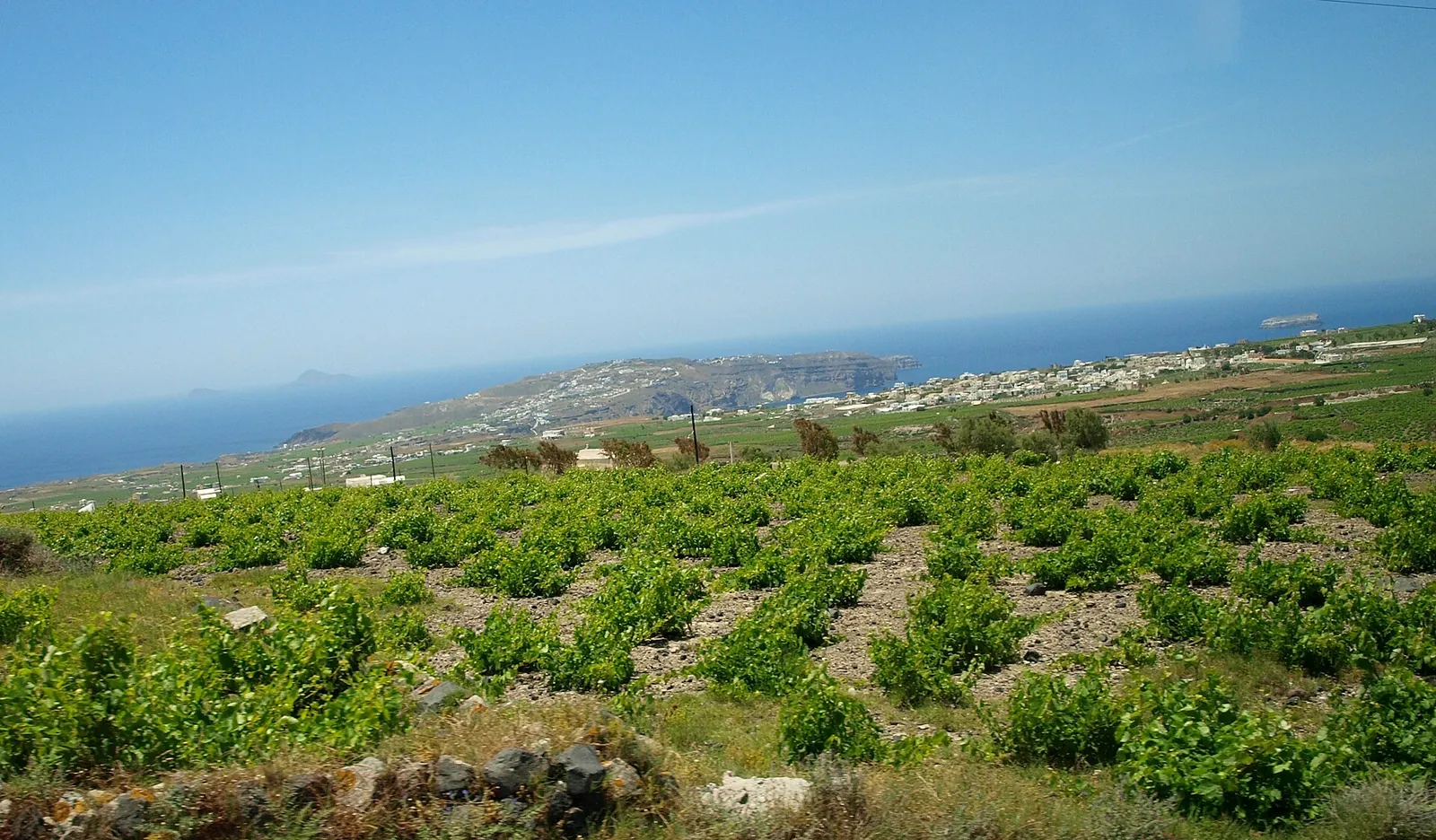 Photo: Joye~, CC BY 2.0, via Wikimedia Commons
Santorini is what remains after a massive volcanic eruption around 1600 BC. The soil: pumice stone, volcanic ash, powdered rock. Poor in nutrients. Packed with minerals. Vines struggle, and that struggle is exactly the point.
Stressed vines produce fewer grapes with more intense, concentrated flavors. The minerals transfer directly into the wine. That flinty, almost salty character, what wine professionals call "minerality" and everyone else describes as "tasting like the sea", comes straight from the ground.
The volcanic soil also saved Santorini from phylloxera, the vine-killing pest that, according to Wikipedia, destroyed most of Europe's wine vineyards in the late 19th century. The pest couldn't survive in pumice, so while France, Italy, and Spain replanted on American rootstocks, Santorini's vines stayed ungrafted on their original roots. According to Estate Argyros, some Santorini vines are over 200 years old.
Walk through a Santorini vineyard. No neat trellised rows. Instead, the vines are woven into low, circular basket shapes called "kouloura." Each vine wraps around itself in a tight wreath close to the ground, with the grape clusters tucked inside for protection.
The method solves two problems at once. The low profile shields grapes from Aegean winds that hit 60 km/h during the growing season. And the basket shape traps moisture from morning sea mist, the vines' only real water source. Almost no rain from June through September. No irrigation.
Farmers have trained vines this way for millennia. It looks primitive next to modern viticulture, but it works better than anything else they've tried. Visit Greece's official Santorini wine guide celebrates the island as one of the country's most distinctive wine regions, with Assyrtiko at the heart of its volcanic vineyards.
When winemakers in California or Australia say "old vines," they typically mean 50-80 years. Assyrtiko in Santorini? Some vines have been producing fruit for over 200 years. The continuous winemaking tradition goes back more than 35 centuries. One of the oldest wine-producing regions in the world.
These old vines yield almost nothing. A single vine might produce a few tiny clusters per season. But those clusters, what they lack in quantity, they make up for tenfold in flavor intensity. Old-vine Assyrtiko wines are among the most concentrated, complex whites you can drink.
If you've had a good Chablis or a crisp Albarino and liked the mineral, clean quality, Assyrtiko sits in that family. But it goes further.
Primary flavors: Lemon, grapefruit, green apple, white peach. Not the sweet, fruity flavors you get from New Zealand Sauvignon Blanc. These are sharp. Precise.
Mineral character: This is what sets Assyrtiko apart. A flinty, almost chalky note running through every glass. A saline finish from vines that grow within sight of the Aegean.
Acidity: Assyrtiko holds its acidity even when grapes ripen fully in Santorini's heat. Most white grapes lose acidity as they gain sugar in warm climates, making flat wines. Assyrtiko stays sharp, which makes it an excellent food wine with more aging potential than most people expect.
Body: Medium to full for a white, with real weight and texture rather than a light, watery feel.
Finish: That saline, mineral tail lingers. Good Assyrtiko finishes with wet stone and sea salt. Wine writers call it "liquid rock." Sounds pretentious until you taste it and realize they're right.
| Wine | Acidity | Minerality | Fruit | Body | Price Range |
|---|---|---|---|---|---|
| Assyrtiko (Santorini) | Very high | Intense (volcanic/saline) | Citrus, stone fruit | Medium-full | EUR 8-25 (winery), EUR 15-40 (restaurant) |
| Chablis (Burgundy) | High | Strong (limestone) | Green apple, citrus | Medium | EUR 15-40 (shop) |
| Sauvignon Blanc (Marlborough) | High | Low | Tropical, herbaceous | Light-medium | EUR 10-20 (shop) |
| Albarino (Rias Baixas) | High | Moderate (granite) | Peach, citrus | Medium | EUR 8-15 (shop) |
| Vermentino (Sardinia) | Medium-high | Moderate | Citrus, herbs | Medium | EUR 8-15 (shop) |
What makes Assyrtiko stand out: the combination of high acidity AND full body AND intense minerality. Most whites have one or two. Assyrtiko has all three.
One grape, three distinct wines. Understanding these before your trip means you'll know exactly what to order at dinner and what to look for at tastings.
The standard Santorini white wine. The one you'll drink most often. Carries the PDO Santorini designation, must be made from Assyrtiko grapes grown on Santorini and produced according to specific rules.
How it's made: Picked, pressed, fermented in stainless steel at cool temperatures. No oak. Straight into the bottle, fresh and direct.
What to expect: Bright, crisp, sharp. Lemon and grapefruit on the nose. Mineral and saline on the palate. Bone-dry, zero residual sugar. Alcohol typically 13-14%, slightly higher than many whites because Santorini's sun concentrates the sugars.
Best with: Grilled fish, raw seafood, Santorini fava with capers and onion, fried calamari, or fresh tomatoes with olive oil. Also perfect on its own as an aperitif on a caldera terrace.
Price: EUR 8-25 at wineries, EUR 15-40 at restaurants in Fira.
Barrel-aged Assyrtiko. Completely different drinking experience. Name comes from "nychta", night, because grapes were traditionally harvested and pressed after sunset to avoid daytime heat.
How it's made: Assyrtiko (at least 75% by regulation), fermented then aged in oak barrels for a minimum of three months. Many producers go much longer, 12-18 months in a combination of new and used French oak.
What to expect: Fuller-bodied and rounder than dry Assyrtiko. Oak adds honey, dried apricot, toasted almond, subtle smokiness. Mineral backbone still there but wrapped in a richer, creamier texture. Some Nykteri wines age well for 10-15 years in the bottle.
Best with: Richer dishes that would overpower a dry Assyrtiko. Roasted chicken. Grilled octopus with capers. Pasta with seafood in cream sauce. A plate of aged Graviera cheese from Crete.
Price: EUR 15-30 at wineries, EUR 25-50 at restaurants. More expensive because barrel aging costs money and ties up stock.
Not Italian Vin Santo. Different wines, different grapes, different production. The Santorini version predates the Italian one. Some historians believe the name traveled from Greece to Italy, not the other way around.
How it's made: Assyrtiko blended with Aidani and Athiri (two other local varieties), sun-dried on straw mats for 10-14 days on rooftops and terraces. Santorini sun concentrates the sugars dramatically. Pressed, fermented slowly, then aged in oak for at least 24 months. The best examples: 10, 15, even 20 years.
What to expect: Amber to deep mahogany. The aromas hit before you taste: caramel, dried fig, raisin, honey, coffee, roasted nuts. Intensely sweet, but good Vinsanto wine maintains enough acidity to stay balanced. Never cloying if well made.
Best with: Dark chocolate, baklava, walnut cake, aged hard cheeses. Many Greeks drink it as dessert itself, nothing on the side. A small glass after dinner on a warm Santorini evening is one of the most romantic things you can do on the island.
Price: EUR 15-30 for a 375ml bottle at wineries (almost always half bottles because of the labor-intensive production). EUR 8-15 per glass at restaurants.
Santorini has around 20 wine producers, and these are the ones worth seeking out, at their wineries or on a restaurant wine list.
For visiting these wineries in person, tour prices, reservation tips, a driving route, read our best wineries in Santorini guide.
Estate Argyros is the benchmark. Fourth-generation winemaker Matthew Argyros. 120 hectares of vines, some over 200 years old. Their 20-year-old Vinsanto received a perfect 100-point rating from Wine & Spirits Magazine. Look for the Cuvee Monsignori Assyrtiko (EUR 20-25 at the winery).
Sigalas produces some of the most elegant Assyrtiko on the island. Paris Sigalas left mathematics to start winemaking in 1991. His estate in Baxedes sits on the coast, and the sea salt shows in every bottle (EUR 15-18).
Gavalas Winery, one of Santorini's oldest, has been in the same family for five generations, with roots reaching back to the late 18th century. Heritage varieties, traditional methods. Their Nykteri is one of the best on Santorini (EUR 18-22).
Santo Wines is the largest cooperative, representing over 1,200 growers. Consistent quality, fair prices (EUR 8-12), and their caldera-view terrace is also one of the best places to taste wine on Santorini.
Hatzidakis Winery in Pyrgos Kallistis makes complex, age-worthy wines. The late Haridimos Hatzidakis was considered one of Santorini's greatest winemakers. His daughter Stella now carries the work forward (EUR 12-16).
High acidity and mineral character make Assyrtiko one of the most food-friendly whites in the world. Cuts through fat. Complements seafood. Holds its own with dishes that would flatten most whites.
| Dish | Why It Works | Which Style |
|---|---|---|
| Grilled whole fish (sea bream, red snapper) | Acidity cuts the richness of grilled skin, minerality mirrors the sea | Dry Assyrtiko |
| Santorini fava with capers and lemon | Earthy sweetness of the puree meets the wine's citrus sharpness | Dry Assyrtiko |
| Fried calamari | Classic match. Acid balances oil, lemon notes echo the squeeze on top | Dry Assyrtiko |
| Raw oysters or sashimi | Saline finish of Assyrtiko is a liquid version of the sea | Dry Assyrtiko |
| Grilled octopus | Char and texture need a wine with weight. Nykteri's oak adds complexity | Nykteri |
| Pasta with lobster or shrimp | Rich seafood pasta needs a fuller white. Nykteri matches without overwhelming | Nykteri |
| Aged hard cheeses (Graviera, Kefalotyri) | Barrel notes and body of Nykteri stand up to strong cheese | Nykteri |
| Dark chocolate | Vinsanto's caramel and dried fruit mirror chocolate's bitterness | Vinsanto |
| Baklava or walnut cake | Sweet with sweet, but Vinsanto's acidity keeps it balanced | Vinsanto |
Assyrtiko doesn't work with heavily spiced food (curry, Sichuan), overly sweet fruit-based desserts (the wine's acidity clashes), or red meat. For steak or lamb, ask for a red, preferably Mavrotragano if you want to stay local.
For more pairing ideas with specific Santorini dishes, check our guide to the best restaurants in Fira.
Most visitors fall in love with Assyrtiko at a winery tasting and want to bring bottles home. Here's how.
| Where | Price Range | Advantage |
|---|---|---|
| At the winery | EUR 8-25 per bottle | Best prices, widest selection, exclusive labels unavailable elsewhere |
| Wine shops in Fira | EUR 10-30 per bottle | Convenient, good range across producers |
| Restaurant wine list | EUR 15-40 per bottle (EUR 6-12 per glass) | No commitment, try before buying |
| Airport duty-free | EUR 12-20 per bottle | Limited selection but convenient last-minute |
Can't go in carry-on. Pack in checked bags wrapped in clothing, or buy wine protector bags (EUR 2-3 at Fira shops) with air chambers. Most wineries bubble-wrap purchases if you ask.
Some producers, Estate Argyros and Santo Wines among them, ship internationally. Expect EUR 15-30 per box of 6, plus customs duties.
Good shopping list: 2-3 bottles of dry Assyrtiko, 1 Nykteri for a special dinner at home, 1 half-bottle of Vinsanto. Total spend: around EUR 50-80 at a winery.
Our team at Aroma Suites in Fira arranges wine tours and tastings for guests. Guided tours with transport or self-drive routes between wineries, we set up the itinerary based on what you're after.
After tasting, our cave suites are the place to wind down with a final glass on the caldera terrace. The best restaurants in Fira are a short walk away, most with Assyrtiko on the wine list.
Check availability and book direct for the best rates plus complimentary wine for stays of 3 nights or more.
Assyrtiko is a dry white wine made from an ancient grape indigenous to Santorini. Bone-dry with high acidity, minerality, and citrus flavors. The grape also produces Nykteri (barrel-aged white) and Vinsanto (sweet dessert wine from sun-dried grapes).
Standard Assyrtiko wine is completely dry, zero residual sugar. Nykteri is also dry but tastes richer due to oak aging. Vinsanto is the sweet style, made from grapes sun-dried for 10-14 days to concentrate their sugars.
Lemon, grapefruit, green apple, with a mineral and saline finish from the volcanic soil. Sharp, clean, medium to full-bodied. People describe it as "tasting like the sea." Nothing like fruity New World whites.
They share high acidity, but that's where the similarity ends. Sauvignon Blanc is more herbaceous and tropical. Assyrtiko is more mineral-driven, fuller-bodied, with a saline finish that Sauvignon Blanc lacks. Assyrtiko sits closer to a good Chablis than to Marlborough Sauvignon Blanc.
At wineries: EUR 8-25 for dry Assyrtiko, EUR 15-30 for Nykteri, EUR 15-30 for a 375ml Vinsanto. At restaurants: EUR 15-40 per bottle (EUR 6-12 per glass) for dry Assyrtiko, EUR 25-50 for Nykteri, EUR 8-15 per glass for Vinsanto. Outside Greece: USD 15-35 or GBP 12-28 per bottle.
Yes. Good dry Assyrtiko ages 5-8 years, developing honey and lanolin notes while keeping its acidity. Nykteri ages even better, up to 10-15 years. Vinsanto from top producers can age 20-30 years and improve the entire time.
Assyrtiko has grown in popularity internationally. Specialty wine shops and online retailers in the US, UK, and Australia carry Greek wines from producers like Estate Argyros, Sigalas, and Santo Wines. Search for "Greek Assyrtiko" at your local wine shop or online retailer. Prices outside Greece are typically USD 15-35 or GBP 12-28 per bottle.
Seafood. Grilled fish, fried calamari, raw oysters, shrimp pasta, sushi. On Santorini, the classic pairing is Assyrtiko with fava (yellow split pea puree) or tomatokeftedes (tomato fritters). The high acidity cuts through oil and fat. You can learn to make both at a Santorini cooking class.
Planning a trip to Santorini? Read our complete Santorini wine and food guide for more on the island's cuisine, or browse our romantic things to do in Santorini for ideas beyond the wine glass.
Planning a Santorini trip?
Get our insider guide
Local tips, hidden spots, and an exclusive direct booking discount delivered to your inbox.
Stay with us
Six rooms and a private villa on the caldera in central Fira. Direct booking includes complimentary wine on 3+ night stays and free airport transfer on 4+ nights.
Cave suite with caldera-facing veranda, designed for couples and milestone trips.
View room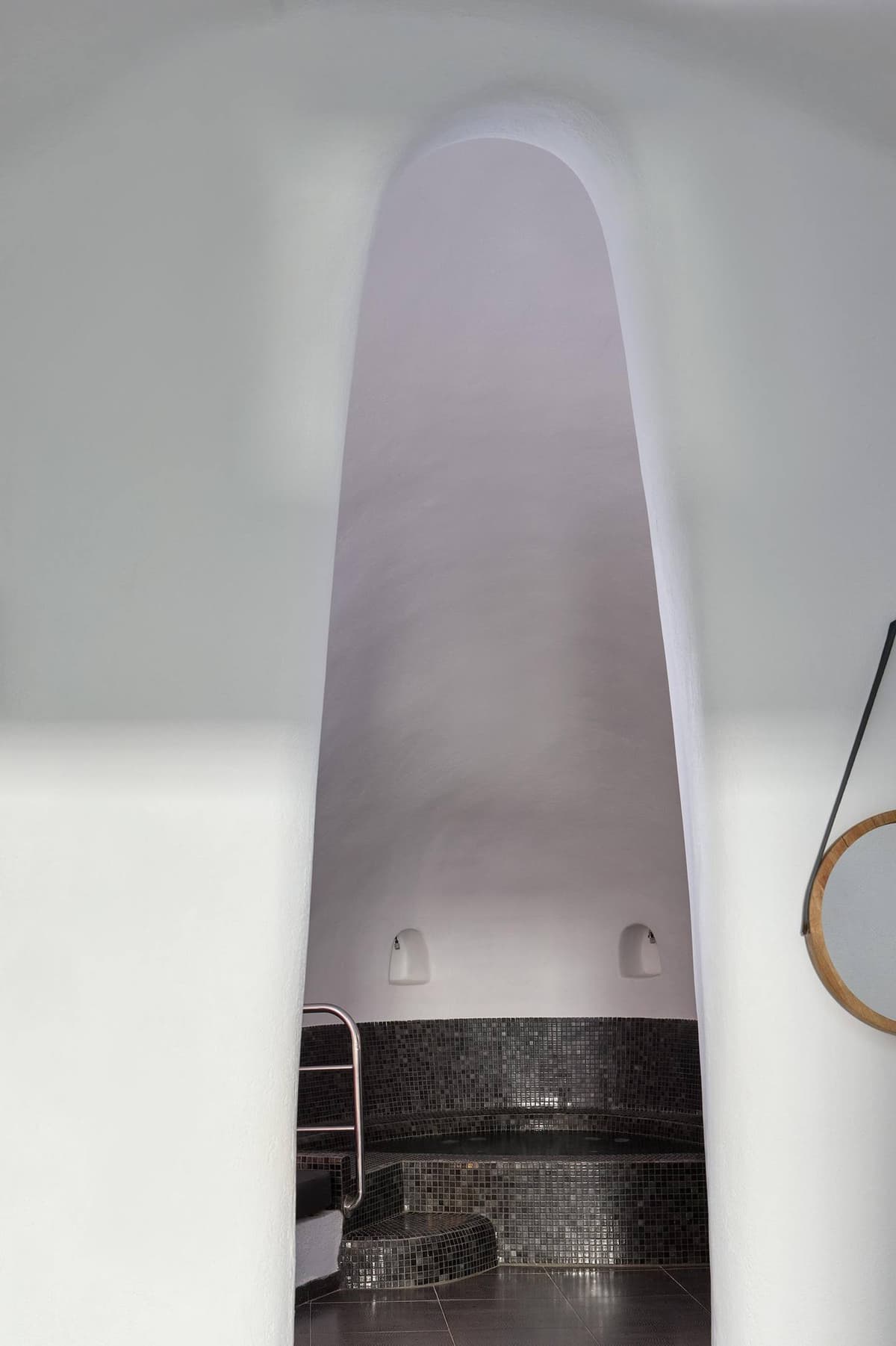
70m² cave suite with heated indoor jacuzzi and arched ceilings.
View room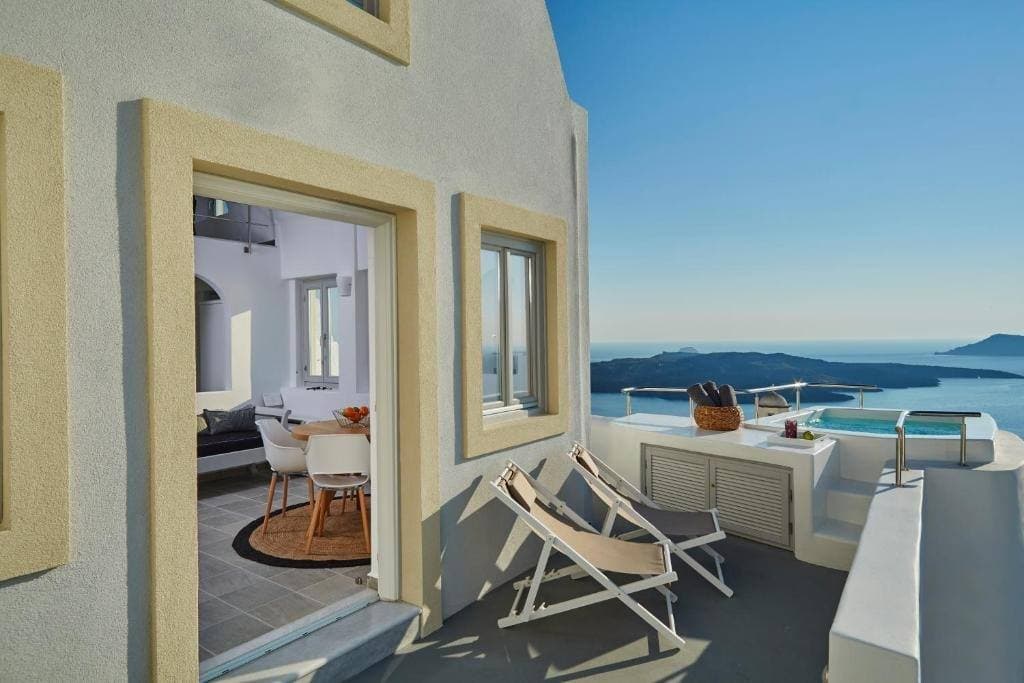
Heated outdoor jacuzzi on your own balcony, with the caldera and the sunset in front of you.
View roomYour Stay Awaits
Experience Santorini from a cave suite perched on the caldera edge in Fira.