
50m²
Σουίτα Μήνα του Μέλιτος
Υπόσκαφη σουίτα με βεράντα προς την καλντέρα, για ζευγάρια και ξεχωριστά ταξίδια.
Δείτε το δωμάτιο
Food & Wine
By Fanis Kafouros, Owner since 2006 · Published · Updated
Moussaka and souvlaki are everywhere in Greece. Santorini has those too. But the volcanic soil here grows ingredients that taste different from anything on the mainland or the other islands, sweeter tomatoes, creamier eggplant, split peas with a nutty depth that normal farming conditions can't produce.
Short answer: Eat what the volcanic soil grows. Start with fava, the island's yellow split pea purée, and tomatokeftedes made from small, sweet local tomatoes. Then try white eggplant, chlorotyri goat cheese, sfougato, Santorini capers and melitinia pastries for dessert. Fresh fish and grilled octopus are best at the seaside tavernas. Skip the generic moussaka-and-souvlaki menus and drink Assyrtiko with all of it.
The volcanic soil here grows ingredients that taste different from the mainland, and this companion to our Santorini food and wine guide goes dish by dish through the traditional food worth ordering at least once, with honest notes on where to find it and what to skip.
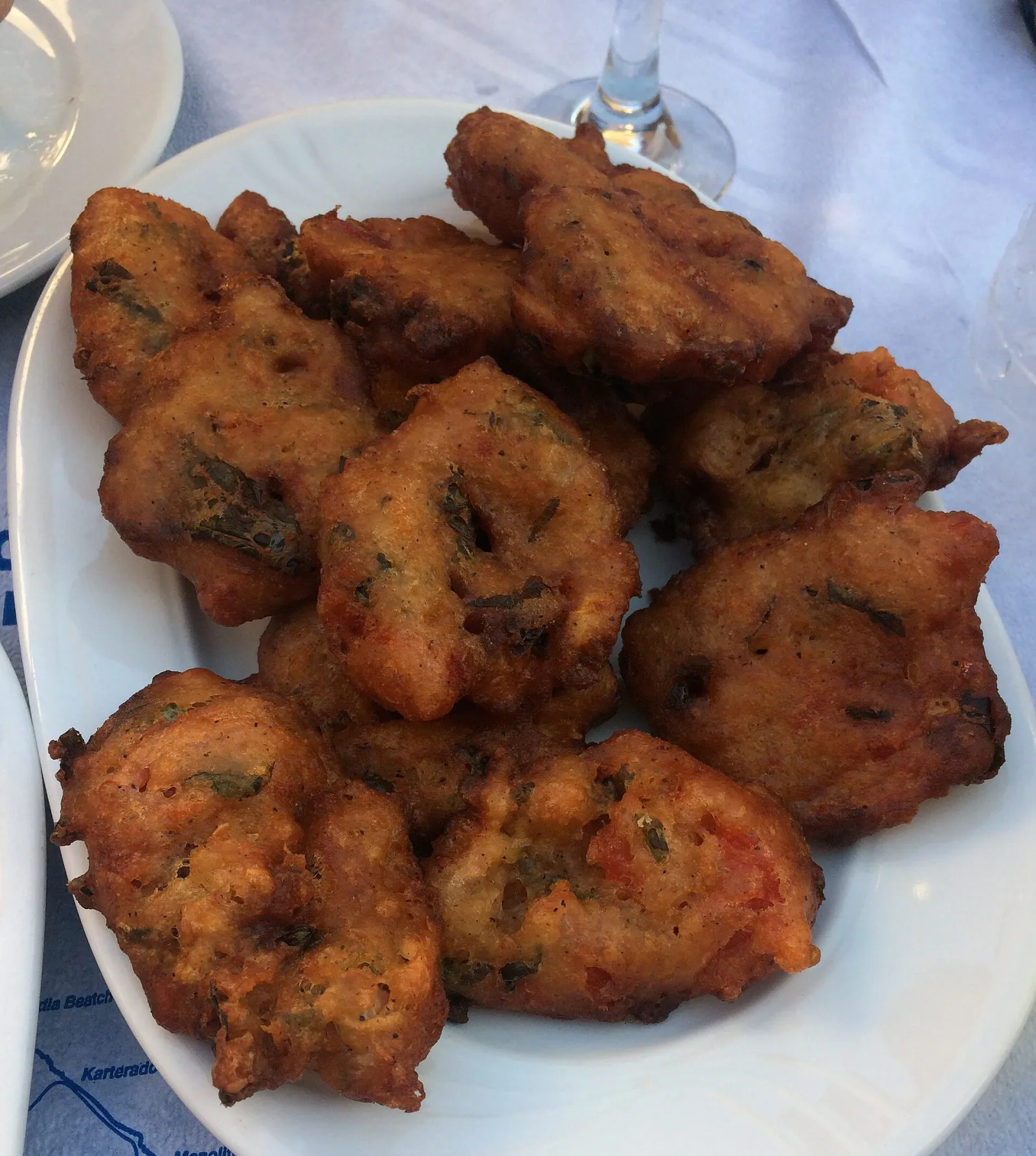 Photo: Sam Holt, CC BY-SA 4.0, via Wikimedia Commons
Search "fava Santorini" and you'll find it on every best-of list. The island's most famous dish. And it confuses visitors every time.
This is not fava beans. Santorini fava is made from yellow split peas (Lathyrus clymenum) that grow in volcanic soil and develop a sweet, earthy flavor you won't find in split peas from anywhere else. The variety has been cultivated here for centuries. PDO-protected (Protected Designation of Origin).
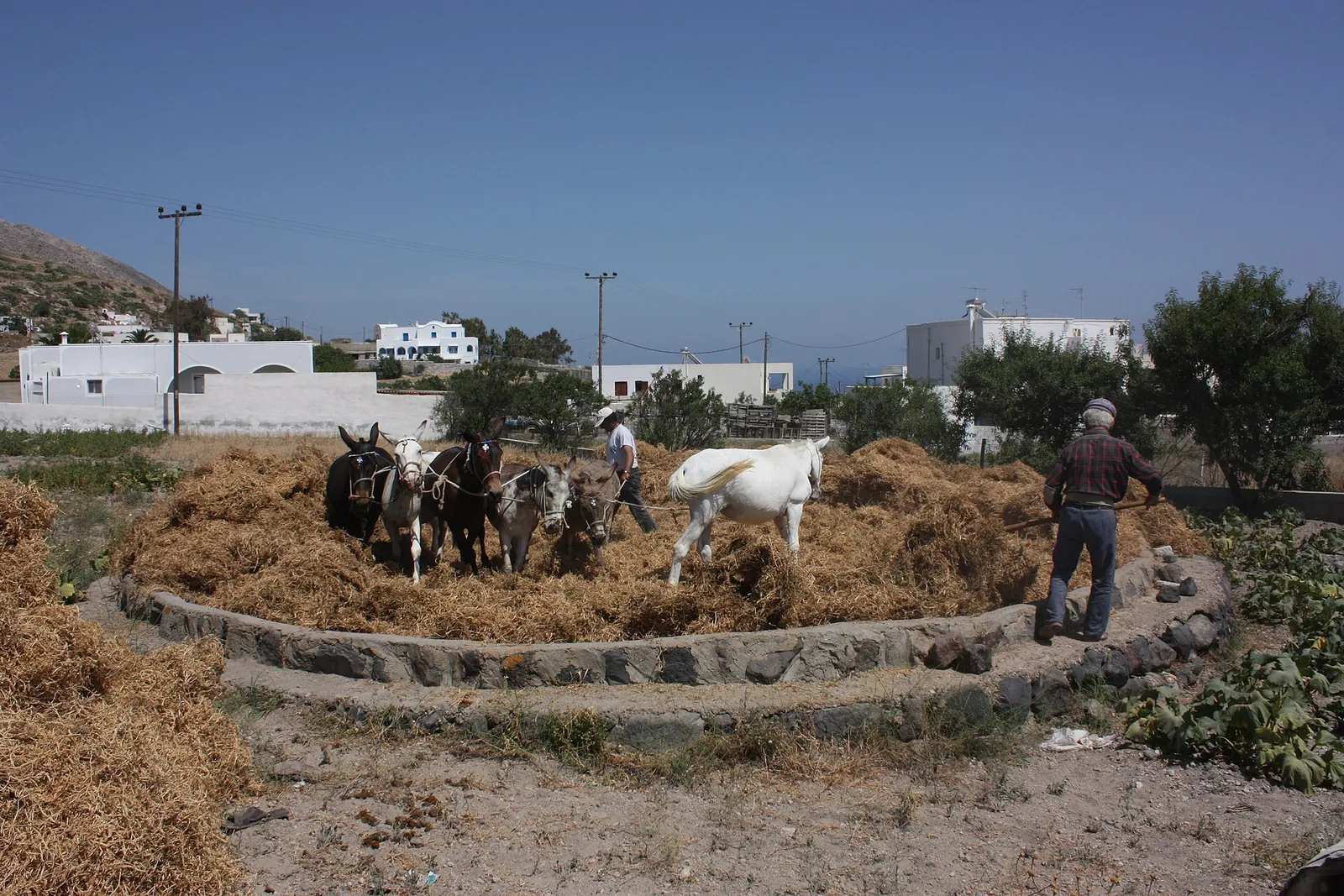 Photo: Klearchos Kapoutsis from Santorini, Greece, CC BY 2.0, via Wikimedia Commons
Served as a warm or room-temperature puree, topped with raw onion, capers, olive oil, squeeze of lemon. Good fava should be creamy with a slight grain, not thick like baby food, not runny like soup.
Where to find it: Every restaurant on the island. Quality varies. Look for places that source locally grown split peas. Mama Thira in Firostefani does a straightforward, well-made version. Tavernas in Pyrgos and Megalochori tend toward more traditional preparations.
Price: EUR 6-10.
Wine pairing: Assyrtiko, dry and mineral. The citrus notes cut through the richness. More about Santorini's signature wines in our wine tasting guide.
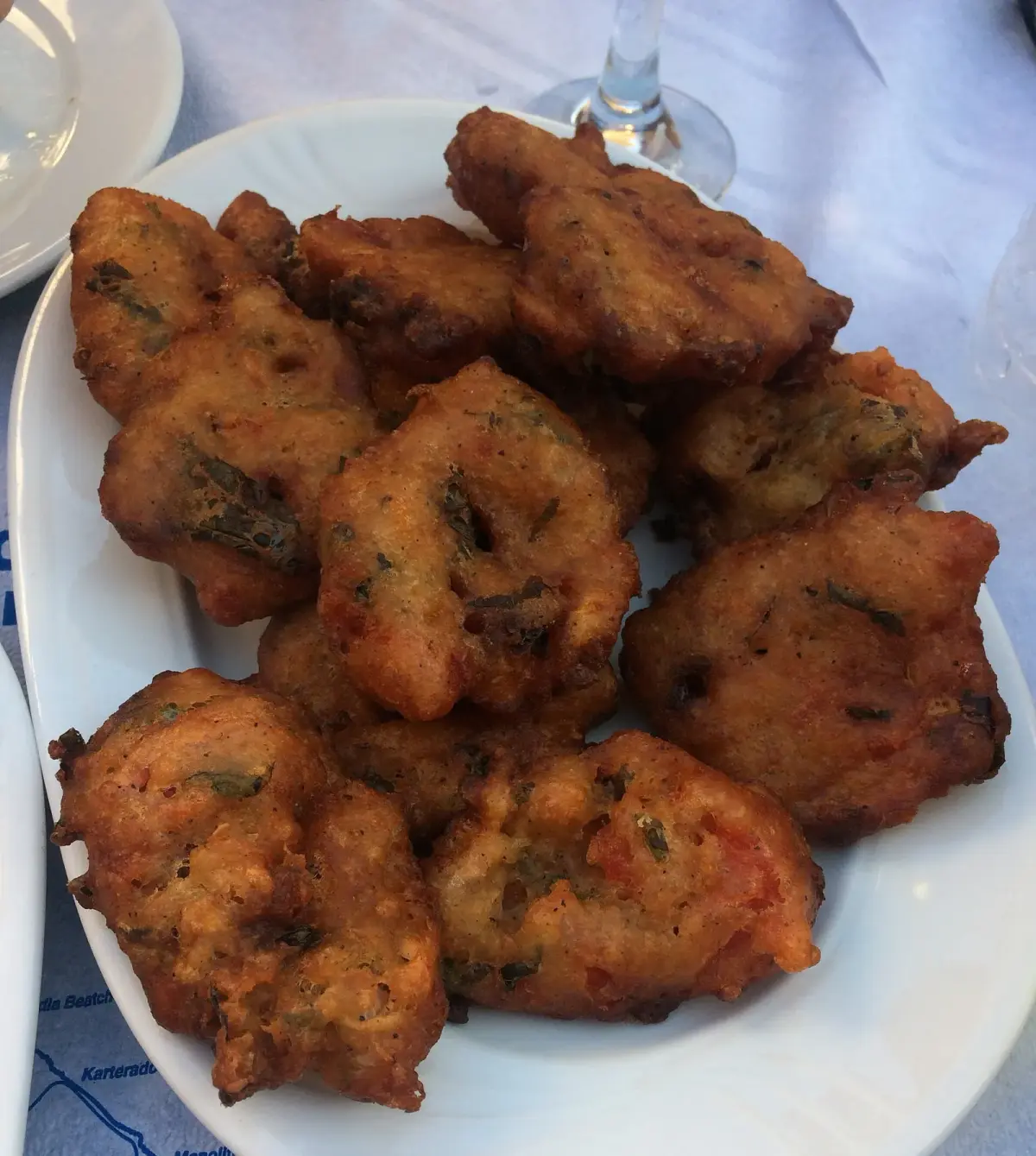
Second most famous dish on the island. They exist because of the cherry tomatoes. Santorini tomatoes carry EU Protected Designation of Origin status. Volcanic soil and dry conditions concentrate sugars to a level normal tomatoes never reach. Tomatokeftedes are deep-fried fritters made from these tomatoes, mixed with onion, fresh mint, a small amount of flour to bind.
The best versions: crispy outside, soft, almost jammy inside. The worst: heavy, floury balls where you can barely taste the tomato.
Timing matters. Fresh cherry tomatoes are in season June through October. Spring or late autumn, restaurants use sun-dried or imported. Still good. Not the same.
Where to find it: Widespread. Best tomatokeftedes tend to come from smaller tavernas rather than caldera-view fine dining. Naoussa in Fira does a reliable version.
Price: EUR 7-12 for a plate of 4-6.
Wine pairing: Dry rose or a lighter Assyrtiko. The acidity matches the sweetness of the tomatoes.
Another product of the volcanic terroir. Sweeter, less bitter than the purple variety found elsewhere in Greece. Creamier flesh that doesn't need as much oil to cook.
Usually grilled and drizzled with olive oil. Sometimes stuffed with tomato and feta. Occasionally baked into a gratin. One of the best vegetarian options on the island. And it's genuinely good, not a consolation prize.
Where to find it: Not on every menu, especially tourist-heavy spots. Traditional tavernas in inland villages (Pyrgos, Megalochori, Emporio) are your best bet. If you see it as a daily special, order it.
Price: EUR 7-11.
Wine pairing: Nykteri (barrel-aged Assyrtiko). Fuller body pairs well with the creamy texture.
The answer to "what is the traditional Santorini cheese?" Soft, tangy, unpasteurized. Made from goat's or sheep's milk. Texture somewhere between ricotta and cream cheese, but with more personality, sharper, a bit sour, clean finish.
Served as a meze dish on its own, drizzled with olive oil, sometimes paired with Santorini tomatoes or capers. Also shows up inside pies and alongside fava.
Where to find it: Not every restaurant stocks it. Look for places that push local ingredients. Sometimes available at the Saturday farmers' market in Fira or specialty food shops. On the menu? Don't skip it.
Price: EUR 6-9 as a meze plate.
Wine pairing: Assyrtiko. Mineral acidity matches the tartness of the cheese.
This one is rare. Traditional Santorini cured pork fillet rubbed with cinnamon and black pepper, then air-dried. Made on the island for centuries as a preservation method. It tastes like nothing else in Greek food: smoky, spiced and dense, with an almost charcuterie-like texture.
Finding it is the hard part. Few restaurants serve apochti. Most visitors never hear about it. More of a home recipe and specialty deli item. If you see it on a menu or in a food shop, get it. Served sliced thin as a meze with bread and cheese.
Where to find it: Ask at tavernas in Pyrgos or Megalochori. Some higher-end restaurants in Fira include it on seasonal tasting menus. Specialty food shops between Fira and Firostefani sometimes carry packaged versions.
Price: EUR 8-14 as a meze plate (when available).
Wine pairing: Vinsanto (sweet dessert wine). Sweetness balances the spice and salt of the cured meat. Unusual pairing. But a traditional one.
Thick, baked egg dish. Closer to a frittata than a French omelet. Traditional version: eggs, fresh tomato, white eggplant, local cheese (often chlorotyri). Some versions add mint or zucchini. Hearty, simple. One of the dishes locals actually eat at home.
Most restaurants don't list sfougato by name. Find versions under "egg dishes" or as part of a meze spread. Solid breakfast option too if your hotel serves a Greek-style morning meal.
Where to find it: Traditional tavernas, especially inland villages. Farm-to-table restaurants in Megalochori and Pyrgos serve it.
Price: EUR 7-10.
Wine pairing: Assyrtiko or a light rose. Egg dishes pair with wines that have enough acidity to cut through the richness.
Not unique to Santorini. But the island does it particularly well. Caught locally, sun-dried on lines outside the tavernas (you'll see this all over the port areas), then grilled over charcoal. Done right: tender inside, charred edges, drizzled with olive oil and vinegar, sometimes a sprinkle of oregano.
The sun-drying step is what separates good Greek octopus from the rubbery versions at tourist traps. Breaks down muscle fibers. Concentrates flavor.
Where to find it: Almost everywhere. Look for restaurants that dry their own. The tavernas around Amoudi Bay (below Oia, accessible by the 278 steps) are famous for it. Just outside Fira, in Kontochori, Argo restaurant does a reliable version.
Price: EUR 12-18 for a plate.
Wine pairing: Assyrtiko is the classic match. Salinity and citrus complement the char and brine.
Santorini isn't a fishing island the way Paros or Naxos are. But there's a local fleet. What comes in is good. Catch changes daily: red mullet, sea bream, swordfish, sardines, occasionally tuna.
Ask your server what was caught today. Can't tell you? Fish might not be local. Greek law requires marking frozen or imported fish on the menu (look for an asterisk or "kat." meaning frozen). Compliance varies.
Fish is priced by the kilo, not the plate. Ask the price before ordering.
Where to find it: Tavernas near the ports (Amoudi Bay, Vlychada) and beach towns (Kamari, Perissa) have the freshest options.
Price: EUR 35-60 per kilo, roughly EUR 15-30 per serving.
Wine pairing: Assyrtiko for white fish. Nykteri for richer preparations.
Wild capers grow across the island, thriving in the rocky, dry volcanic terrain. Harvested by hand. Pickled in brine. Used as a topping on fava, salads, fish dishes. Santorini capers are smaller and more intensely flavored than the jarred ones at the supermarket.
You won't order them as a standalone dish, but pay attention when they appear. They're a marker of quality: restaurants using local capers on fava and salads are usually paying attention to ingredients across the board.
Where to buy them: One of the best food souvenirs from the island. Saturday morning market in Fira or the food shops around town. They last for months. Weigh almost nothing in your luggage.
Price: EUR 4-8 for a jar (200-300g).
Small, open-faced pastries filled with sweet mizithra cheese (soft, unsalted), flavored with mastic and sometimes vanilla. Traditionally made for Easter. A handful of bakeries in Fira and Oia stock them during tourist season too.
Not overly sweet, that surprises visitors used to baklava and syrup-heavy Greek desserts. Light cheese filling, slightly crumbly pastry, faint piney aroma from the mastic.
Where to find them: Local bakeries, not restaurants. Ask for "melitinia" at any traditional fourno (bakery). Visiting around Greek Easter (April or May, date varies)? They're everywhere.
Price: EUR 1.50-3 per piece, EUR 8-15 for a box.
Santorini has hundreds of restaurants. Many perfectly acceptable. But some patterns should raise a flag:
The 20-page menu. Sushi, pasta, burgers, Mexican food, AND Greek food on the same menu? The Greek food probably comes from the same wholesale supplier as everything else. Traditional Santorini dishes need local ingredients and kitchen time. A restaurant trying to do everything does nothing well.
The caldera-view premium. Caldera restaurants charge noticeably more for the same dishes, and fava that costs about EUR 6-10 at most tavernas is often no better on a cliff-top terrace. Want the view? Go for drinks or coffee. For the best Greek food on Santorini, eat where the kitchen matters more than the terrace.
"Authentic Greek" restaurants with photos of the food. Laminated menus with stock photos of every dish usually point to a generic kitchen, not local ingredients. The best tavernas have handwritten daily specials instead of photo menus.
For restaurants in Fira, see our separate Fira restaurant guide. Here's the broader island:
For traditional Santorini dishes at the best prices, head inland. Pyrgos, Megalochori, Emporio. Tavernas with caldera-free terraces (no view premium), local ingredients, prices lower than on the caldera rim. Metaxy Mas in Exo Gonia and Kantouni in Pyrgos are both worth the trip.
For seafood, go to where the fish comes from. Amoudi Bay (below Oia), beachfront restaurants in Vlychada, fish tavernas in Kamari and Perissa. For the full picture by area, see our guide to the best restaurants across Santorini. Don't order expensive fish at a caldera restaurant far from any port.
For a food market experience, the Saturday morning farmers' market in Fira. Small but genuine. Local produce, cheese, honey, capers, baked goods sold by the people who made them. Not a curated food festival. Just a normal market with good stuff.
The volcanic soil doesn't just shape the food. It shapes the wine, and wine tasting in Santorini is the best way to taste the difference. Three wines pair with almost everything on the island:
| Wine | Style | Best with |
|---|---|---|
| Assyrtiko | Dry white, mineral, citrus | Fava, chlorotyri, octopus, fish, capers, tomatokeftedes |
| Nykteri | Barrel-aged Assyrtiko, fuller body | White eggplant, richer fish, chicken dishes |
| Vinsanto | Sweet dessert wine, sun-dried grapes | Apochti, melitinia, baklava, strong cheese |
Assyrtiko covers 80% of Santorini's food pairings because its acidity and mineral character work with most of the island's ingredients. Deeper look at the wines and where to taste them in our wine tasting guide.
Santorini is surprisingly good for vegetarians. Fava is vegan. Tomatokeftedes are often vegan (check for egg). White eggplant dishes go either way. Most tavernas also serve grilled vegetables, dolmades, gigantes, fasolada.
Vegans should ask about eggs and butter in specific dishes. But the base ingredients are plant-forward. Traditional food here relies on the quality of the vegetables, not on meat.
Several places on the island offer cooking classes where you prepare traditional recipes with local ingredients (EUR 95-280 per person, usually includes a market visit and a meal with wine). Our complete cooking class guide compares providers, prices, and what you'll actually cook.
For the broader food and drink picture, see our complete food and wine guide.
Spending 3 days in Santorini? Rough food plan:
Day 1 (arrival): Walk around Fira. Eat at a local taverna. Order fava and tomatokeftedes as your introduction to the island's traditional food. Have dinner at one of the caldera-view spots for the experience. Keep expectations realistic on the food quality.
Day 2 (explore): Inland village, Pyrgos or Megalochori, for lunch. Try what you haven't had yet: white eggplant, sfougato, chlorotyri. Pair everything with local wine. See apochti on the menu? Order it.
Day 3 (seafood day): Amoudi Bay or Vlychada for grilled octopus and fresh fish. Pick up capers and a bottle of Assyrtiko from a food shop on the way back. Something romantic in mind? Book a sunset cruise that includes dinner on board.
Stop at a Fira bakery for melitinia before you leave.
More than on the mainland, but manageable. A meal for two with wine runs EUR 50-80 at a mid-range taverna and EUR 100-150+ for fine dining. Caldera-view restaurants add a premium for the view; fava costs about EUR 6-10 at most tavernas. Inland village tavernas (Pyrgos, Megalochori) skip that premium and cost less for the same quality. See our Fira restaurant guide for specific prices.
Yes. Fava is vegan. Tomatokeftedes are often vegan. Most tavernas serve grilled vegetables, dolmades, gigantes, fresh salads. Ask about eggs and butter in specific dishes.
Skip restaurants with 20-page menus. For the best Santorini dishes, choose places with short menus and local ingredients. Fresh fish belongs near a harbour, not on a cliff-top menu. Don't pay a view premium for fava when the taverna down the hill makes it just as well for EUR 6-10.
Most open at 6:30-7:00 PM, serve until 11:00 PM or later. Greeks eat dinner around 9:00-10:00 PM. At most tavernas, arriving before 7:30 PM means less crowding and no reservation needed. Caldera-view restaurants are the exception: book those 2-3 days ahead in summer.
The volcanic soil, the dry wind and the isolation push every ingredient on the island to develop flavors you won't find on the mainland. Eating traditional Santorini dishes is the most direct way to taste what makes this place different.
Our cave suites in Fira put you within walking distance of Fira's tavernas, bakeries, and food shops.
Book direct for the best rates, complimentary wine on stays of 3+ nights, and a free airport transfer on stays of 4+ nights.
Σχεδιάζετε ταξίδι στη Σαντορίνη;
Αποκτήστε τον οδηγό μας
Τοπικές συμβουλές, κρυμμένα σημεία και αποκλειστική έκπτωση απευθείας κράτησης, κατευθείαν στο inbox σας.
Μείνετε μαζί μας
Έξι δωμάτια και μία ιδιωτική βίλα στην καλντέρα, στο κέντρο της Φηράς. Η απευθείας κράτηση περιλαμβάνει κρασί για διαμονή 3+ νυχτών και δωρεάν μεταφορά από το αεροδρόμιο για 4+ νύχτες.
Υπόσκαφη σουίτα με βεράντα προς την καλντέρα, για ζευγάρια και ξεχωριστά ταξίδια.
Δείτε το δωμάτιο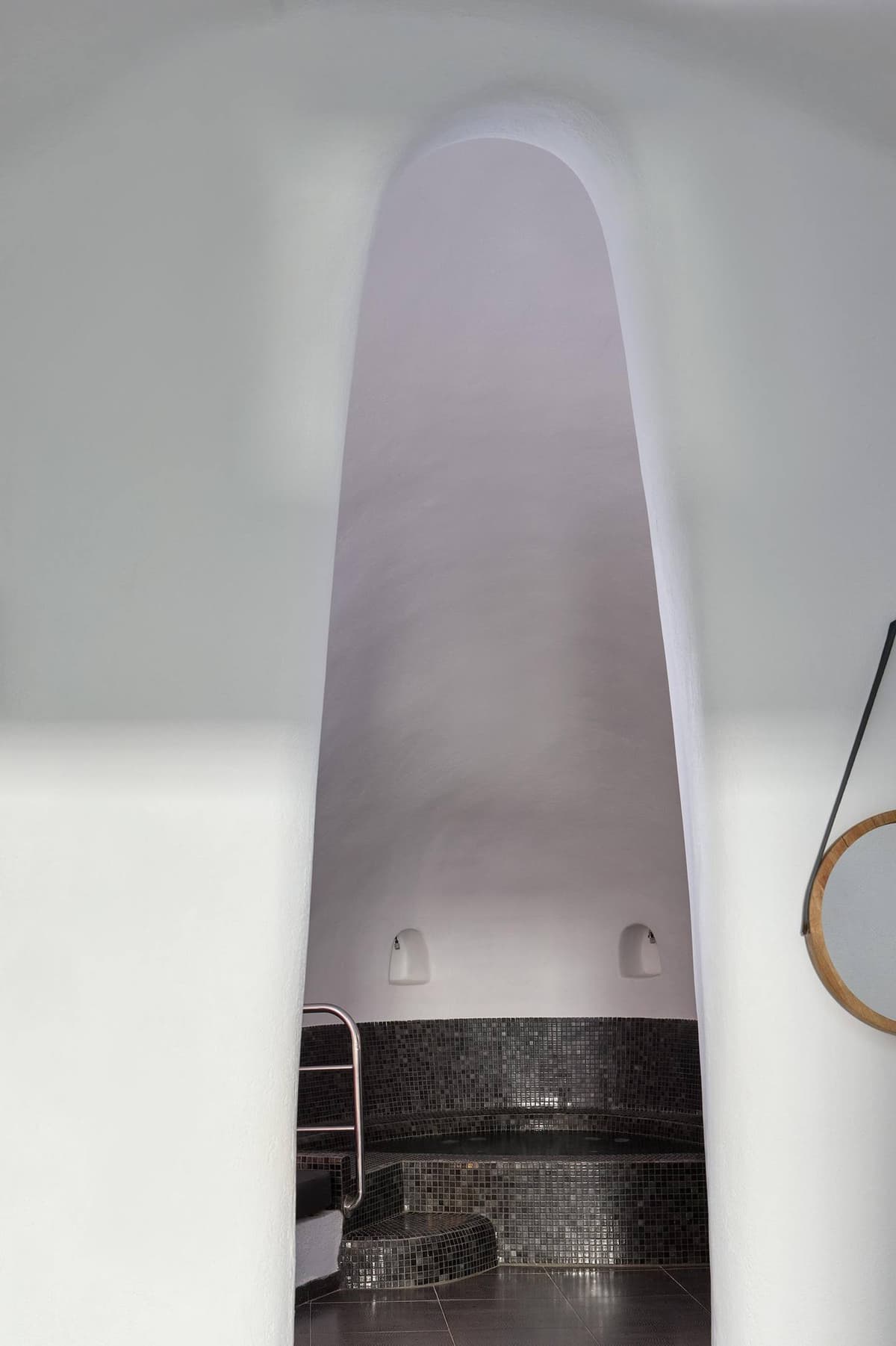
Υπόσκαφη σουίτα 70m² με εσωτερικό θερμαινόμενο τζακούζι και θολωτά ταβάνια.
Δείτε το δωμάτιο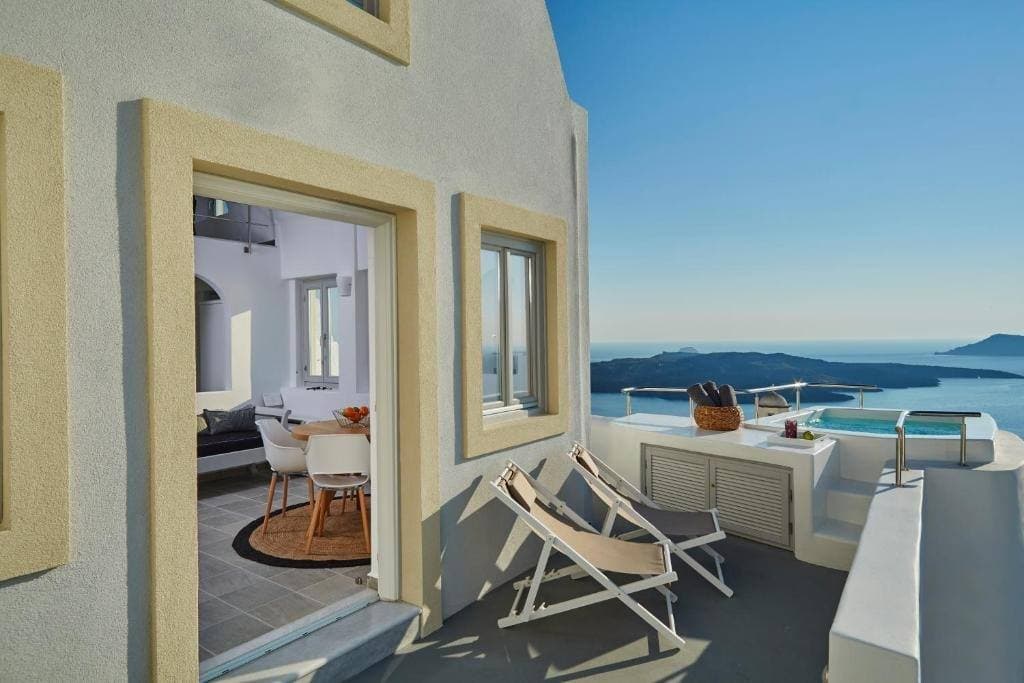
Θερμαινόμενο εξωτερικό τζακούζι στο δικό σας μπαλκόνι, με θέα την καλντέρα και τη δύση.
Δείτε το δωμάτιοYour Stay Awaits
Experience Santorini from a cave suite perched on the caldera edge in Fira.