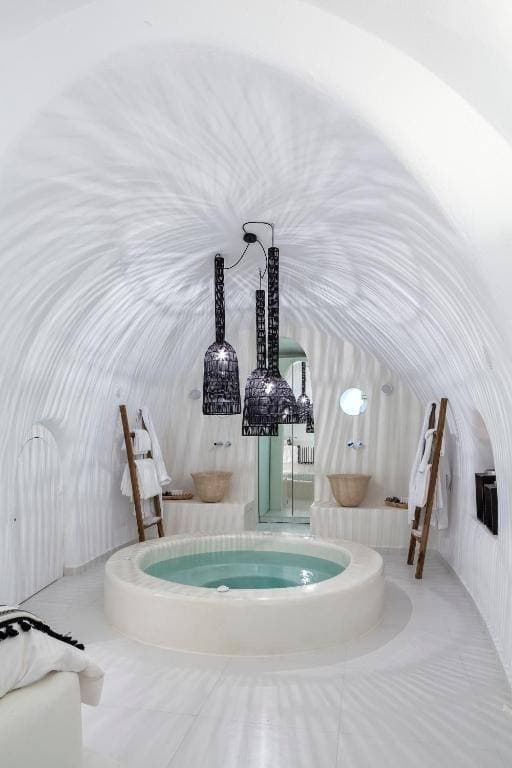
50m²
Σουίτα Μήνα του Μέλιτος
Υπόσκαφη σουίτα με βεράντα προς την καλντέρα, για ζευγάρια και ξεχωριστά ταξίδια.
Δείτε το δωμάτιο
Beaches
By Fanis Kafouros, Owner since 2006 · Published · Updated
Yes, you can swim here. And it's great. But it's not what you're picturing. Forget long ribbons of white sand sloping into shallow turquoise water. That's not Santorini.
Short answer: Yes, you can swim in Santorini, best from June to October when the sea is warmest. Expect volcanic sand or pebbles, not white sand, and water that gets deep quickly. For easy swimming, head to Perivolos, Perissa or Kamari. For deep, clear water, swim off the rocks at Amoudi Bay below Oia. The hot springs by the volcano are warm but murky and sulfurous, so wear a dark swimsuit.
Forget long ribbons of white sand sloping into shallow turquoise water. That's not Santorini. What you get instead is volcanic black-sand beaches where the sea floor drops off quickly, rocky caldera coves with deep blue water right at the cliff base, and one bay where the sea is warm because there's a literal volcano underneath it.
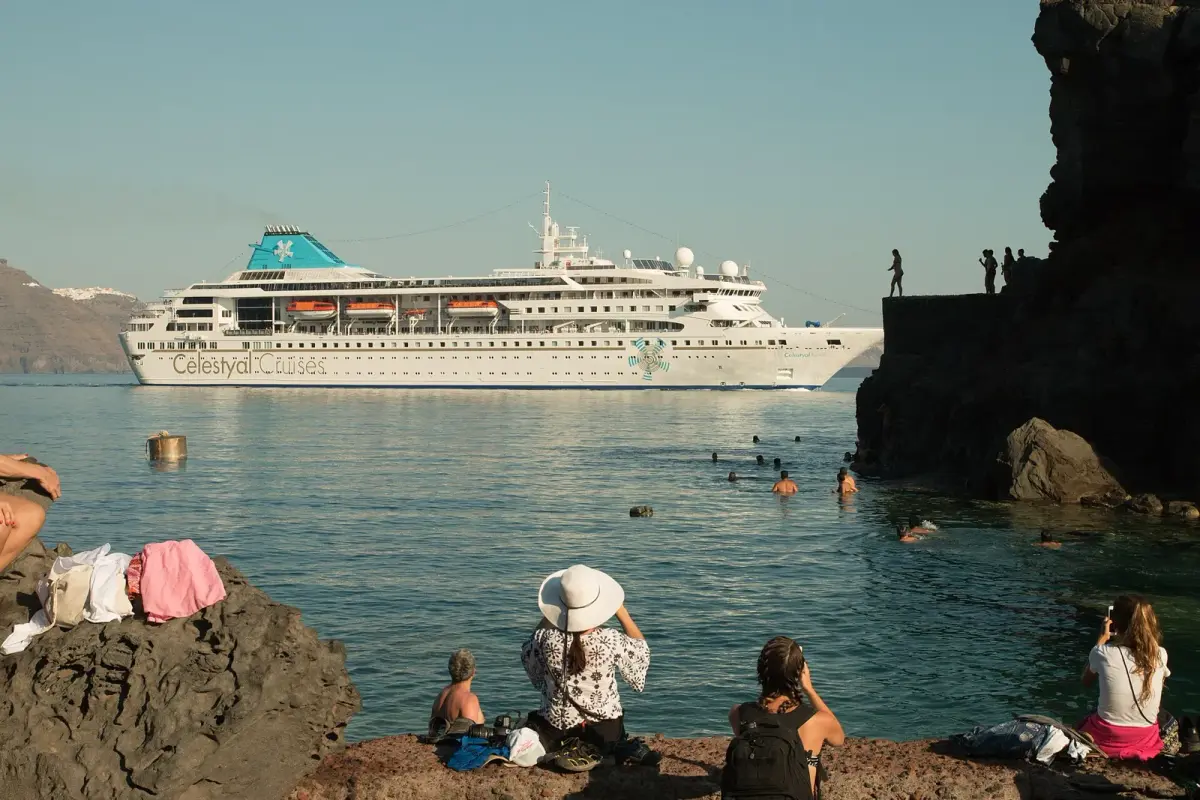
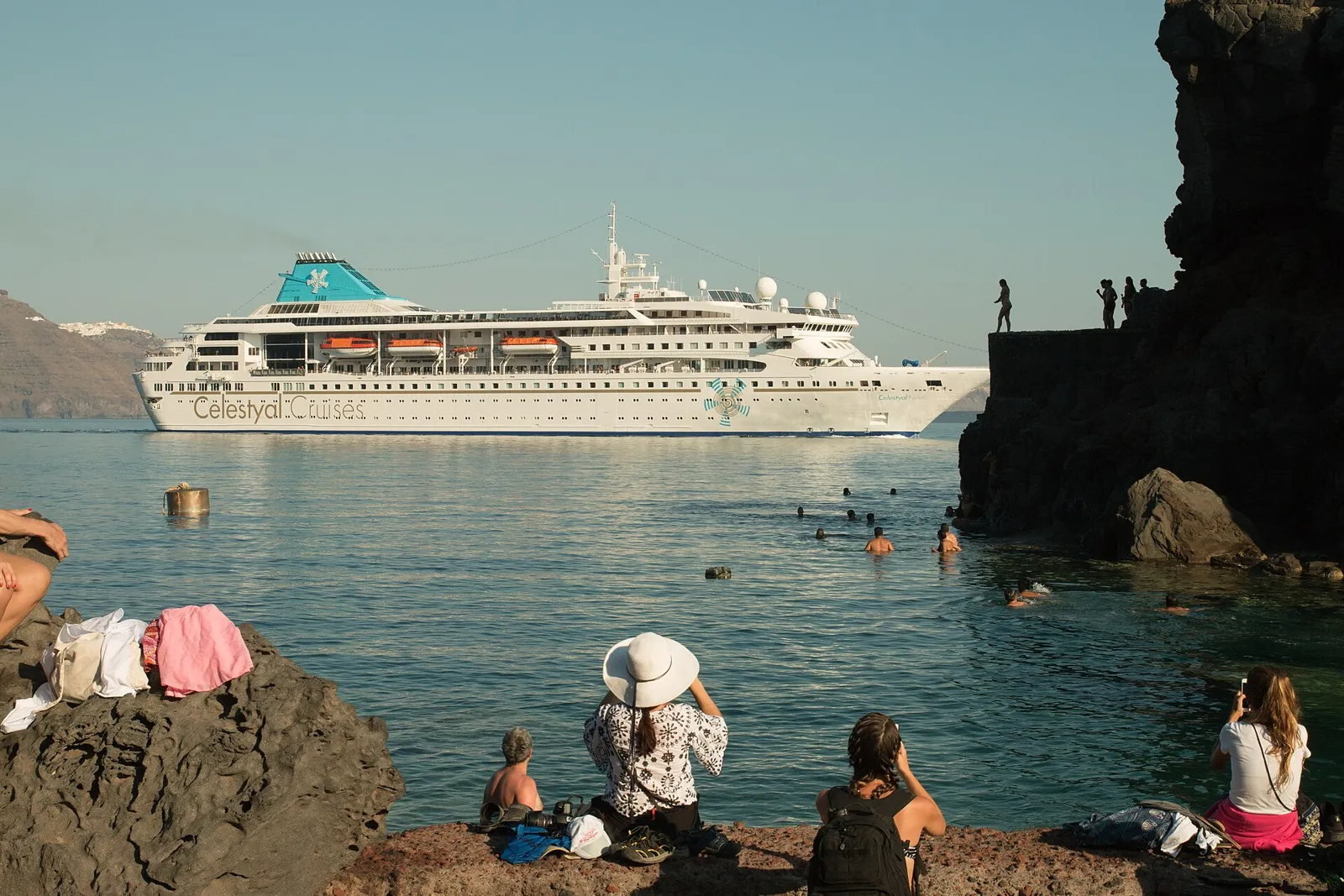 Photo: Zde, CC BY-SA 4.0, via Wikimedia Commons
If you're visiting Santorini's beaches and you actually want to spend time in the water, not just pose at the shoreline for a photo, this guide covers all of it. Best swimming beaches, when the water is warm enough, where to snorkel, the truth about the hot springs, and the safety details that most travel blogs skip.
We're based at Aroma Suites in Fira. Our guests ask about swimming conditions constantly, and this is the advice we give them.
The Aegean around Santorini follows a simple pattern: cold winters, a gradual spring warmup, warm summers, and an autumn that stays swimmable longer than most people expect. The sea bottoms out around 15C (59F) in February and peaks around 25C (77F) in August. For every month, see our Santorini sea temperature by month guide.
June through October is the window. Water sits between 22-25C (72-77F), warm enough to float around comfortably for an hour. If you're here during the best time to visit Santorini, swimming won't be a problem.
May is the question mark. About 19C (66F). Feels cold for the first minute, then your body adjusts and it's fine. By late May you're pushing 20C, comfortable if you don't mind a brisk first dip.
One thing people underestimate: Santorini weather matters more than the calendar. Meltemi winds blow from the north from mid-July through August. The north-facing beaches, like Baxedes and Colombo, take the brunt, and Kamari can get choppy. Perissa, sheltered by Mesa Vouno, and the south-facing spots, Perivolos and Vlychada, stay calmer.
Not every beach here is good for swimming. Some are rocky, some have tricky currents, and some are more about the scenery than actually getting wet. These are the ones where swimming is the point.
For most swimmers, this is the best all-around beach on the island.
Dark sand, gentle entry, depth that increases gradually. The sea floor is sandy, so you walk in barefoot without worrying about stepping on volcanic rocks. Water stays calm most days. Beach clubs line the shore, where a pair of sunbeds with an umbrella runs around EUR 15-25 at the standard spots, with the polished front-row clubs charging considerably more. Over a kilometer of beach, so even in peak August there's space.
Best for: Long swims, families, people who want beach club amenities right there
Just north of Perivolos. Perissa is very similar, black volcanic sand, organized facilities, clear water with a smooth entry. Has more of a resort-town feel with hotels and restaurants right behind the beach.
The Mesa Vouno rock formation at the north end works as a natural windbreak. On windy days, Perissa stays calmer than Kamari because of it.
Best for: Swimmers who like having restaurants and bars within walking distance
Kamari catches more wind from the north, and the beach is volcanic pebbles instead of sand. Rougher on bare feet, bring water shoes, but the water is often clearer because there's less sand getting kicked up.
What Kamari does well is organization. Lifeguards in summer. Marked swimming zones. Accessible boardwalks. If you want a lifeguard nearby, this is your spot.
Best for: Families, organized swimming, snorkeling off the rocks at the southern end
Completely different experience. Amoudi Bay is at the bottom of Oia's caldera cliffs. Getting there means walking down roughly 278 steps from Oia village. The water is deep, clear, and cold, even in summer, because you're swimming in the caldera itself.
Locals jump off the flat rocks on the far side of the bay. Water is 5 to 8 meters deep right from the edge, so beginners and small children should stay out. But if you're a strong swimmer? The visibility is extraordinary. You can see the volcanic rock formations on the sea floor from the surface.
Best for: Confident swimmers, cliff jumping, that one swim you'll tell everyone about
Vlychada doesn't get mentioned for swimming as often, but the water is perfectly fine. Sandy entry, usually calm, and those unreal lunar-landscape cliffs rising behind you. What bumps it down the list is the wind, Vlychada faces south-southwest, which is normally sheltered, but on certain days crosswinds roll in and chop the water up.
The real draw: you'll often have massive stretches of beach to yourself. Vlychada doesn't attract the crowds Perivolos and Perissa do, which is also why it shows up in our guide to quiet Santorini beaches for couples.
Naturists use the quieter stretches of Colombo, and of Vlychada east of the marina, though neither beach is officially designated.
Best for: Swimming in peace, combining a dip with dramatic volcanic scenery
A small, rocky and remote cove, a 15-minute walk down a steep path from the road near Akrotiri. The reward is crystal-clear water, no crowds and total silence. Entry is over rocks, so water shoes are non-negotiable. There's a taverna by the car park, but nothing on the beach itself: no sunbeds, no shade, no lifeguard.
Best for: Experienced swimmers who want to be left alone
East coast, near the airport. No caldera views or dramatic scenery, but Monolithos has the shallowest, calmest water on the island. The sand is lighter (more grey than black), water stays shallow for 20-30 meters out, and there's a playground area nearby. If you have young kids and swimming safety is the priority, this is the one.
Best for: Families with young children, shallow calm water
Santorini isn't a snorkeling destination. The volcanic geology means less coral and marine diversity than Crete or the Dodecanese. But there are a few spots worth bringing a mask.
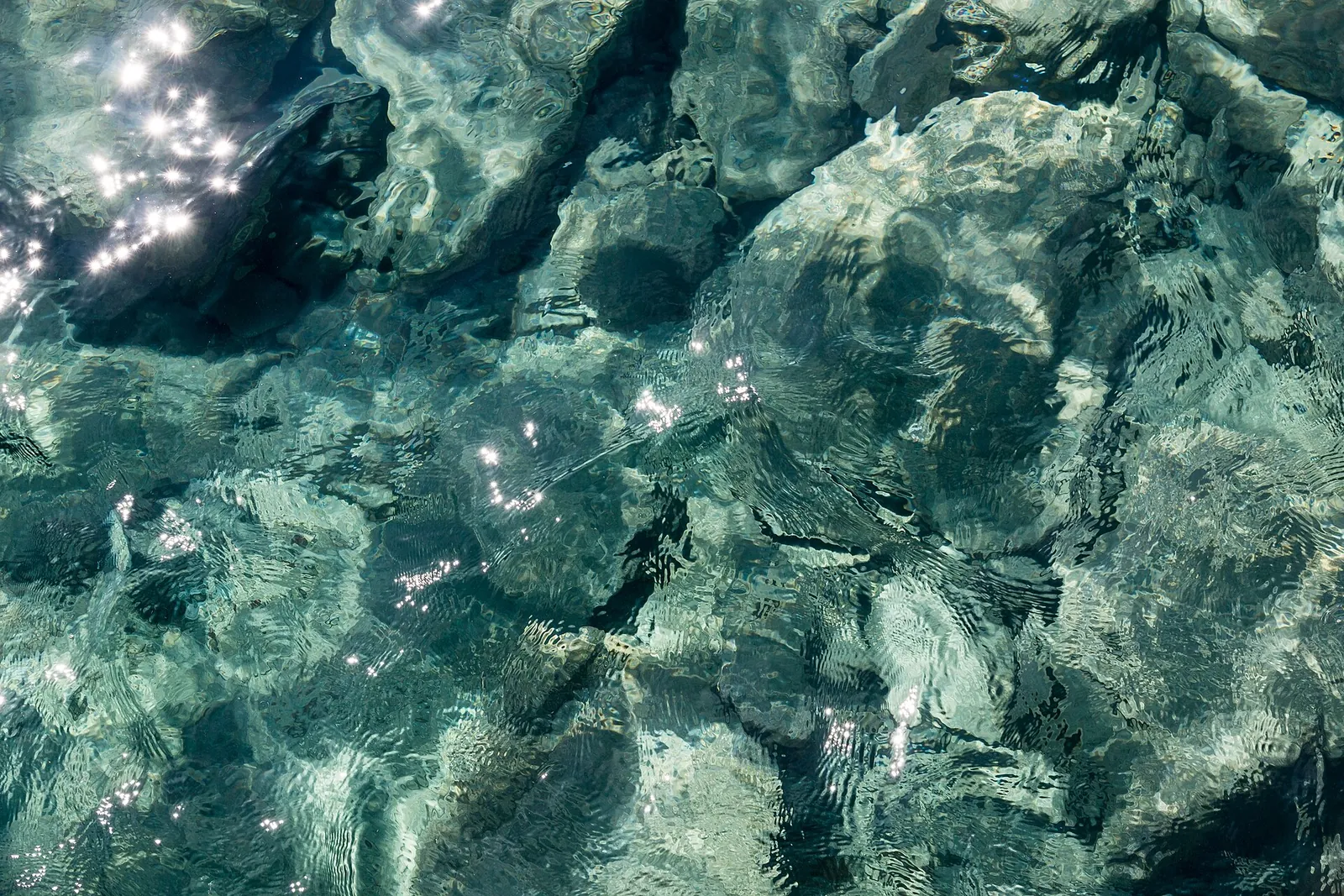 Photo: Dietmar Rabich, CC BY-SA 4.0, via Wikimedia Commons
Kamari Beach, southern rocks: Where the beach hits Mesa Vouno, volcanic boulders create an underwater habitat. Sea urchins, small fish, the occasional octopus if you're patient, and interesting rock formations. Visibility is excellent on calm days.
Amoudi Bay: The caldera water is absurdly clear. No tropical fish, but the volcanic rock walls dropping into deep blue are dramatic in a way that's hard to describe. Stay near shore and the rock formations.
White Beach and Red Beach (by boat): Take the water taxi from Kamari to Red Beach or White Beach. The rocky entries at both have decent snorkeling. The red and white volcanic formations continue underwater.
Guided snorkeling tours run from Vlychada Marina and Ammoudi Bay. They take you to spots you can't reach from shore, usually along caldera walls or near the volcanic islets. EUR 50-80 per person for a half-day, equipment included.
What you'll see: Don't come expecting tropical reefs. Santorini snorkeling is about volcanic geology, rock formations, sea urchins, small Mediterranean fish (damselfish, wrasse, parrotfish), and if you're lucky, an octopus.
The hot springs are probably the most over-hyped and least explained attraction on the island.
The hot springs sit off Palea Kameni, next to the Nea Kameni volcano. You take a boat from Fira's old port (or Athinios) to the volcanic islet of Nea Kameni. After hiking the crater, the boat sails to a small cove near Palea Kameni where underwater vents heat the seawater. You jump off the boat and swim 50-100 meters to where it gets warmer. Near the vents the water reaches about 30-35C. In summer, when the sea is already warm, the difference is noticeable but not dramatic.
What the brochures leave out:
Tour costs: EUR 25-35 per person for a half-day volcano and hot springs trip from Fira. Full-day tours adding Thirassia island start around EUR 37 and run to about EUR 65 with an Oia sunset stop, plus the EUR 5 volcano entry. Catamaran cruises from Vlychada or Ammoudi also stop at the springs and include meals, about EUR 100-180 per person.
Worth it? Once. The volcano hike is interesting, and swimming in volcanically heated seawater is unusual. But manage your expectations. This is a natural phenomenon, not a spa.
The caldera side of Santorini, the west coast, where Fira, Imerovigli, and Oia sit on the cliffs, is mostly vertical rock plunging into deep water. Other than Amoudi Bay, there's almost nowhere to swim from shore.
Most people experience caldera swimming from boat tours. The depth ranges from 50 to over 300 meters. Water is noticeably colder than the east coast. Want to try it? Book a sunset catamaran cruise. The crew anchors in sheltered spots and tells you where it's safe to jump in.
Most beaches here don't have lifeguards. Kamari and Perissa are the exceptions during summer. Keep these things in mind.
Currents: South-coast beaches (Perivolos, Perissa, Vlychada) are generally calm. The caldera side has stronger currents. If you feel a pull, swim parallel to the shore, not against it.
Entry types: Know what you're walking into.
Wind: Meltemi blows hard from the north, mid-July through August. North-facing beaches (Baxedes, Colombo) get the worst waves, and Kamari gets choppy. Check the wind direction before you drive somewhere. Pick a sheltered beach on gusty days.
Sea urchins: You'll find them on almost every rocky shoreline, so water shoes aren't optional at rocky beaches. A spine in the foot is painful and can cost you a beach day or two.
Sun exposure: The Santorini sun is fierce, and it bounces off dark volcanic sand. By midday in August the black sand is too hot to walk on barefoot. Wear sandals or water shoes on the sand. Sunscreen before you swim. Reapply after every swim.
No facilities at remote beaches: Caldera Beach, White Beach (without the boat bar), and several small coves have zero shade, zero fresh water, and nobody around if something goes wrong. Don't swim alone at these spots.
Santorini isn't the easiest island for kids in the water. But it works if you pick the right beach.
Young children: Monolithos. Shallow water, gentle waves, sandy bottom, a playground nearby. It's not scenic. But your kids can wade safely, and that matters more.
Older kids (8+): Perissa and Perivolos. Smooth water entry, lifeguards at Perissa in summer, and beach clubs rent floating toys.
Skip with kids: Amoudi Bay (278 steps down, deep water, no easy exit). Caldera Beach (no facilities, rocky entry). White Beach (boat access only).
Packing list for a swimming day:
Yes, swimming is safe and enjoyable at most Santorini beaches from June through October. The best swimming beaches are on the south and east coasts: Perivolos, Perissa, Kamari, and Monolithos. Water temperatures reach 24-25C (75-77F) in summer. The caldera side (west coast) has limited beach access and deep water, so swimming there is mostly from boats or at Amoudi Bay.
Santorini sea temperature ranges from 15C (59F) in February to 25C (77F) in August. Swimming is comfortable from June through October when temperatures stay between 22-25C (72-77F). May (around 19C) and November (around 20C) are borderline months. Our sea temperature guide has every month.
Santorini offers decent snorkeling but nothing comparable to tropical destinations. The best spots are the rocky southern end of Kamari Beach, Amoudi Bay, and the areas around Red Beach and White Beach. You'll see volcanic rock formations, sea urchins, small Mediterranean fish, and occasional octopus. Guided snorkeling tours (EUR 50-80 per person) take you to better spots along the caldera walls.
The volcanic hot springs near Palea Kameni are worth visiting once. Near the vents the water reaches about 30-35C, warmed by underwater volcanic activity. Tours cost EUR 25-35 and usually include a volcano crater hike. The water is murky and sulfurous (not crystal clear), and the swim from boat to shore is 50-100 meters. Wear a dark swimsuit because the sulfur stains light fabrics.
Monolithos Beach is the best for young children, with shallow calm water and a sandy bottom. For older kids, Perissa and Perivolos work well. Perissa has lifeguards during summer months. Avoid Amoudi Bay, Caldera Beach, and White Beach with children due to deep water, difficult access, and lack of facilities.
Swimming directly in the Santorini caldera is possible but limited. Amoudi Bay below Oia is the main caldera swimming spot, with deep, clear, cold water accessed from rocks. Caldera Beach near Akrotiri, below the village of Plaka, is the other one you can reach on foot. Most of the remaining caldera coastline is vertical cliffs with no beach access. Most people experience caldera swimming from catamaran cruises or sailing tours that anchor in sheltered spots. If you stay with us at Aroma Suites in Fira, reception can book the cruise for you.
Σχεδιάζετε ταξίδι στη Σαντορίνη;
Αποκτήστε τον οδηγό μας
Τοπικές συμβουλές, κρυμμένα σημεία και αποκλειστική έκπτωση απευθείας κράτησης, κατευθείαν στο inbox σας.
Μείνετε μαζί μας
Έξι δωμάτια και μία ιδιωτική βίλα στην καλντέρα, στο κέντρο της Φηράς. Η απευθείας κράτηση περιλαμβάνει κρασί για διαμονή 3+ νυχτών και δωρεάν μεταφορά από το αεροδρόμιο για 4+ νύχτες.
Υπόσκαφη σουίτα με βεράντα προς την καλντέρα, για ζευγάρια και ξεχωριστά ταξίδια.
Δείτε το δωμάτιο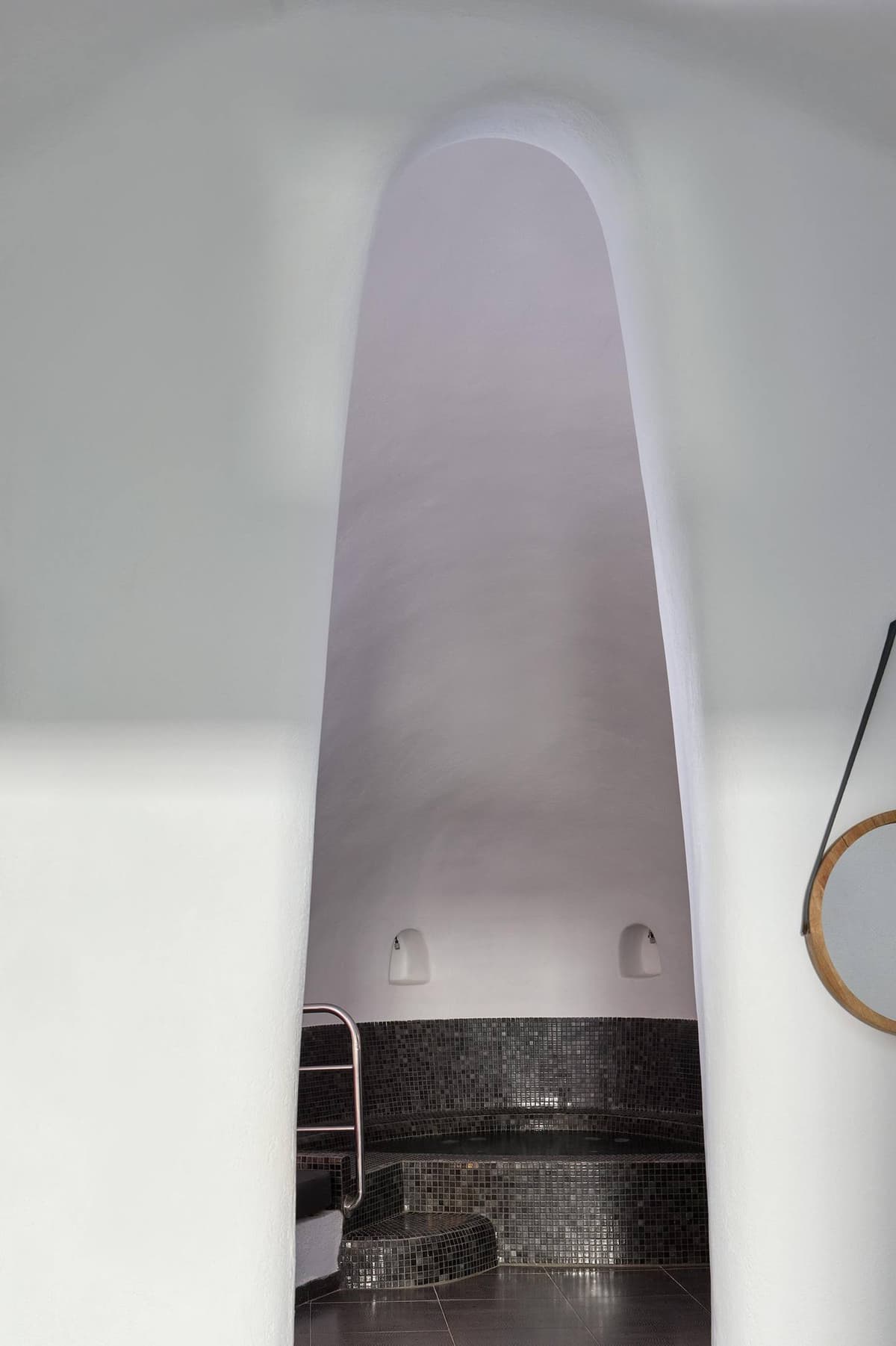
Υπόσκαφη σουίτα 70m² με εσωτερικό θερμαινόμενο τζακούζι και θολωτά ταβάνια.
Δείτε το δωμάτιο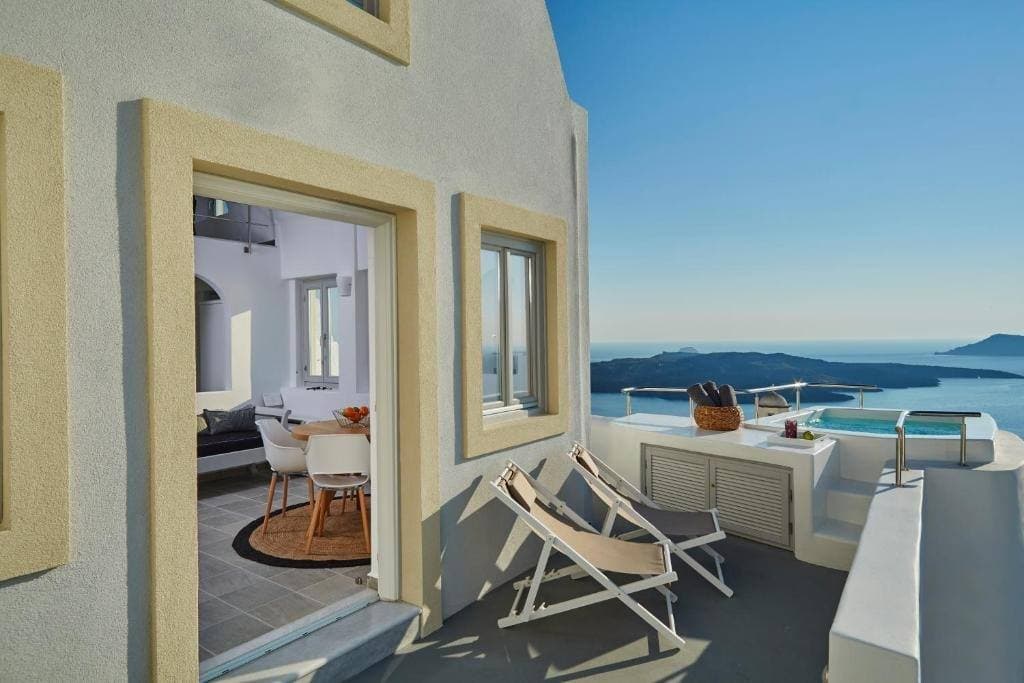
Θερμαινόμενο εξωτερικό τζακούζι στο δικό σας μπαλκόνι, με θέα την καλντέρα και τη δύση.
Δείτε το δωμάτιοYour Stay Awaits
Experience Santorini from a cave suite perched on the caldera edge in Fira.