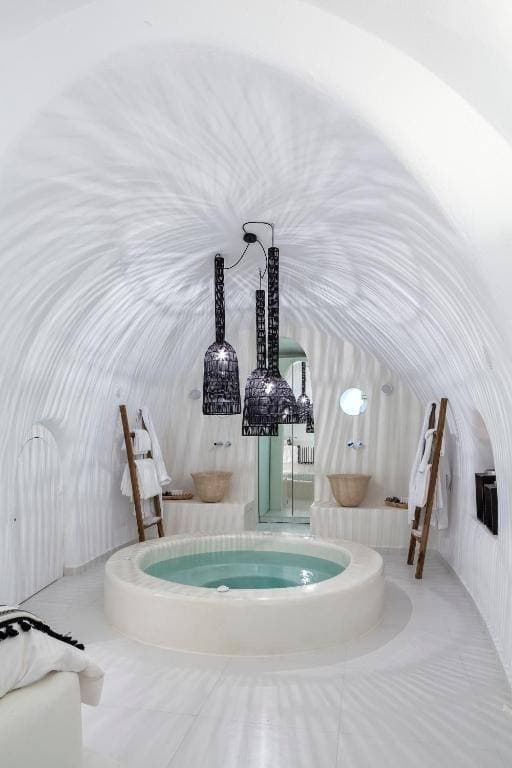
50m²
Σουίτα Μήνα του Μέλιτος
Υπόσκαφη σουίτα με βεράντα προς την καλντέρα, για ζευγάρια και ξεχωριστά ταξίδια.
Δείτε το δωμάτιο
Things to Do
By Fanis Kafouros, Owner since 2006 · Published · Updated
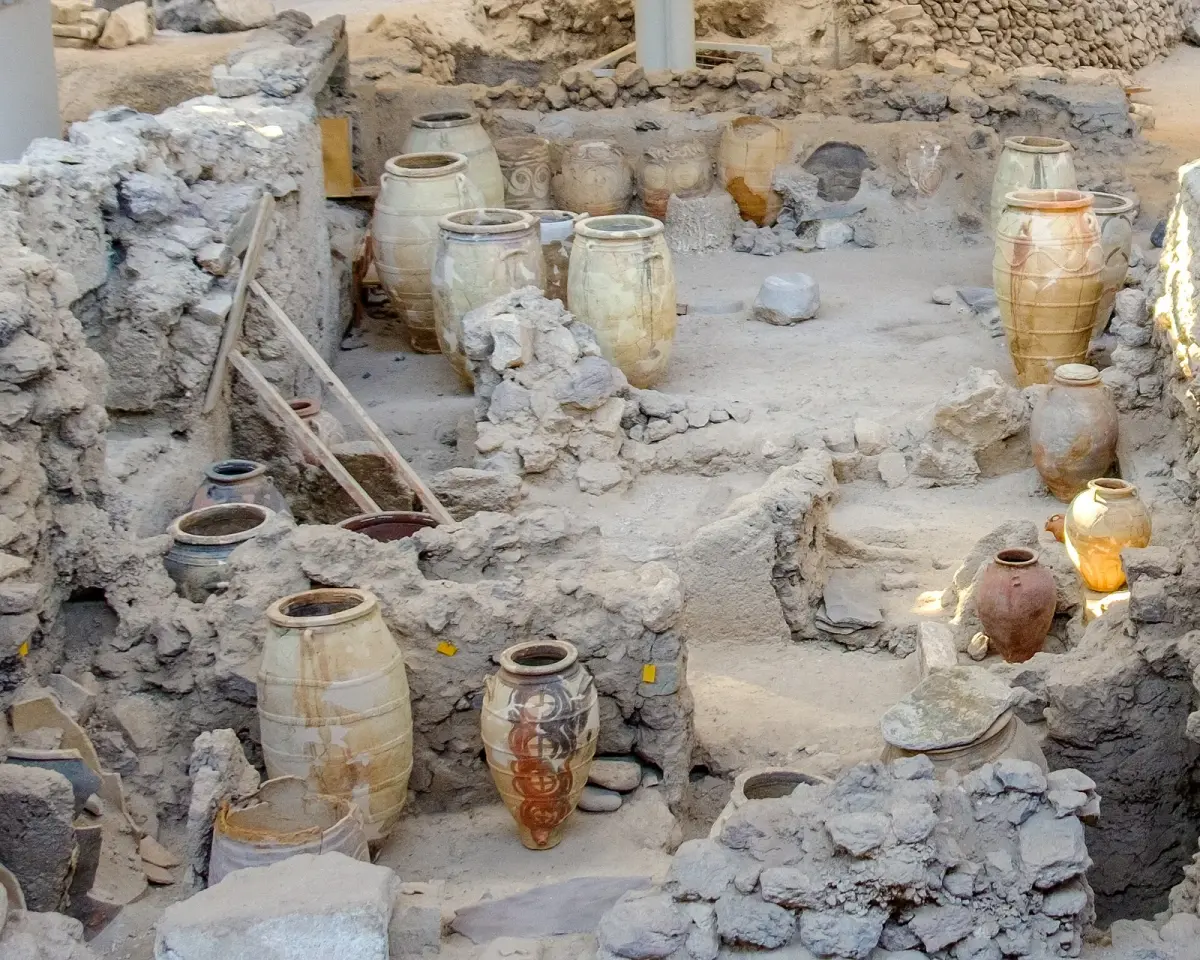
Most visitors to Santorini come for the sunset and the caldera. They leave never knowing that beneath the modern village of Akrotiri lies one of the most important archaeological sites in the Mediterranean: a sophisticated Bronze Age city, frozen in time by a volcanic eruption around 1600 BC.
Most visitors to Santorini come for the sunset and the caldera. They leave never knowing that beneath the modern village of Akrotiri lies one of the most important archaeological sites in the Mediterranean: a sophisticated Bronze Age city, frozen in time by a volcanic eruption around 1600 BC. Older than Pompeii by about 1,700 years. Better preserved in many ways. And far quieter than Oia at sunset.
If you have one half-day to spend on something that is not a beach, the Akrotiri archaeological site is our top recommendation. It changes how you see Greek history. This guide covers what to see, when to go, current 2026 hours and ticket prices, and how to combine it with Red Beach and the Akrotiri Lighthouse in one trip.
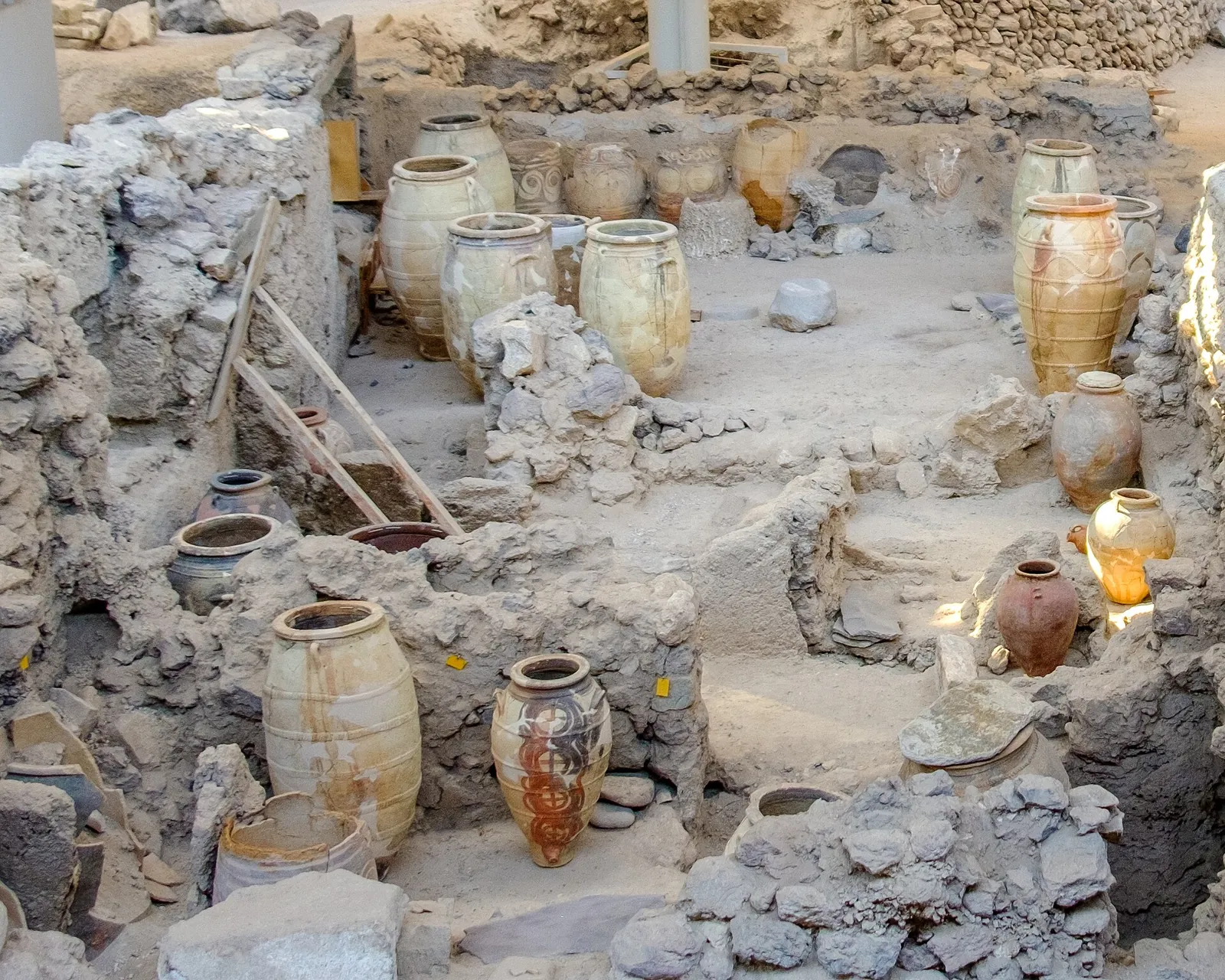 Photo: Hardscarf, CC BY-SA 4.0, via Wikimedia Commons
This article is part of our things to do in Santorini guide.
Quick Answer: Akrotiri is a Minoan Bronze Age city on the southern tip of Santorini, buried by the same volcanic eruption that created the modern caldera around 1600 BC. The archaeological site is closed on Tuesdays in summer 2026. It opens 08:00 to 20:00 on Wednesday, Friday, Saturday and Sunday, and only 08:30 to 15:30 on Monday and Thursday, with an entry fee of EUR 20 (verify current price at hhticket.gr before visiting). It is about a 15-minute drive from Fira and pairs naturally with Red Beach and the lighthouse for a full day.
Akrotiri was a major Bronze Age settlement of the Minoan civilization, the same culture that built the famous palace at Knossos on Crete. The town here had three-story buildings with hot and cold running water, indoor plumbing, sophisticated paved streets, and frescoes that rival anything from the ancient world. Trade ships from Egypt, Cyprus, and the wider Aegean called here regularly.
Then, around 1600 BC, the volcano that is now Santorini erupted in one of the largest eruptions in human history. Akrotiri was buried under more than 50 meters of pumice and ash. The eruption was so powerful that it likely caused a tsunami that reached Crete, and many archaeologists believe it contributed to the collapse of Minoan civilization itself.
The volcanic ash was a perfect preservation medium. Frescoes survived in vivid color. Pottery sat where it was last placed. Furniture left wood impressions in the ash that archaeologists later filled with plaster to recreate. Unlike Pompeii, no human remains have been found at Akrotiri, suggesting the residents had warning from the smaller earthquakes preceding the eruption and evacuated in time.
The site has been excavated since the 1960s under Greek archaeologist Spyridon Marinatos. A bioclimatic shelter now protects the entire excavation, so you walk through the dig under cover, on raised walkways, with the original Bronze Age buildings preserved exactly as they emerged from the ash.
The shelter covers about 1.5 hectares of excavated area. You walk through the actual streets of a Bronze Age town. Highlights include:
Plan 1.5 to 2 hours for the site. There are informative panels in English throughout. For deeper context, the Museum of Prehistoric Thera in Fira holds many of the frescoes and artifacts removed from Akrotiri for safekeeping. Visiting both in the same trip is the complete experience.
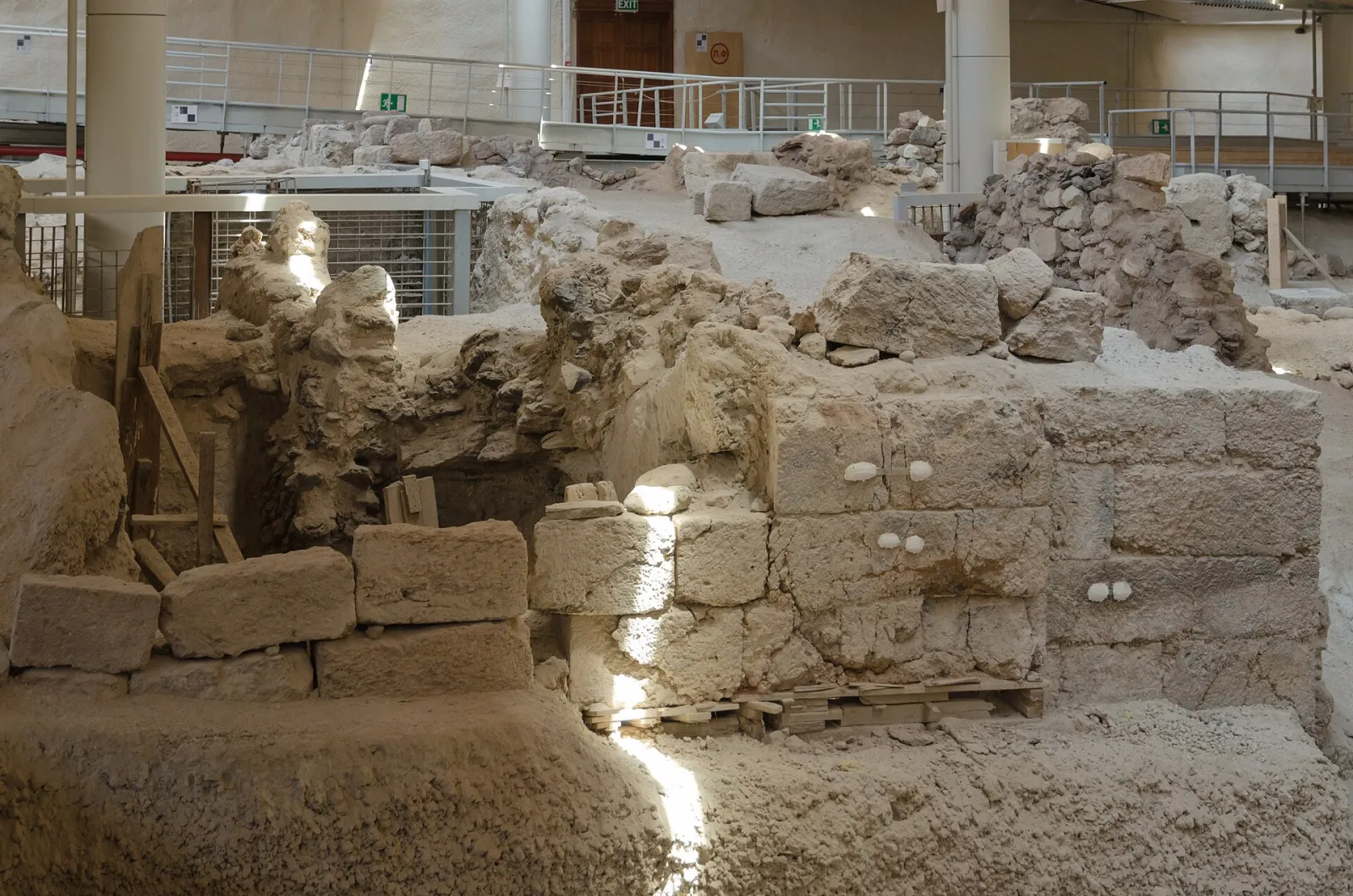 Photo: Norbert Nagel, CC BY-SA 3.0, via Wikimedia Commons
Current 2026 schedule (confirmed via the official ticketing site, but always verify the day before you go):
| Day | Hours |
|---|---|
| Monday | 08:30 to 15:30 |
| Tuesday | Closed |
| Wednesday | 08:00 to 20:00 |
| Thursday | 08:30 to 15:30 |
| Friday | 08:00 to 20:00 |
| Saturday | 08:00 to 20:00 |
| Sunday | 08:00 to 20:00 |
Last entry is 20 minutes before closing.
Entry fee (2026):
Buy tickets online at hhticket.gr to skip the queue in summer. The booth at the entrance does sell tickets but the line can hit 30 minutes on cruise ship days.
Hours and prices change. Check the official ticketing site for the day you are visiting.
From Fira: about a 15-minute drive south. The road is well-signed.
By KTEL bus: Take the bus from Fira's central bus station to Akrotiri. Departures roughly every hour in summer. About 20-30 minutes, EUR 2.20 one way. The bus stop in Akrotiri village is a 5-minute walk from the archaeological site entrance. For full transport context, see getting around Santorini. Coming off a cruise ship? Ride the cable car up to Fira first, then walk to the central bus station.
By car or ATV: Free parking just outside the site entrance. Easier if you want to combine with Red Beach and the lighthouse.
By organized tour: Several operators run combined Akrotiri + Red Beach + winery tours from Fira. EUR 50-90 per person depending on what is included. Staying with us? Reception can book a bus tour that covers the archaeological sites, a private car tour with a driver-guide, or a rental car. See our experiences.
The southern tip of Santorini packs three of the island's best non-village sights into a 5 km radius. We recommend this loop:
This is a full day, and one of the most underrated days on the island. You see archaeology, a famous beach, and a quiet sunset, in one loop.
The original Akrotiri frescoes are not at the archaeological site itself. They were removed for conservation and are now at two museums:
If you only have time for one, the Museum of Prehistoric Thera in Fira does the job (separate ticket, check current price on the ministry of culture site).
The Minoan civilization was largely lost to history because no one could read its writing (Linear A is still undeciphered). What survives at Akrotiri is closer to walking through a real Bronze Age daily life than anything else in the Mediterranean. The drainage. The cooking pots in storerooms. The signs of trade. The painted decoration of homes. It is the closest thing we have to a time-travel snapshot of a 3,600-year-old society.
It also reframes the volcano. The same eruption that wiped out Akrotiri created the modern caldera that defines Santorini today. The cliffs we live and work on, the spectacular sunset views, all of it is the rim of a collapsed volcano. Akrotiri is the human story of that geological event.
Yes. Akrotiri was destroyed around 1600 BC. Pompeii was destroyed in 79 AD. Akrotiri is roughly 1,700 years older. Both sites were preserved by volcanic eruptions, but Akrotiri represents a much earlier civilization (Minoan Bronze Age) and is considered better preserved in many respects, although smaller in scale.
The 2026 entry fee is EUR 20 for adults and around EUR 10 reduced (EU students, EU citizens over 65, under 25). A combined ticket with the Museum of Prehistoric Thera in Fira offers better value if you plan to see both. Buy online at hhticket.gr to skip the queue.
1.5 to 2 hours is enough for the archaeological site itself. Add another 1 to 1.5 hours if you also visit the Museum of Prehistoric Thera in Fira on the same trip. For the full southern Santorini day (Akrotiri + Red Beach + lighthouse), plan a full 6 to 8 hours.
The site is covered by a bioclimatic shelter that keeps it cooler than outside, but it is not air-conditioned. In peak summer (July to August) it can still reach 30°C inside. Bring water and visit in the morning if possible.
Yes. The site has clear English-language panels throughout. A self-guided visit works well for most people. If you want deeper context, audio guides are available at the entrance, or you can book a private archaeological guide in advance through specialist operators. Guests at Aroma Suites can also ask reception for a private car tour with a driver-guide.
The KTEL bus runs from Fira's central bus station to Akrotiri roughly every hour in summer, taking about 20-30 minutes and costing EUR 2.20 one way. By car, ATV, or taxi, it is about a 15-minute drive south. For wider context on transport, see our getting around Santorini guide.
Yes. If you have any interest in archaeology, ancient civilizations, or the history of the Mediterranean, Akrotiri is one of the most impressive sites in Greece outside Athens and Crete. Even visitors who do not normally do archaeology often rate it as a highlight of their Santorini trip. It is also a welcome break from beaches and sunsets on a hot day.
This guide is part of our Santorini things to do hub. For nearby attractions, see Red Beach, santorini hidden gems, and the Santorini volcano tour. For accommodation about a 15-minute drive from the site, see our hotel in Fira.
Σχεδιάζετε ταξίδι στη Σαντορίνη;
Αποκτήστε τον οδηγό μας
Τοπικές συμβουλές, κρυμμένα σημεία και αποκλειστική έκπτωση απευθείας κράτησης, κατευθείαν στο inbox σας.
Μείνετε μαζί μας
Έξι δωμάτια και μία ιδιωτική βίλα στην καλντέρα, στο κέντρο της Φηράς. Η απευθείας κράτηση περιλαμβάνει κρασί για διαμονή 3+ νυχτών και δωρεάν μεταφορά από το αεροδρόμιο για 4+ νύχτες.
Υπόσκαφη σουίτα με βεράντα προς την καλντέρα, για ζευγάρια και ξεχωριστά ταξίδια.
Δείτε το δωμάτιο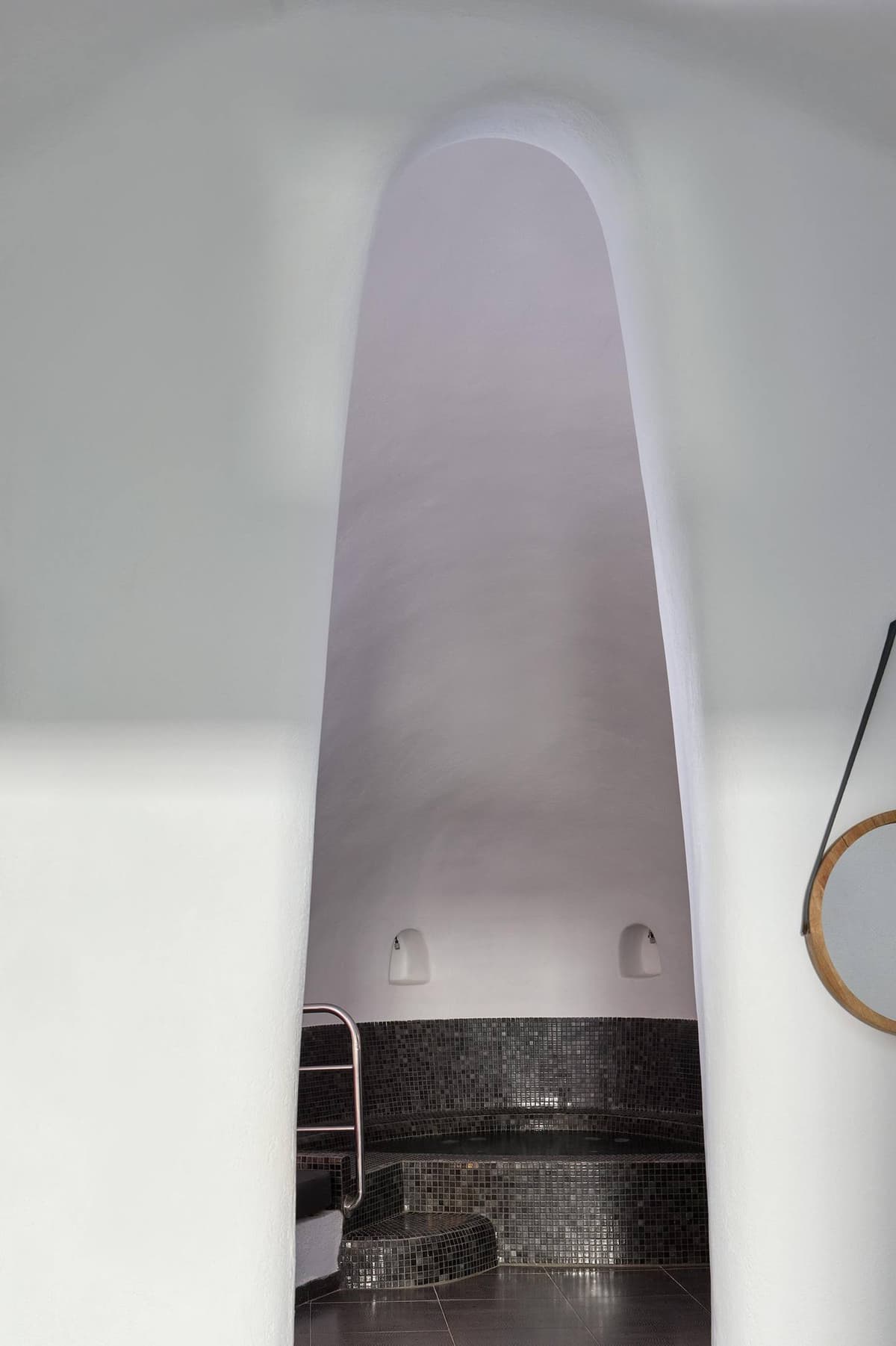
Υπόσκαφη σουίτα 70m² με εσωτερικό θερμαινόμενο τζακούζι και θολωτά ταβάνια.
Δείτε το δωμάτιο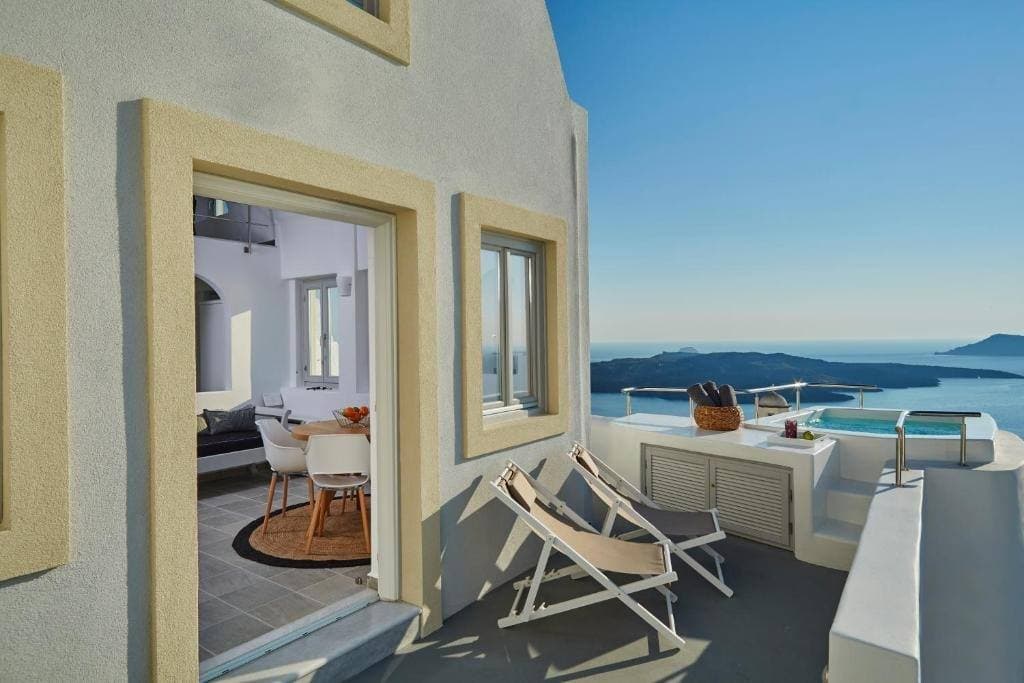
Θερμαινόμενο εξωτερικό τζακούζι στο δικό σας μπαλκόνι, με θέα την καλντέρα και τη δύση.
Δείτε το δωμάτιοYour Stay Awaits
Experience Santorini from a cave suite perched on the caldera edge in Fira.