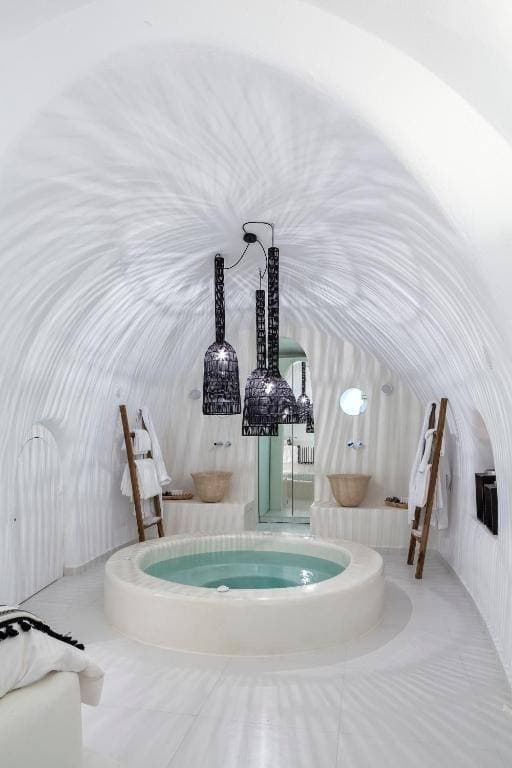
50m²
Σουίτα Μήνα του Μέλιτος
Υπόσκαφη σουίτα με βεράντα προς την καλντέρα, για ζευγάρια και ξεχωριστά ταξίδια.
Δείτε το δωμάτιο
Food & Wine
By Fanis Kafouros, Owner since 2006 · Published · Updated
Santorini doesn't just look different from the rest of Greece. It tastes different. The volcanic soil here, the same stuff that shaped those caldera cliffs, grows things you can't get anywhere else.
Short answer: Santorini's food and wine come from its volcanic soil. Order fava, tomatokeftedes, white eggplant and chlorotyri cheese at a local taverna, and drink the island's three signature wines: crisp Assyrtiko, oak-aged Nykteri and sweet Vinsanto. Book at least one winery tasting with a view. For better value and more local cooking, eat in the inland villages and the beach towns as well as on the caldera.
Santorini tastes different from the rest of Greece. The volcanic soil here, the same stuff that shaped those caldera cliffs, grows things you can't get anywhere else. Cherry tomatoes so sweet people eat them straight off the vine like candy. Fava, the island's yellow split peas, with an earthy richness you won't find in the canned kind. And then there's Assyrtiko wine, with a mineral bite that comes from 3,500 years of vines fighting to survive in volcanic rock.
This is your starting point for the full picture. We'll send you to deeper guides on wine tasting experiences, where locals eat in Fira, specific wineries, and cooking classes as we go.
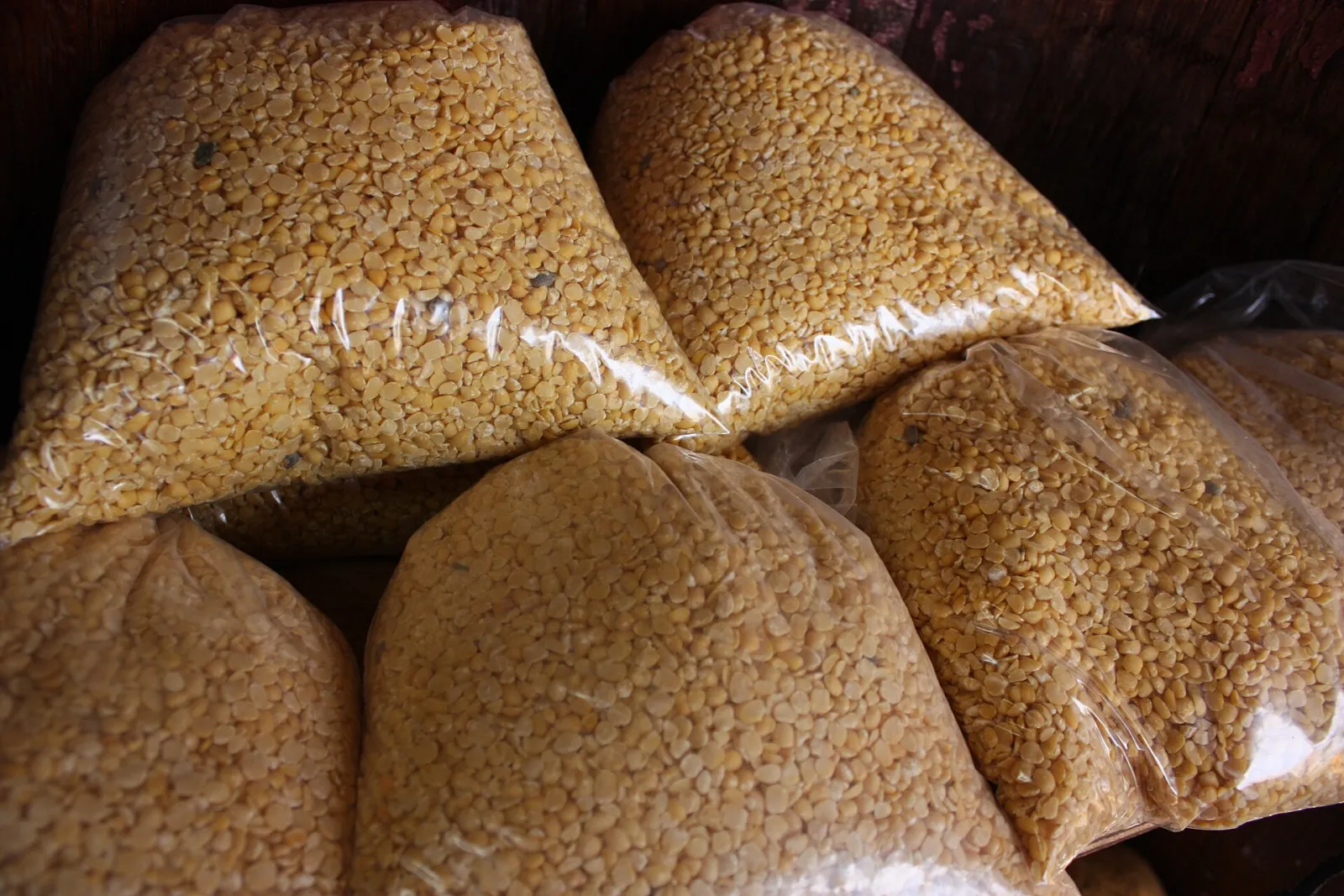 Photo: Klearchos Kapoutsis, CC BY 2.0, via Wikimedia Commons
Every Greek island does grilled fish, Greek salad, moussaka, souvlaki. Santorini has all of that. But the island sits on one of the most violent volcanic eruptions in recorded history, around 1600 BC, and that changes everything about what grows here.
The explosion left soil packed with minerals and almost completely waterless. Plants that survive develop concentrated flavors because they fight for every drop of moisture. The white eggplant is creamier, less bitter. Fava split peas grown in this ash-rich soil have a nuttiness you won't get from fava grown anywhere else on earth.
Then the wine. Santorini's Assyrtiko grapes grow in basket shapes called "kouloura," curled close to the ground to protect them from the Meltemi wind. The vines pull moisture from morning sea fog instead of rain. Some are over 70 years old, with root systems that reach deep enough to hit volcanic minerals most grapevines will never touch.
What you get is Santorini Greek cuisine that is distinctly its own thing. You'll taste the difference from Mykonos or Crete in the first few bites.
For a deep dive into each dish, where to find it, what to pay, and what to skip, read our guide to traditional Santorini food.
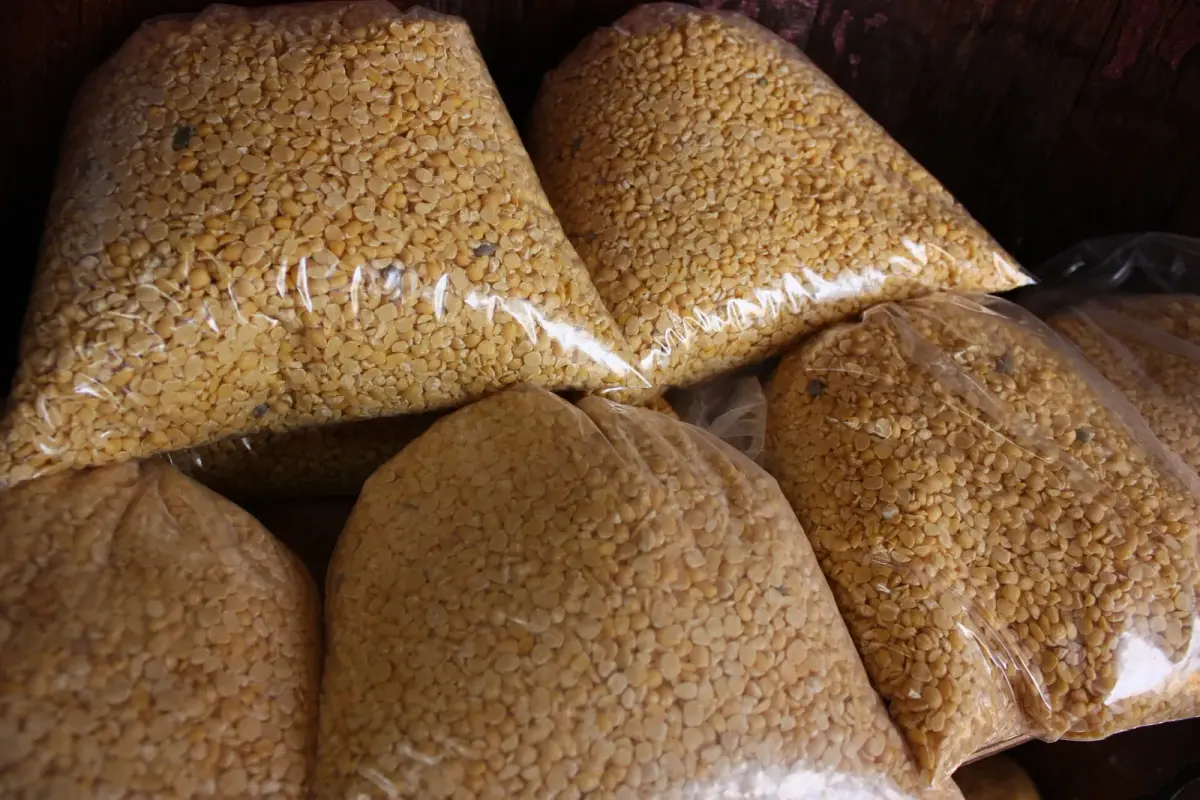
The island's signature dish. And it confuses everyone. Santorini fava is not fava beans. It's made from yellow split peas (Lathyrus clymenum), and the volcanic soil gives them a sweet, earthy flavor that's been a staple here for centuries.
Smooth puree, drizzled with olive oil, topped with capers and raw onion, sometimes a squeeze of lemon. Good fava should be creamy but not gluey, with a slight graininess. Served warm or at room temperature. EUR 6-10 at most tavernas.
Where to try it: Almost every restaurant serves fava. The best versions come from places that source locally. Mama Thira in Firostefani does an honest, unfussy version.
Santorini's cherry tomatoes are PDO-protected (Protected Designation of Origin), the EU says these specific tomatoes, grown in this specific volcanic soil, are unique. Tomatokeftedes are deep-fried fritters made from them, mixed with onion, mint, and sometimes a bit of flour. Crispy outside, soft and sweet inside.
Quality varies wildly. The best versions use fresh local tomatoes (available June through October). Off-season, many restaurants switch to sun-dried or imported. Fine, but not the same.
Cost: EUR 7-12 for a plate of 4-6 fritters.
When people ask "what is the traditional Santorini cheese?", this is the answer. Soft, tangy, spreadable. Made from goat's or sheep's milk. Similar texture to cream cheese but with a sharper, more complex flavor. Usually served alongside fava, drizzled with olive oil.
Not every restaurant has it. You won't find it in supermarkets outside Greece. If you see it on a menu, order it.
Sweeter and creamier than the purple variety, fewer seeds, almost no bitterness. Typically grilled, baked, or served in a salad with tomatoes and capers. Some restaurants stuff it with cheese and herbs.
Seasonal, summer months primarily. Don't expect it in April or November.
| Dish | What It Is | Price Range | When Available |
|---|---|---|---|
| Apochti | Cured pork loin, spiced and air-dried | EUR 8-14 | Year-round |
| Sfougato | Egg and cheese frittata, local herb version | EUR 7-10 | Year-round |
| Brantada | Cod fritters, lighter than mainland versions | EUR 8-12 | Year-round |
| Saganaki | Pan-fried cheese, sometimes with tomato | EUR 7-10 | Year-round |
| Grilled octopus | Charred tentacles, olive oil and lemon | EUR 12-18 | Year-round |
| Fresh fish (by weight) | Caught daily, varies by season | EUR 45-65/kg | Year-round (best spring/fall) |
Santorini is one of the oldest wine-producing regions on Earth. Evidence of winemaking going back to at least 1500 BC. The volcanic soil, the lack of rainfall, the Meltemi wind, they produce wines unlike anything on the mainland.
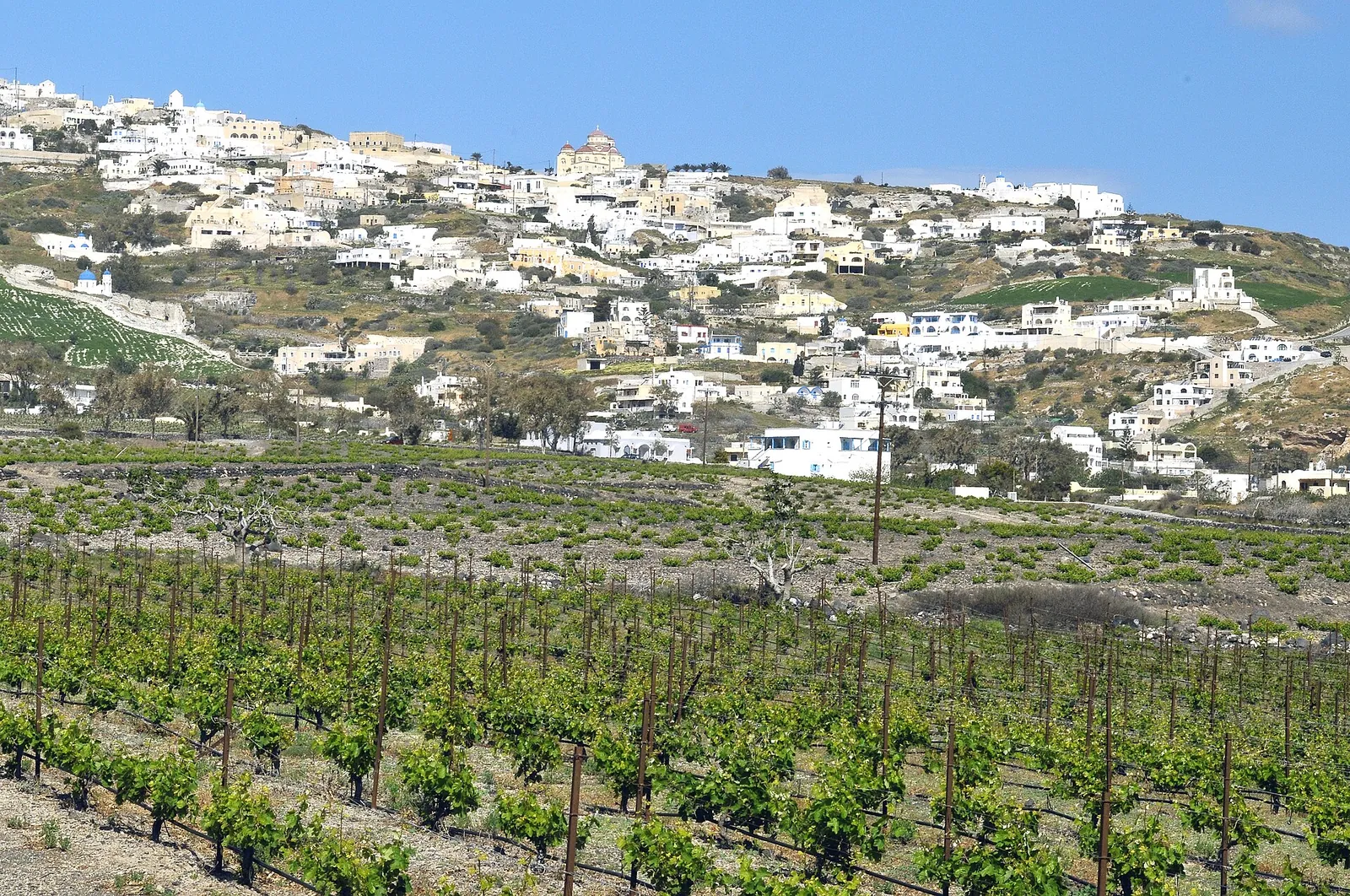 Photo: LBM1948, CC BY-SA 4.0, via Wikimedia Commons
For a deep look at the island's wineries, tasting experiences, and a full DIY wine route, read our complete wine tasting guide. Here's what you need to know right now.
Assyrtiko is the main grape. Dry white, high acidity, citrus and mineral notes, crisp finish that pairs beautifully with seafood. Most visitors try it first and end up buying bottles to take home. Assyrtiko grown on Santorini tastes different from Assyrtiko grown elsewhere in Greece, the volcanic minerals again.
Nykteri is Assyrtiko's richer cousin. Barrel-aged, fuller-bodied, notes of honey and stone fruit alongside the citrus. The name means "worked at night", winemakers traditionally harvested and pressed the grapes after dark to avoid the heat.
Vinsanto is the island's famous sweet dessert wine. Grapes are sun-dried for 10-14 days to concentrate their sugars before pressing. Deep amber, flavors of dried fruit, honey, caramel, coffee. A good Vinsanto from Estate Argyros or Sigalas is worth the EUR 15-40 tasting fee on its own.
Around 15-20 wineries open to visitors. The most popular include Santo Wines (best caldera views), Venetsanos (more intimate, excellent terrace), Estate Argyros (serious wine lovers), and Sigalas (critics' favorite, Robert Parker 90+ point scores). Our best wineries guide ranks all ten top wineries with honest reviews and tasting prices. For the full tasting experience, our wine tasting guide covers tours, routes, pricing, what to expect, and how to plan your visit. If you'd rather join a guided wine tour in Santorini, we compare the options and prices there.
Guided tour: from €140 per person in a small group, or from €500 per group private, according to Santorini Wine Adventure's published prices (includes transport, several wineries, tastings and tapas) Self-drive: EUR 30-50 total (tasting fees only, you drive between wineries) Private driver: EUR 150-250 (dedicated driver, custom itinerary)
| Wine | Pairs With | Why It Works |
|---|---|---|
| Assyrtiko (dry, mineral) | Grilled fish, shrimp, seafood pasta, fava | Acidity cuts through richness, mineral notes match the sea |
| Nykteri (barrel-aged, fuller) | Grilled octopus, chicken, pork, aged cheese | Body matches heavier proteins |
| Vinsanto (sweet dessert) | Baklava, chocolate, dried fruit, strong cheese | Sweetness balances intense flavors |
| Rose (from Mandilaria grape) | Tomatokeftedes, salads, light appetizers | Fruit and acidity work with tomato-based dishes |
Insider tip: Ask for a glass of Assyrtiko with your fava. The most Santorinian pairing you can have. Most restaurants will happily recommend a local producer.
Fira is the capital. Widest selection. Everything from fine dining (Selene) to genuine local spots with generous portions and fair prices (Mama Thira in Firostefani, Naoussa). For the full breakdown, specific restaurants, pricing, what to order, see our Fira restaurant guide.
If you're staying at Aroma Suites, every restaurant in Fira is within walking distance. Different spot each night, no taxis, no driving.
What dinner costs in Fira: Casual taverna dinner for two with wine: EUR 50-70. Caldera-view fine dining for two: EUR 120-200+.
Oia leans higher-end with sunset views. Expect to pay more than for equivalent quality in Fira. Ambrosia and Lycabettus are the standouts for a special occasion. Excellent food, but you're paying a premium for the Oia sunset positioning.
For something more relaxed, walk down the roughly 278 steps to Amoudi Bay. The tavernas at the bottom, Ammoudi Fish Tavern, Sunset Ammoudi, serve grilled fish and octopus right at the water's edge. Different experience entirely, and the portions tend to be more generous.
Quieter than Fira or Oia. Some good restaurants that don't get the same traffic. In Imerovigli, Mezzo serves Mediterranean-Greek plates from a restored Cycladic mansion above the caldera, with sweeping sunset and volcano views, while Avocado works for healthier options, also with caldera views.
Both villages connect to Fira by the caldera walking path. If you're based in Fira, you can walk to dinner, about 15 minutes to Firostefani, about 40 to Imerovigli.
Completely different vibe on the eastern coast. More casual, lower prices, younger crowd. Kamari has the most variety, tavernas lining the waterfront. Perissa and Perivolos are more beach-bar oriented. Fresh fish generally costs less here than on the caldera side.
Good for a beach day lunch. Not fine dining. A seafood platter for two at a Kamari waterfront taverna runs about EUR 35-50 with wine, versus EUR 80-120 on the caldera side.
This is where you go for authentic Greek food without the tourist markup. Pyrgos has a handful of tavernas in the village square serving traditional dishes at honest prices. Megalochori is quieter still, family-run places where the menu changes based on what's fresh.
If you want to eat Santorini cuisine the way locals eat it, these villages are your best bet. EUR 30-45 for two with wine.
Half the fun is bringing some of it home.
Assyrtiko wine, the obvious choice. Buy at wineries (EUR 10-18 per bottle) not airport shops (EUR 15-25 for the same bottle). Estate Argyros, Sigalas, and Gavalas all sell directly and will pack bottles for travel. Most airlines allow wine in checked luggage if packed properly.
Vinsanto makes an excellent gift. A 375ml bottle costs EUR 15-30 at the winery. Unique to Santorini. Most people outside Greece have never tasted it.
Sun-dried cherry tomatoes, available at local shops and the tomato factory in Vlychada. EUR 4-8 for a bag, light enough to pack easily. Look for ones labeled "Santorini" specifically. Generic Greek sun-dried tomatoes are not the same.
Fava (dried split peas) travels well, easy to cook at home. EUR 3-5 per bag at any local shop.
Caper leaves pickled in vinegar, a Santorini specialty you won't find in most supermarkets abroad. EUR 3-6 per jar.
Where to shop: Skip the tourist shops on Fira's main street. Small grocery stores in Pyrgos and Megalochori stock local products at better prices. The Tomato Industrial Museum at the Santorini Arts Factory in Vlychada has a shop selling local tomato products.
Santorini food tours run 3-4 hours, typically stopping at 4-6 locations: a winery, a local producer (tomato factory, fava producer, or cheese maker), and 2-3 restaurants for tastings. Good way to cover ground quickly and hear the story behind what you're eating.
Guided food tours: EUR 80-130 per person Private food and wine tours: EUR 200-350 per person
Most tours hit the inland villages, Pyrgos, Megalochori, where you see traditional production methods and taste straight from the source. The better tours include transport, all food and wine, and a guide who actually understands the volcanic terroir connection.
Worth it? If you're spending fewer than 4 days on the island, yes. A food tour covers a lot of ground in one afternoon and gives you context you'd miss on your own. Five or more days? You can find the same spots independently.
Santorini cooking classes teach you to make traditional dishes, fava, tomatokeftedes, sfougato, using local ingredients. Most include a market or farm visit, the cooking session, then eating everything you made with local wine.
Group classes: EUR 95-240 per person (3-4 hours) Private classes for couples: EUR 200-600 total
April through October, with peak-season availability daily. Book at least a week ahead in July and August.
Greek hotel breakfast is different from what most visitors expect:
Breakfast at caldera-view restaurants in Fira runs EUR 8-15 per person. Obelix Cafe is a popular spot with good coffee and a relaxed feel. Pelican Kipos, with 4,600+ reviews and a 4.7 rating, is another solid option.
Honest answer: it depends entirely on where and how you eat.
Caldera-view restaurants charge a premium for the view. A main at the top fine-dining spots runs EUR 25-45. You're paying for location as much as food. Worth it for one or two special dinners. Every meal on a caldera terrace adds up fast.
Tavernas and casual spots in Fira and the beach towns are more reasonable. Mains EUR 12-22, portions usually generous. Two people, house wine carafe: EUR 40-60.
Gyros and street food are the best value. A gyro pita costs EUR 3.50-5.00 (Lucky's Souvlaki in Fira is the local favorite). You can eat well for EUR 10-15 per person at counter spots.
Wine by the glass at restaurants: EUR 6-12 for local wines. A bottle of Assyrtiko at a restaurant: EUR 20-35. The same bottle at a winery or local shop: EUR 10-18.
| Style | Per Person/Day | What You Get |
|---|---|---|
| Simple | EUR 30-45 | Gyro lunch + taverna dinner + coffee |
| Mid-range | EUR 60-90 | Cafe breakfast + casual lunch + nice dinner with wine |
| Splurge | EUR 120-200+ | Brunch + wine tasting + caldera fine dining |
Santorini is casual by default. Even the upscale caldera restaurants don't enforce strict dress codes. Smart casual works everywhere, a sundress or clean shorts and a collared shirt. No restaurant will turn you away for wearing sandals.
The only exception: a tasting-menu dinner at Selene or similar. A slightly more polished look is appropriate. But "polished" on Santorini still means relaxed compared to fine dining in London or New York.
Practical note: Fira's main streets are cobblestoned and sometimes steep. Comfortable walking shoes matter more than dress shoes. If you're walking the caldera path to dinner in Firostefani or Imerovigli, skip the heels entirely.
The food changes with the calendar.
April - May: Season just starting. Not all restaurants are open, but the ones that are tend to be year-round locals. Fresh fish is excellent. Fewer tourists means better service and no reservation stress.
June - September: Peak season. Everything open. Fresh tomatoes for authentic tomatokeftedes. Full range of local produce at its best. Freshest experience, but also the most crowded. Book caldera-view restaurants 2-3 days ahead.
October - November: Shoulder season wind-down. Still pleasant weather for outdoor dining. Some restaurants close for winter. Good time for food tours, operators aren't overwhelmed with groups.
December - March: Most tourist restaurants close. Visit off-season and you'll eat where locals eat. Its own kind of experience. But options are limited.
Three to five nights is the typical Santorini stay. Here's how to fit in the best eating and drinking:
Night 1: Start with a caldera-view dinner in Fira. Order fava, tomatokeftedes, a glass of Assyrtiko. Check our Fira restaurant guide for specific picks.
Day 2 morning/afternoon: Wine tasting. Guided tour or self-drive to 2-3 wineries. See our wine tasting guide for the full route.
Night 2: Casual taverna dinner. Try an inland village, Pyrgos or Megalochori, for lower prices and a more authentic atmosphere.
Day 3: Food tour or cooking class if it interests you. Otherwise, explore the beach towns for a seafood lunch.
Night 3: Amoudi Bay dinner if visiting Oia, or a second Fira restaurant to try different dishes.
Night 4-5 (if staying longer): Repeat favorites, try Lucky's for street-level gyros, or book a romantic dinner. For romantic dining ideas, see our couples guide to Santorini.
If you're staying at Aroma Suites, we're happy to recommend restaurants and arrange wine tours for you. Just ask at check-in or contact us before you arrive.
Fava (yellow split pea puree), tomatokeftedes (tomato fritters made with PDO-protected cherry tomatoes), chlorotyri (fresh goat cheese), white eggplant, and grilled octopus. The volcanic soil gives these ingredients a concentrated sweetness and depth you won't find elsewhere in Greece.
Yes, more expensive than mainland Greece, but there are good-value options. Caldera-view restaurants charge EUR 25-45 for mains. Casual tavernas are EUR 12-22. Gyros cost EUR 3.50-5.00. A realistic daily food spend is EUR 60-90 per person for a mix of casual and nice dining.
Chlorotyri, a soft, tangy, spreadable cheese made from goat's or sheep's milk. It's similar in texture to cream cheese but sharper and more complex. You won't find it in supermarkets outside Greece, so try it while you're there.
Smart casual works everywhere, even at high-end restaurants. Sundresses, clean shorts with a collared shirt, or linen trousers are all fine. No restaurant enforces a formal dress code. Comfortable walking shoes matter more than anything else because of Fira's cobblestone streets.
Greek yogurt with honey, fresh bread with jam, eggs, cheese and cold cuts, seasonal fruit, and Greek coffee. Most hotels include breakfast. Independent breakfast spots in Fira charge EUR 8-15 per person.
We don't recommend it. Santorini's tap water comes from desalination, tastes slightly brackish, and locals drink bottled water. A 1.5L bottle costs about EUR 0.50-1.00 at shops. Restaurants usually charge EUR 2-4 for a bottle.
Tipping isn't mandatory in Greece, but leaving 5-10% for good service is appreciated. Many locals round up the bill or leave a few euros. Don't feel obligated to tip 20% like in the US.
The easiest way to eat well in Santorini is to stay somewhere central, with walkable access to restaurants and a team that knows the island. Aroma Suites sits right on the caldera in central Fira, putting every restaurant in Fira within walking distance. Our cave suite with heated jacuzzi gives you a place to unwind after a day of eating and drinking, and our reception books wine tours and recommends restaurants.
Check availability and book direct to get the best rate, plus complimentary wine for stays of 3+ nights and a free one-way airport transfer for stays of 4+ nights.
For more on planning your trip, explore our Santorini travel guide and things to do on the island.
Σχεδιάζετε ταξίδι στη Σαντορίνη;
Αποκτήστε τον οδηγό μας
Τοπικές συμβουλές, κρυμμένα σημεία και αποκλειστική έκπτωση απευθείας κράτησης, κατευθείαν στο inbox σας.
Μείνετε μαζί μας
Έξι δωμάτια και μία ιδιωτική βίλα στην καλντέρα, στο κέντρο της Φηράς. Η απευθείας κράτηση περιλαμβάνει κρασί για διαμονή 3+ νυχτών και δωρεάν μεταφορά από το αεροδρόμιο για 4+ νύχτες.
Υπόσκαφη σουίτα με βεράντα προς την καλντέρα, για ζευγάρια και ξεχωριστά ταξίδια.
Δείτε το δωμάτιο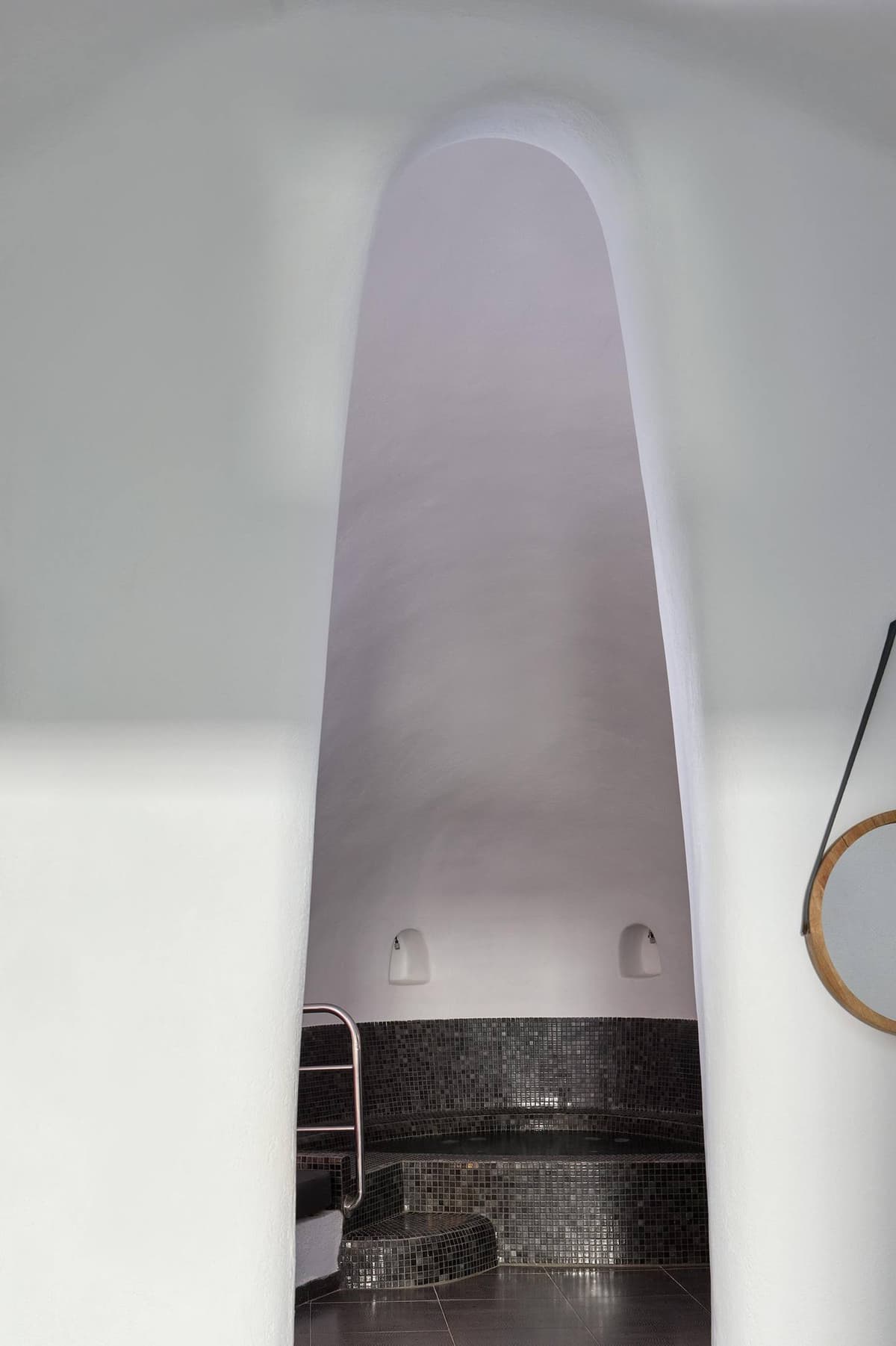
Υπόσκαφη σουίτα 70m² με εσωτερικό θερμαινόμενο τζακούζι και θολωτά ταβάνια.
Δείτε το δωμάτιο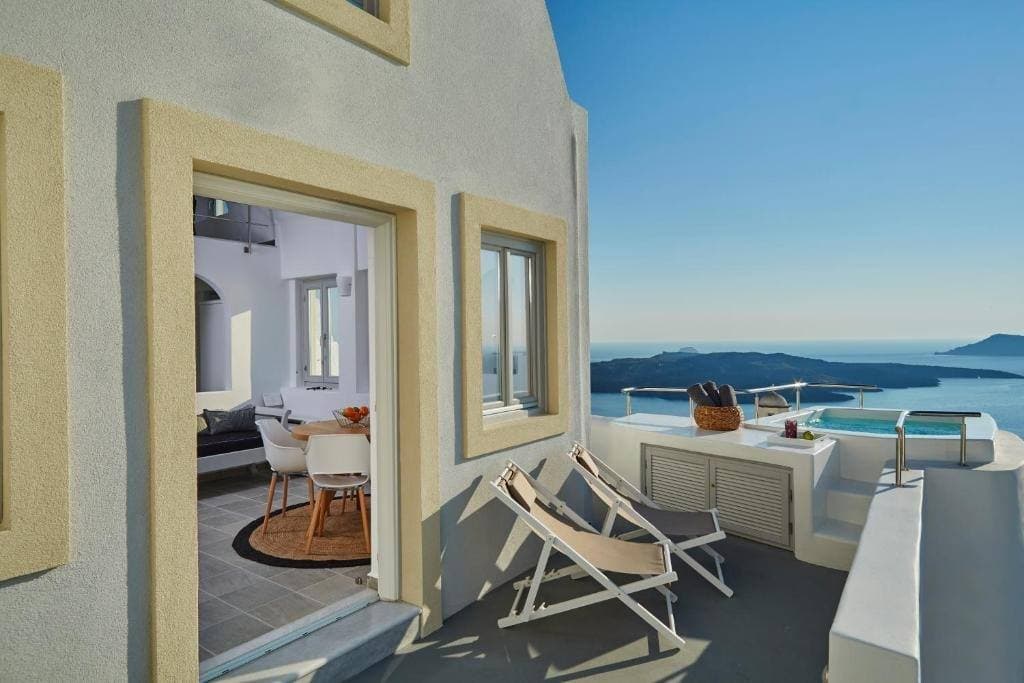
Θερμαινόμενο εξωτερικό τζακούζι στο δικό σας μπαλκόνι, με θέα την καλντέρα και τη δύση.
Δείτε το δωμάτιοYour Stay Awaits
Experience Santorini from a cave suite perched on the caldera edge in Fira.