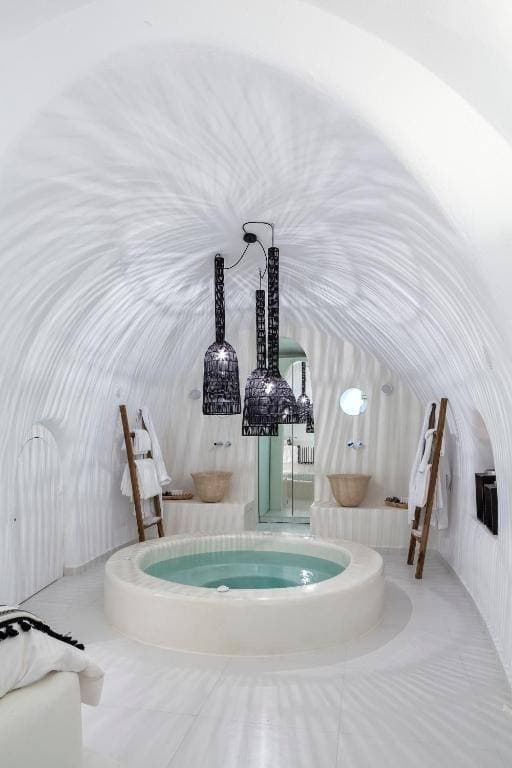
50m²
Honeymoon Suite
Cave suite with caldera-facing veranda, designed for couples and milestone trips.
View room
Travel Guide
By Fanis Kafouros, Owner since 2006 · Published · Updated
Come in late May to June or September to early October, fly in or take the ferry from Piraeus, and base yourself in Fira for buses, restaurants and caldera views.
Short answer: Come in late May to June or September to early October, when the sea is warm, the crowds are thinner and prices drop. Fly into Santorini's airport or take a ferry from Athens to Athinios port. Base yourself in Fira, the island's transport hub on the caldera, then fill your days with the caldera path, a catamaran cruise, the Akrotiri ruins, the wineries and the black-sand beaches.
This guide comes from people who live here: we run a small hotel on the caldera in Fira and have watched guests plan this trip for years.
| Detail | Quick Answer |
|---|---|
| Best time to visit | Late May-June or September-early October |
| How to get there | Fly from Athens or take the ferry from Piraeus (times below) |
| Best area to stay | Fira (most central, best value caldera views) |
| Average daily spend (couple) | EUR 275-450/day for mid-range |
| Currency | Euro (EUR) |
| Language | Greek (English widely spoken in tourist areas) |
| Safety | Very safe, one of the safest destinations in Europe |
| Minimum days needed | 3 days for highlights; 5 days to explore properly |
| Airport code | JTR (Thira National Airport) |
| Island population | ~15,000 year-round residents |
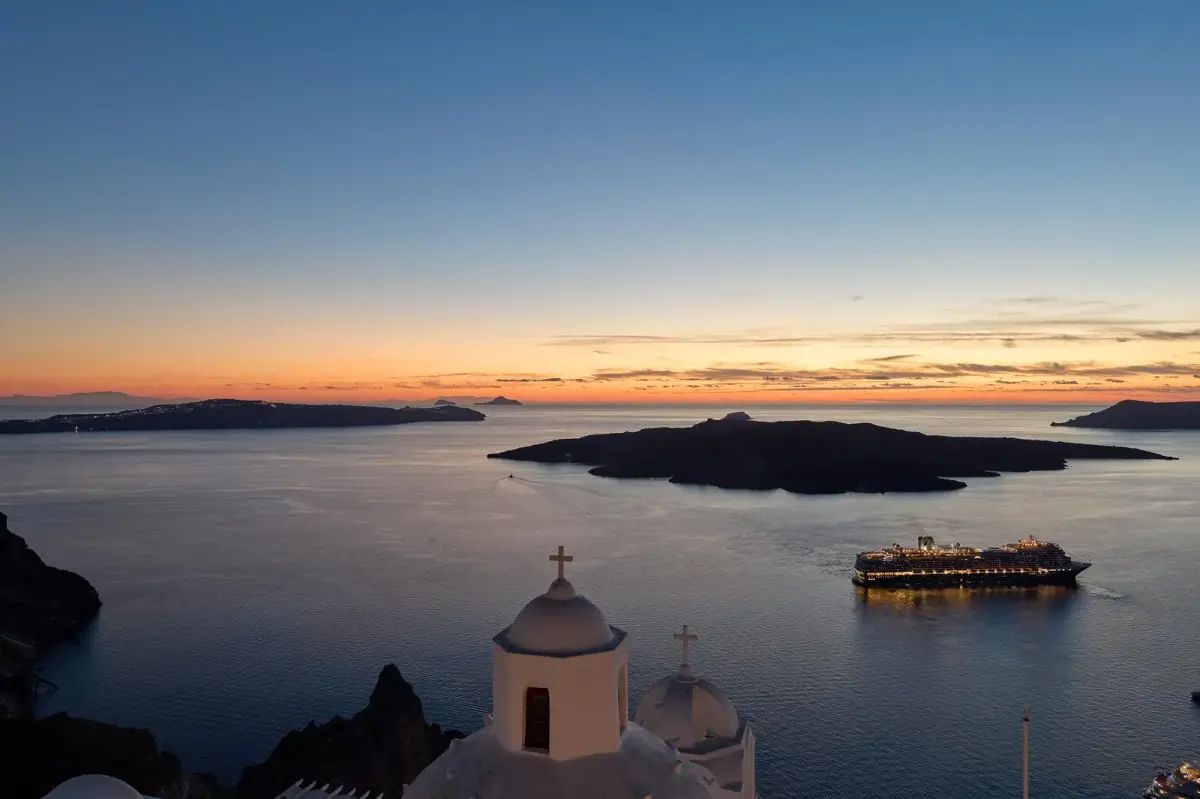
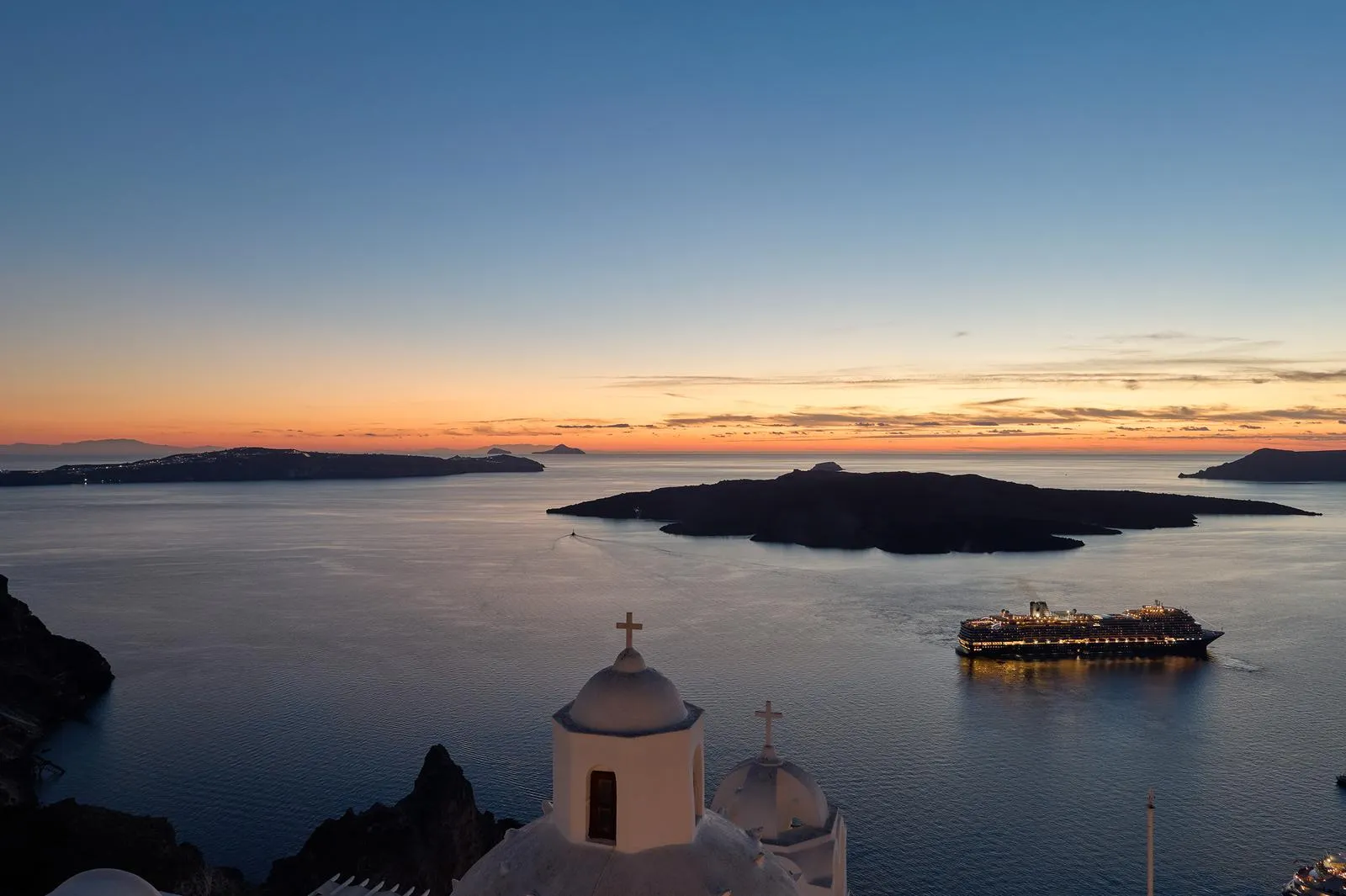
About 3,600 years ago, a volcano blew the middle of this island into the sea. What's left is a crescent-shaped cliff face, the caldera, with villages stacked along the rim, looking down into a flooded volcanic crater. That's the geography. That's why it looks the way it does.
The hotels and houses you see in photos? Most are cave dwellings carved into the volcanic rock. They stay cool in 35-degree August heat without air conditioning. You sleep inside a cliff. It's strange, and it works.
But geology only explains the shape. The light is what gets people. Painters figured this out centuries ago. Photographers come back year after year chasing it. There's something about the combination of white pumice walls and open water that makes late afternoon on the caldera look like a different planet. We've tried to explain it, and it doesn't translate to words very well.
Then there's the wine, Assyrtiko grapes grown in volcanic ash and pumice, vines twisted into low basket shapes to survive the wind, some over 200 years old. UNESCO has considered protecting these vineyards because they exist nowhere else on earth. The food: cherry tomatoes so sweet you'd think someone added sugar (they didn't, it's the soil), white eggplant that's creamier than the purple kind, fava that's been a staple here for centuries.
And the sunsets. Yes. They're as good as the photos suggest. Actually better, because the color shifts across the caldera in real time and no camera captures that movement properly.
The caldera rim gets all the attention, but step off the cliff edge and the island changes completely. Pyrgos has a medieval castle with 360-degree views and almost nobody there. Vlychada beach looks like the surface of the moon. Akrotiri's ruins predate classical Greece by over a thousand years, a Bronze Age settlement frozen under volcanic ash, complete with frescoes and a drainage system that has no business being that advanced for 1600 BC.
The best moments on this island tend to be the ones you didn't schedule.
Late May through June, or September through early October.
Santorini's season runs April to October. Outside that window, most hotels and restaurants close, ferry schedules become unreliable, and the island's 15,000 year-round residents have the place to themselves. Each month within that window feels like a different destination.
This is the underrated window. Wildflowers everywhere, the hillsides go purple and yellow. Weather sits around 20-25 degrees C, warm enough for a t-shirt but cool enough for the Fira to Oia hike. Oia is quiet at noon, a surprise if you've only seen it in summer. Hotel prices are noticeably lower.
The catch: the sea's still cold. Around 18-19 degrees C. Fine for a quick dip if you're hardy, too cold for a proper beach day.
If we didn't already live here, this is when we'd come. Late May into June hits the sweet spot, the temperature's up (25-28 degrees C), sunset comes after 8:30 PM, the water's warm enough to swim without bracing yourself, and the crowds haven't reached their July peak. Most locals, if you ask them, will point at early-to-mid June. Warm enough to swim. Quiet enough to get a caldera restaurant table without booking days ahead.
Temperatures hit 30-35 degrees C. The caldera villages run at full capacity. That restaurant with the view? Book three days out minimum. The upside is real though, the sea is perfect at 25-26 degrees C, every beach bar on the island is fully alive, and sunset watching on the caldera becomes this communal thing where everyone just stops and looks west for twenty minutes.
The cruise ship problem. Multiple ships dock on the same day. When that happens, Oia and Fira's narrow alleys fill wall-to-wall with day-trippers from about 10 AM to 5 PM. If you're visiting in peak summer, schedule your caldera village time for early morning or after dinner.
Ask someone who lives here when to come. They'll say September. Crowds thin, weather stays warm at 25-28 degrees C, and the sea stays close to its August peak, about 24 degrees C from months of summer sun. The light changes too. Softer. More golden. Less of that harsh midday glare August has. Shoulder rates kick in, and in early September you may still catch the end of the trygos, the grape harvest, at one of the smaller family wineries.
Most everything shuts down. A handful of tavernas in Fira stay open, the ferry schedule gets unpredictable, and the island goes quiet in a way that some travelers find beautiful and others find isolating. Winter storms over the caldera are dramatic if you're into that. But catamarans, wine tours, beach bars, all gone until spring.
Detailed month-by-month breakdown with temperatures, crowd levels, and pricing: complete guide to the best time to visit Santorini. For climate specifics and packing advice per month: Santorini weather guide.
Two options. Fly or take the ferry. Most people coming from outside Greece fly into Athens first and then connect.
Santorini's airport is JTR, Thira National Airport. Small airport. Gets very busy in summer.
From Athens: 45-minute flight. Aegean Airlines, Olympic Air, Sky Express, Ryanair, multiple flights daily. If you book a few weeks ahead, expect EUR 50-150 one way. Wait until July to book a July flight and you're looking at EUR 200+. Don't wait.
Seasonal direct routes from Europe: London, Paris, Rome, Milan, several German cities. From the US, Australia, or anywhere in Asia, you're connecting through Athens.
Airport to hotel: Fira is about 10 minutes by car. We offer complimentary airport transfers at Aroma Suites for stays of 4+ nights when you book direct. Otherwise: taxis run EUR 25-35 to Fira by day (they wait at the terminal), and there's a bus for EUR 2.20, though wrestling luggage onto a packed bus isn't great.
Ferries leave from Piraeus port (Athens). According to Ferryhopper's Piraeus to Santorini route page, Seajets' high-speed ferries take about 5 hr to 6 hr 10 min, and the fastest sailing on the route is listed from about 4 hr 50 min. Blue Star Ferries' conventional ships are slower but cost less, taking 6 hr 10 to 9 hr 10 min, per the same Ferryhopper page.
Operators: Blue Star Ferries is the affordable conventional option. SeaJets runs high-speed catamarans. Fast Ferries also sails from Piraeus, and in summer Golden Star Ferries runs from Rafina. Book through ferryscanner.com or directferries.com. Summer sailings sell out, especially weekends.
Prices: economy deck seats on the conventional ferries start at around €46.50, high-speed tickets from €59.70 on some sailings and €89.70 on most, and cabins from around €90, according to Ferryhopper's fare data (checked September 2026). Our Athens to Santorini ferry guide has the full breakdown.
You arrive at Athinios Port, roughly 20 minutes south of Fira. The road from the port climbs through a series of switchbacks carved into the cliff wall, that's your first look at the caldera and it hits differently when you're not expecting it.
Island hopping note: Santorini connects to Mykonos by ferry in 1 hr 50 min to 3 hr 20 min (Ferryhopper route data), Naxos in 1 hr 10 min to 2 hr 35 min (Ferryhopper route data), Paros in 2-3 hours and Ios in 30 min to 1 hr (both per Ferryhopper's island-hopping data), and Crete in 1 hr 30 min to 1 hr 50 min by high-speed ferry (Ferryhopper Heraklion data). Lots of people combine Crete and Santorini, two very different islands, short crossing. Trying to decide between the two most famous Cycladic islands? Our Santorini vs. Mykonos comparison lays it out honestly.
Flying in? Our Santorini airport guide covers airlines, transfers, and what to expect at JTR. Coming by sea? Our Athens to Santorini ferry guide compares the boats, fares and the climb up from Athinios.
Five main options: Fira, Oia, Imerovigli, Firostefani, and the beach towns (Kamari/Perissa). Choosing where to stay shapes your entire Santorini Greece vacation more than any other decision. Here's the honest version, not the one where every area is "charming in its own way."
We're biased because we're here. But we're here for a reason.
Fira is the transportation hub. Every bus route on the island starts from the central station here. You don't need a car. You don't need taxis (good, since there are barely any). Walk out the door and you're in the middle of everything, restaurants, bars, shops, the caldera path, the cable car down to the old port.
The caldera view is the same caldera wherever you stay. Oia, Fira, Imerovigli, Firostefani, they're all perched on the same volcanic rim looking at the same water-filled crater. The sunset? Same direction from all of them. But in Fira the hotel rooms cost less, the restaurant selection is much wider (everything from Michelin-level to a EUR 3.50 gyros), and you can actually get a table without planning a week ahead.
The caldera walkway in Fira has cave-style hotels carved into the cliff, infinity terraces over the volcano, and the sunset every single evening without fighting a crowd for it. The same owner behind Aroma Suites also operates Uma Ray Suites (modern luxury with a pool) on the Fira caldera, and Casa di Terra Villa (private villa) in Messaria, different styles depending on what you're after.
Works best for: first-timers who want to explore the whole island, couples who want caldera views without the Oia markup, anyone who values being able to walk to dinner.
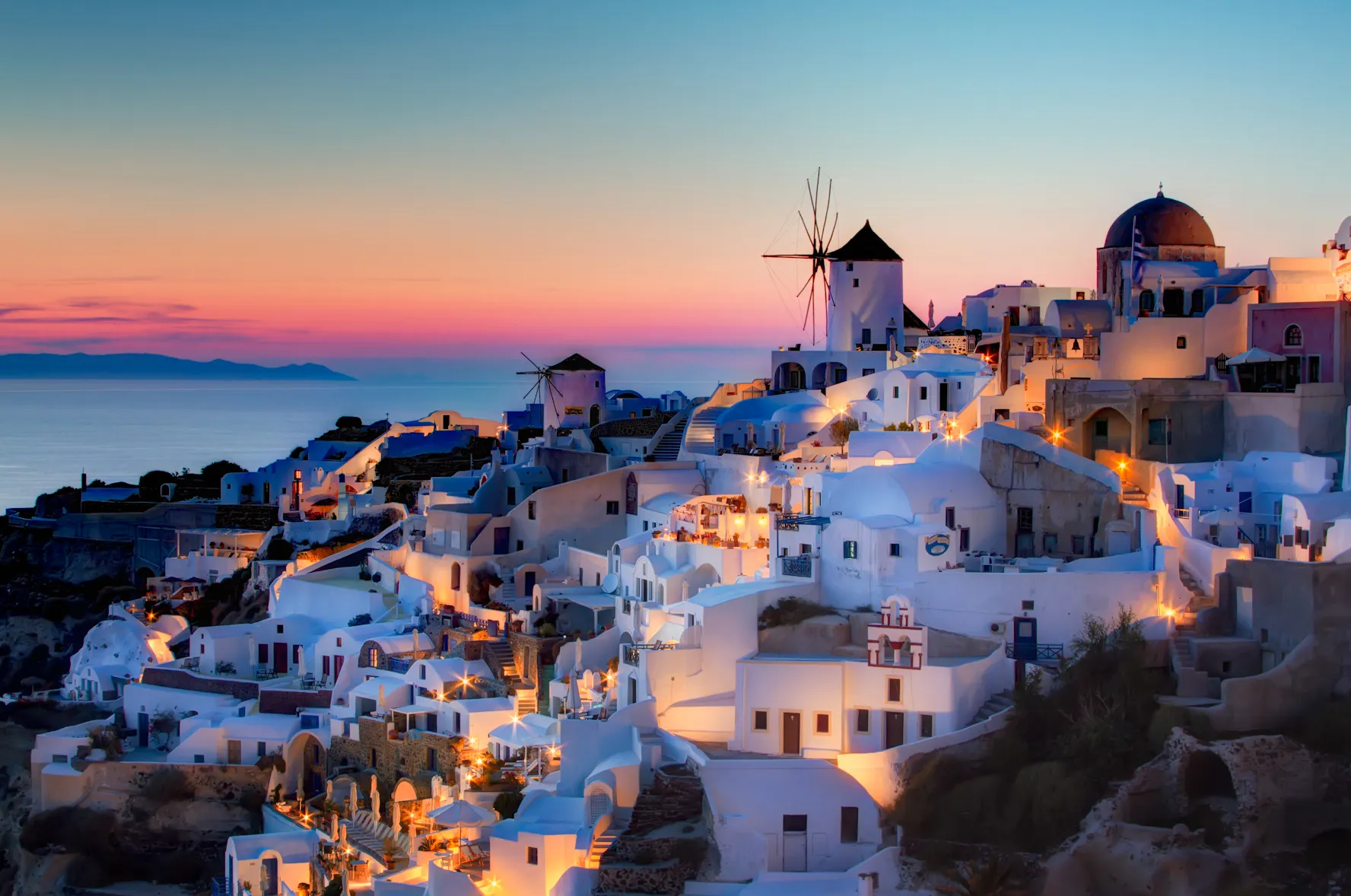 Photo: Pedro Szekely, CC BY-SA 2.0, via Wikimedia Commons
Beautiful. No argument. Blue domes, whitewashed lanes cascading down the cliff, that sunset at the castle ruins where hundreds of people gather every evening and applaud when the sun disappears. It's real. It's worth seeing at least once.
The trade-off is significant though. Oia is expensive, noticeably more than Fira for comparable rooms. It's at the northern tip of the island, which means getting to beaches, the airport, or the port is a 20-30 minute drive each time. Restaurant options are limited and pricier. And that sunset? Walk to any caldera-view bar in Fira, order an Assyrtiko, and watch the same sun drop into the same sea. Without elbowing strangers on a castle wall.
Works best for: people whose main priority is the iconic Oia look, and who are ready to pay the premium that comes with it.
Highest point on the caldera. Between Fira and Oia. Small. Quiet. Almost no nightlife. The Skaros Rock ruin is worth the walk. The views are wide open because there's less built up around you.
Downside: a handful of restaurants and that's it. Getting to Fira for anything means a car, taxi, or a walk of about 40 minutes. If you want seclusion, perfect. If you want options, it'll feel limiting fast.
Works best for: honeymooners who plan to spend most of their time at the hotel.
Technically its own village but it bleeds into Fira, ten-minute walk along the caldera path connects them. Slightly quieter, slightly more residential. Home to the blue-domed Three Bells of Fira (Church of the Dormition) that everyone thinks is in Oia because of how often it gets photographed.
Works best for: people who want caldera views and a calmer street scene but still want Fira's restaurants and nightlife within a short walk.
On the east coast, away from the caldera. Black volcanic sand, tavernas right on the waterfront, sunbed and umbrella setups. Completely different vibe. No volcano views. Much lower accommodation prices. More relaxed, less photogenic.
Works best for: beach people, families, value-minded travelers who'd rather spend on experiences than a view from their room.
Complete guide to every area with price ranges and hotel picks: Where to Stay in Santorini. Head-to-head: Fira vs. Oia. Island layout: Santorini map and island layout guide. Traveling with young children? Our Santorini with kids guide explains why these flat-ground beach towns beat the caldera cliffs.
People ask us for a top-five list. Fine. Catamaran cruise, the Fira-to-Oia hike, sunset from somewhere that isn't packed, wine tasting at the volcanic vineyards, and Akrotiri's ruins. But the list is misleading because it makes it sound like Santorini is a checklist. It's not. Some of the best days here involve no plan at all.
If you only do one organized activity. This one.
You sail out onto the caldera, past the volcanic islands sitting in the middle of it, to swimming spots you can't reach from shore. Standard route includes a stop at the hot springs, where underwater volcanic vents heat the sea to this murky, mineral-warm bath, then past Red Beach and White Beach from the water side, finishing with the sunset and dinner on board.
Day cruises run roughly 5 hours. Sunset cruises depart later but last about the same. Shared boats cost EUR 100-180 per person. Private charters go about EUR 1,000 to EUR 3,000 depending on the vessel and how many people are on it. Summer sells out, so book a few days ahead at minimum.
We arrange catamaran cruises at Aroma Suites, private ones included. Full breakdown: Santorini Catamaran Cruise Guide.
Ten kilometers along the caldera rim. Fira to Firostefani to Imerovigli to Oia, the volcanic crater dropping away on your left the entire way. It takes 3-4 hours at a comfortable pace.
Start early. Before 9 AM in summer. There's almost no shade on this trail, and by midday in July the heat is hard going. Wear actual shoes, the path has rocky, uneven stretches where flip-flops are asking for a turned ankle. Bring water. More than you think you need.
The first section, Fira to Imerovigli, about 40 minutes, is the most dramatic. If the full 10 kilometers sounds like too much, do this stretch and turn around. You'll get the best scenery without the commitment.
Bus back from Oia takes about 25 minutes. EUR 2.20.
Everyone goes to Oia castle. It's famous. It's beautiful. In July and August it's also shoulder-to-shoulder packed, and you need to stake out a position an hour before sundown.
Locals watch from somewhere else. The sun sets in the same direction from anywhere on the western caldera. Pick any bar terrace in Fira with a westward view, order a glass of something local, and watch it happen without a crowd pressing against you.
Spots worth knowing about:
One more thing. Stay twenty minutes after the sun goes below the horizon. The sky deepens to violet, the village lights start coming on across the caldera, and the crowds at Oia castle clear out. A lot of us who live here actually prefer this blue hour to the sunset itself.
For secret spots: 10 Best Sunset Spots in Santorini.
For the complete breakdown of traditional dishes, wine experiences, restaurant recommendations by area, and daily food costs, see our Santorini food and wine guide.
Santorini wine is serious. Not a tourist gimmick, these bottles compete at international level, and the reason comes down to geology. Volcanic soil (pumice and ash, no clay), extreme wind, and vines twisted into low basket shapes called "kouloura" to survive the Meltemi. Some vines are over 200 years old. Pre-phylloxera. Among the oldest producing vines in Europe.
Assyrtiko is the flagship. Crisp, mineral, pairs with seafood like it was designed for it. Beyond that: Nykteri (barrel-aged white), Vinsanto (a sweet dessert wine with centuries of island tradition behind it), and some increasingly good reds from the Mavrotragano grape.
Worth visiting:
A standard tasting costs about EUR 15-40 per person at most wineries. We can set up wine tours from Aroma Suites with transport arranged.
Full winery guide: Santorini Wine Tasting: The Complete Guide.
The Minoan settlement at Akrotiri was buried by the eruption around 1600 BC. That's roughly 1,700 years before Pompeii, for scale. Multi-story buildings, a sophisticated drainage system, frescoes depicting daily life in detail that has no business existing from the Bronze Age. The original frescoes are now in the Museum of Prehistoric Thera in Fira, go see those too.
Closed Tuesdays, open the rest of the week (Wednesday, Friday, Saturday and Sunday until evening, with shorter hours on Mondays and Thursdays). EUR 20 entry, reduced EUR 10. Book a timed-entry ticket in advance through the official archaeological-site service rather than a third-party reseller. Give yourself 60-90 minutes. Honestly, hire a guide (EUR 40-60 for a group), the site is hard to make sense of without context, and a good guide turns it from "looking at old walls" to "understanding a civilization that was more advanced than it had any right to be."
Located near the southern tip, about 15 minutes from Fira by car, 20-30 by bus.
Beyond the caldera, most tourists vanish. Their loss. Pyrgos, Emporio, Megalochori, Vothonas and Exo Gonia each get a short write-up in Santorini's villages beyond the caldera below.
More hidden spots: Santorini's Secret Spots: 12 Hidden Gems Most Tourists Miss.
Full activity guide: Things to Do in Santorini.
Santorini food used to mean "Greek salad and grilled fish at a taverna." Still does, in the best way. But a new generation of chefs has shown up in the last decade or so, working with local produce in ways that are more ambitious without losing what makes the food here good in the first place. The volcanic soil does something to the ingredients, everything tastes more intensely like itself.
Santorini tomatoes. Smaller and sweeter than any tomato you've had. Not exaggerating. The volcanic soil concentrates the sugars and the limited rainfall means less water dilution. Look for tomatokeftedes on every taverna menu, tomato fritters, the island's signature appetizer. They should be crisp outside, sweet and herby inside. If they're bland, leave.
Fava. Not fava beans despite the name, yellow split peas, cooked to a smooth puree and served with capers and raw onion. Earthy. Nutty. Grown on the island for centuries. Simple dish, but the good versions have a silky texture you won't forget. The volcanic soil again.
White eggplant. Creamier and less bitter than the purple ones you know. Grilled or fried. Seasonal, July through September. Order it when it's available.
Seafood. Changes day to day. Grilled octopus, fried calamari, whatever white fish came in that morning. Amoudi Bay below Oia is the famous spot for fish tavernas, but Fira and the beach towns are just as good without the Oia price tag.
Vinsanto with dessert. Sweet wine, aged years in oak barrels. Traditional to Santorini. Pair it with baklava or drink it straight after dinner.
Caldera view dining: Aktaion (in neighbouring Firostefani) and a handful of cliff-edge restaurants in Fira. The volcano as your backdrop. EUR 40-80 per person.
Real tavernas, honest prices: Naoussa does fresh fish without pretension. Nikolas has been a Fira institution for decades, the kind of place where the menu's short because everything's made that day. Mama Thira (in neighbouring Firostefani) is similar.
Quick and easy on the wallet: Gyros from Lucky's. Souvlaki at Obelix. Bougatsa (custard pastry) from the bakery near the main square. A gyros pita costs EUR 3-4 and honestly rivals anything.
Drinks with the view: PK Cocktail Bar and Franco's Bar both have caldera terraces. Neither requires a dinner commitment, you can just stop for a glass and the view.
Oia: everything costs more. Best value is heading down to Amoudi Bay for fresh fish. Pyrgos: quiet hilltop village with a few good tavernas and one of the island's best monastery hikes. Megalochori: small tavernas on the village square, honest food, prices noticeably lower than the caldera towns.
Full restaurant guide: Best Restaurants in Fira.
If you're expecting white sand, recalibrate. Santorini is a volcano. The beaches here are black sand, red rock, grey pebbles, and the occasional lunar landscape. They're unlike any coastline you've seen before. Weird and beautiful, once you let go of the Caribbean mental image.
Red Beach. Famous for a reason. A wall of red volcanic rock rises behind a narrow strip of red-and-black sand. Looks unreal, especially from the water. Getting there means a short rocky path from the parking area near Akrotiri, actual shoes required, not sandals. The beach itself is more pebbly than sandy, better for photos and swimming than lying out. Gets packed in summer. Go early or see it from a catamaran.
Perissa. Long black sand beach on the southeast coast. Beachfront bars, sunbed setups (EUR 10-15 for two beds and an umbrella), calm water, good for a full lazy beach day. More developed and lively than Kamari.
Kamari. Similar to Perissa, they're on opposite sides of the Mesa Vouno headland, but a bit more upscale, with a waterfront promenade and organized beach clubs. There's an open-air cinema on the beach that shows films in English on summer evenings. That alone makes it worth a visit.
Vlychada. Most unusual beach on the island. Tall white cliffs carved into shapes that look like another planet rising behind quiet grey-black sand. Far fewer visitors than Red Beach or Perissa. Near the Vlychada marina and the Tomato Industrial Museum, sounds niche, but it tells the story of Santorini's tomato export industry that shaped the island's economy before tourism took over. Worth an hour.
White Beach. Only reachable by boat from Red Beach or Akrotiri port. White pumice cliffs, clear water, not many people. An adventure to get to, which is the point.
Vlychada, the cove at Mesa Pigadia, and the stretch of Perivolos closest to the dunes all have more privacy and less party atmosphere.
Don't come expecting the Cycladic white sand you'll find on Mykonos or Paros. Santorini's beaches are volcanic, dramatic, colorful, unlike anything else. That's their appeal.
Most visitors stick to the caldera. Fira, Oia, maybe Imerovigli. That's like visiting Paris and never leaving the Champs-Élysées. The inland villages are where the history is, where the farming roots are, where the atmosphere feels the way the caldera towns felt before the tourism boom reshaped them.
Pyrgos. Highest village on Santorini. Built around a medieval Kasteli. Climb to the top for a panorama that takes in the entire island, caldera on one side, sea on every other. Narrow lanes, blue-shuttered doors. Several cafes at the summit serve coffee and wine with the view, and they charge a fraction of what you'd pay in Oia. Almost nobody up there.
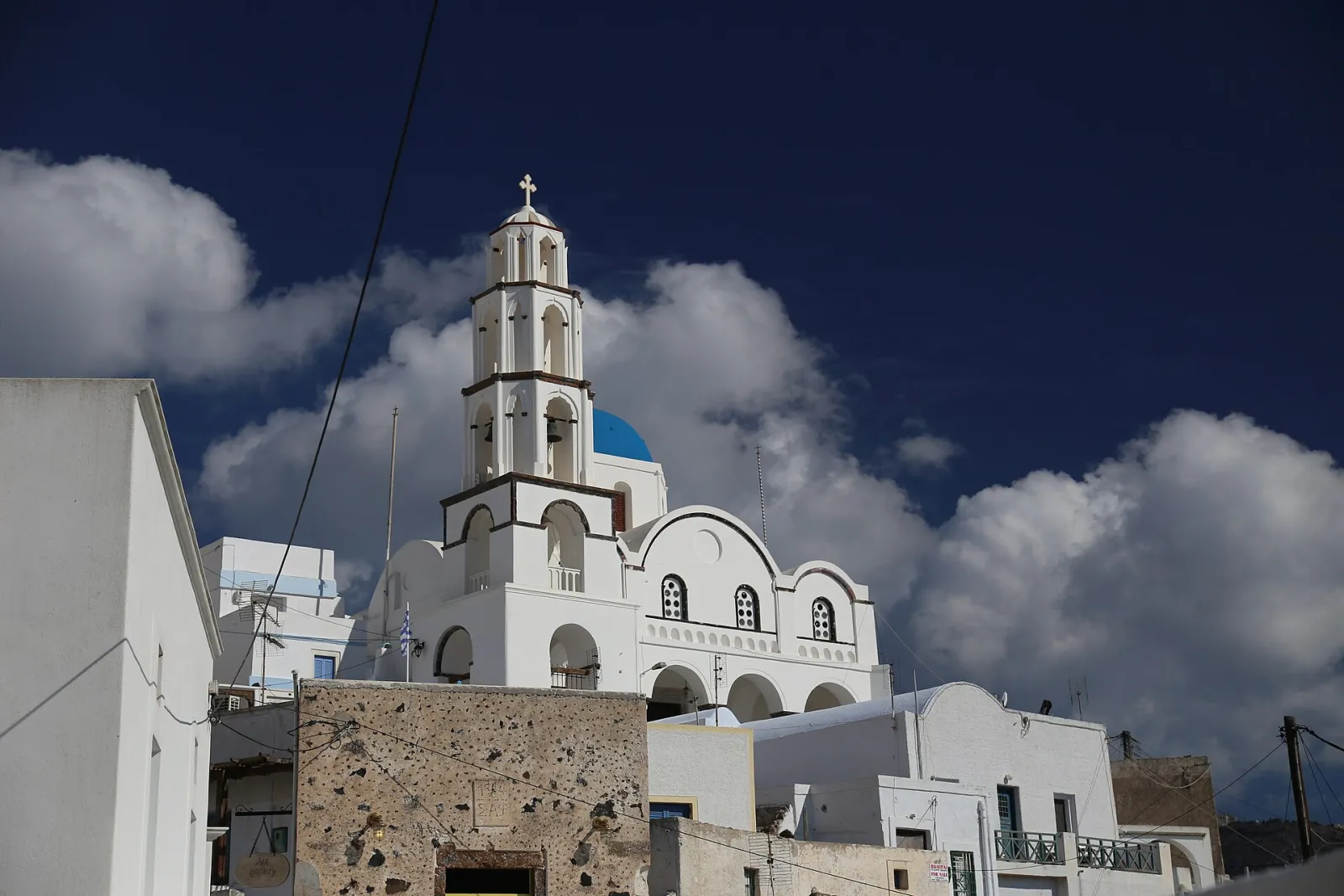 Photo: logopop, CC BY-SA 3.0, via Wikimedia Commons
Emporio. A fortress village. The narrow passages, blind alleys, and hidden doorways were designed specifically to confuse pirate raiders, walking through it feels like entering a labyrinth. Tourists almost never visit. That's its appeal.
Megalochori. Wine village with neoclassical mansions, grapevine-shaded courtyards, and a village square that invites you to sit down and stay a while. This was Santorini's first wine-producing area, and several wineries still operate within walking distance.
Vothonas and Exo Gonia. Cave villages built into rock, churches carved into cliffsides. They look like they haven't changed in a century because they basically haven't.
Best explored late afternoon, golden light, empty streets. Free.
The Santorini travel tips that separate a smooth trip from a frustrating one.
Full transport breakdown: Getting Around Santorini (buses, taxis, car rental, ATVs, and how Uber works here).
Buses. Santorini's KTEL bus system runs from Fira's central station to everywhere you need to go: Oia, Perissa, Kamari, Akrotiri, the port, the airport. EUR 2.20-2.80 per ride (Fira to Oia EUR 2.20, longer routes to Perissa and Vlychada EUR 2.70-2.80, with a 25% surcharge on late-night services). Every 20-30 minutes to popular routes in summer. Timetables at the station and on ktel-santorini.gr. They do get crowded, especially airport and port runs.
This is the real argument for staying in Fira. Every bus route starts and ends here. Stay in Oia or a beach town and you're adding a transfer through Fira to most trips.
Taxis. Only around 35 to 40 taxis for the whole island. In August, expect 30-45 minute waits, longer in the evening. Pre-book through your hotel whenever you can. Fira to Oia: about EUR 25. Fira to airport: about EUR 25-35.
From Fira down to the port, a taxi costs around €35, according to Welcome Pickups' port-to-Fira guide.
Rental cars and ATVs. A car makes sense if you want to hit the wineries, villages, and less-accessible beaches at your own pace. About EUR 40-60/day in summer. ATVs cost less (EUR 25-35/day) and are popular, but the roads have steep sections, loose gravel, and blind turns. The island's clinic sees ATV injuries regularly. Many travel insurance policies don't cover ATV accidents, and the ones that do often have exclusions. Unless you're experienced, rent a car.
Walking. Fira is entirely walkable. The caldera path connects Fira to Oia over about 3-4 hours. Just be prepared for stairs. This island is built on a cliff. Stairs are everywhere.
Hotel-arranged transfers are the most reliable transport option on the island, full stop.
Euro (EUR). ATMs in Fira, Oia, Kamari, Perissa. Most restaurants and shops take cards. Smaller tavernas and kiosks, especially in the villages (Pyrgos, Megalochori, Emporio), may be cash-only. Carry some notes.
Tipping: not required. Rounding up or leaving 5-10% is appreciated for good service. Cash tips preferred even if you pay the bill by card.
Greek is the official language. English is spoken widely in all tourist areas, you won't have trouble communicating. But learning three words earns you warmer service everywhere: "efharisto" (thank you), "yassou" (hello/goodbye), "parakalo" (please).
Very safe. Violent crime is almost unheard of. Petty crime is rare. The real risks are practical: sun exposure (the Aegean reflection intensifies UV more than people expect), uneven caldera paths with steep drops (careful after dark), the Meltemi wind making seas choppy some days, and ATV accidents, the most common serious tourist injury on the island. For the 2025 earthquakes, the volcano and current travel advice, see is Santorini safe.
Wi-Fi at most hotels and many restaurants. Local SIM cards (Cosmote, Vodafone, Nova) cost EUR 10-20 at shops in Fira. Greece uses Type C/F plugs, standard European two-pin, 230V. Bring an adapter from the US, UK, or Australia.
More tips: First Time in Santorini: 15 Things You Need to Know.
A mid-range couple: EUR 275-450 per day for two. That covers a caldera-view hotel, taverna meals, and activities. Santorini has a reputation for being expensive, and the luxury suites in Oia can certainly justify it. But the island is more accessible than most people assume, the money lever is timing and location, not deprivation.
Mid-range (our typical guest): EUR 275-450/day for two
Higher-end: about EUR 480-850+/day for two
Lower-cost: EUR 120-200/day for two
| Item | Approximate Cost |
|---|---|
| Gyros pita | EUR 3-4 |
| Taverna meal for two (with wine) | EUR 40-60 |
| Caldera restaurant dinner for two | EUR 80-150 |
| Coffee (freddo cappuccino) | EUR 3-5 |
| Glass of local wine | EUR 6-12 |
| Bus ticket (one way) | EUR 2.20-2.80 |
| Taxi Fira to Oia | EUR 25 |
| Taxi Fira to airport | EUR 25-35 |
| Car rental per day | EUR 40-60 |
| Sunbed + umbrella pair | EUR 10-15 |
| Winery tasting | EUR 15-40 |
| Catamaran cruise (shared) | EUR 100-180 |
| Catamaran cruise (private) | EUR 1,000-3,000 |
| Akrotiri archaeological site | EUR 20 |
The biggest money lever is timing. Visit in shoulder season and every line item on that table drops. The caldera hotels that charge EUR 300 in August go for under EUR 200 in May. The catamaran that's fully booked three days out in July has seats open in October. Timing alone can cut a Santorini trip by 30-40%.
How many days you have changes the trip entirely. Here's what we recommend based on watching thousands of guests do it.
Most common trip length. Enough for the highlights.
Day 1: Arrive, settle in, walk the Fira caldera path. Watch the sunset from your terrace with a glass of local wine. Dinner somewhere with the view.
Day 2: Morning or full-day catamaran cruise. If half-day, spend the afternoon at a winery, Santo Wines or Venetsanos. Dinner in Fira.
Day 3: Hike Fira to Imerovigli (about 40 minutes, the best stretch). Bus or walk to Oia, explore the lanes, see the churches, lunch at Amoudi Bay. Bus back.
Full day-by-day plan: 3 Days in Santorini: The Perfect Itinerary.
Five days lets you get past the caldera and into the parts of the island most visitors miss.
Days 1-3 as above, plus:
Day 4: Beach day, Perissa or Vlychada. Evening: explore Pyrgos village, dine at a local taverna, then book Selene back in Fira if you want a fine-dining night.
Day 5: Akrotiri ruins in the morning. Wine tasting in the afternoon, try Estate Argyros or Gavalas. Akrotiri lighthouse for a different sunset angle. Farewell dinner at whichever Fira spot became your favorite.
Five days is the sweet spot. Enough time for the caldera experience and the quieter island.
A week and you stop checking the time. Add a day trip to Thirassia island. Take a cooking class. Do a photoshoot. Wander through Emporio and Vothonas. Spend an entire afternoon at a beach bar reading a book. That's not wasted time, that's the point of being here.
Pack light. Seriously. The streets are marble and stone, luggage wheels are useless on most surfaces, and you will carry your bags up stairs at some point. Probably multiple times.
The most common packing mistake is bringing too much. Fira has plenty of shops if you forgot something.
If you're coming to Santorini with your partner, honeymoon, anniversary, or just because you both needed a week somewhere beautiful, the island handles the romance for you. The sunsets, the caldera views, the candlelit dinners with the volcano across the water, the wine, the village wandering. You don't have to engineer any of it. Just show up.
Aroma Suites is a small cave-style hotel on the caldera cliff in central Fira. A handful of suites, which means we know our guests by name. Walk out the front door and you're in the middle of Fira, restaurants, the caldera path, shops, buses, everything within a few minutes on foot.
We arrange catamaran cruises, wine tours, private car excursions, weddings and elopements on the caldera, whatever you need. Our honeymoon suite and cave suite with indoor heated jacuzzi are the most requested rooms for couples. Book early for summer.
When you book direct:
For couples: Santorini for Couples: Romance, Honeymoons & Weddings. For honeymoon planning specifically: Honeymoon Planning Guide.
Late May through June or September through early October. Shoulder season: warm weather (22-28 degrees C), fewer crowds, lower prices, and water that's warm enough for swimming by late May. July and August are peak, hottest (30-35 degrees C), most crowded, most expensive. September specifically has a nice edge: the sea is still close to its August peak, while everything else starts calming down. For the month-by-month breakdown: best time to visit Santorini.
Three for the highlights, caldera, catamaran cruise, Oia. Five to explore beaches, villages, wineries, and Akrotiri. Seven if you want to slow down, island-hop to Thirassia, and actually relax instead of running through a checklist. Most first-time couples land on 4-5 days as the right balance. We go through each length of stay in how many days in Santorini.
It can be. Oia caldera suites run EUR 300-1,500+/night. But a mid-range couple doing a caldera hotel in Fira, taverna meals, and a couple of excursions should plan on EUR 275-450/day for two. Stay in Kamari or Perissa instead of the caldera, eat at local places, visit in shoulder season, and that drops to EUR 120-200/day for two. Booking direct with a hotel often adds perks such as wine or an airport transfer.
Fira for most people. It's the island's hub, widest restaurant selection, bus station for every destination, caldera views that match Oia's at lower prices. Oia is more photogenic and more famous, but also more expensive, more crowded, and geographically inconvenient for exploring the rest of the island. Choose Oia if the iconic aesthetic is your top priority and the cost fits your plans. For everything else, Fira. Detailed comparison: Fira vs. Oia.
Fly, or take the ferry: tickets start from €46.50 according to Ferryhopper (checked September 2026). Multiple daily options on both. Book early in summer, this route fills up.
Very. Violent crime basically doesn't happen. Petty crime is rare. Practical things to watch for: intense sun, uneven caldera paths after dark, rough seas when the Meltemi blows, and ATV accidents, the most common serious tourist injury on the island. Standard precautions, nothing alarming.
Tomatokeftedes, tomato fritters made from the island's cherry tomatoes, which are sweeter than any tomato has a right to be. Fava, smooth yellow split pea puree with capers. White eggplant. Chloro cheese (soft, local, goat's milk). Grilled octopus. Whatever fish came in that morning. For wine, Assyrtiko is the star, crisp, mineral, volcanic soil, pairs perfectly with seafood. Vinsanto is the traditional sweet wine, aged in oak, worth trying at least once.
Yes. Stay in Kamari or Perissa (EUR 70-120/night vs about EUR 190-300 for a boutique caldera hotel). Eat at tavernas instead of caldera restaurants, gyros for EUR 3-4, full taverna dinner for EUR 15-20 per person. Take the bus (EUR 2.20-2.80). Hike the Fira-to-Oia trail (free), explore villages (free), swim at public beaches (free). Visit in May, early June, or late September to early October and prices drop across the board. Shoulder season timing is the single biggest money lever.
It's been a top honeymoon destination for decades. Caldera-view cave suites with private terraces, sunset dining, wine tasting, the whole setup is built for it. Staying in Fira gives you romance plus convenience. Full guide: Honeymoon Planning Guide.
High-speed ferries from Heraklion take 1 hr 30 min to 1 hr 50 min, with up to 3 crossings a day in summer and usually 2 a week in winter, according to Ferryhopper's Heraklion data. Lots of people do Crete + Santorini as a two-island trip. Short crossing, easy logistics. Timetables, fares and both Cretan ports are in our Santorini to Crete ferry guide.
For a 3-day trip based in Fira: probably not. Buses and walking cover the main sights. For 5-7 days: rent a car for 2-3 of those days to hit wineries, inland villages, and the less-accessible beaches. Full-week visitors get more out of the island with a car for at least part of the stay.
The caldera really is that dramatic. The sunsets deliver. The wine, the food, the villages, all of it holds up to what you've heard.
But a little planning goes a long way. Which town to base yourself in, which months to avoid, where to eat on your anniversary, which beach is worth the effort and which is overhyped, that's the difference between a good trip and one you keep bringing up at dinner parties for years.
This guide is here for that. And if you want a base at the center of it all, caldera views, cave rooms, a team that knows this island, we'd love to have you.
Best price guaranteed when you book direct.
Questions about planning your trip? Get in touch, we're happy to help.
Planning a Santorini trip?
Get our insider guide
Local tips, hidden spots, and an exclusive direct booking discount delivered to your inbox.
Stay with us
Six rooms and a private villa on the caldera in central Fira. Direct booking includes complimentary wine on 3+ night stays and free airport transfer on 4+ nights.
Cave suite with caldera-facing veranda, designed for couples and milestone trips.
View room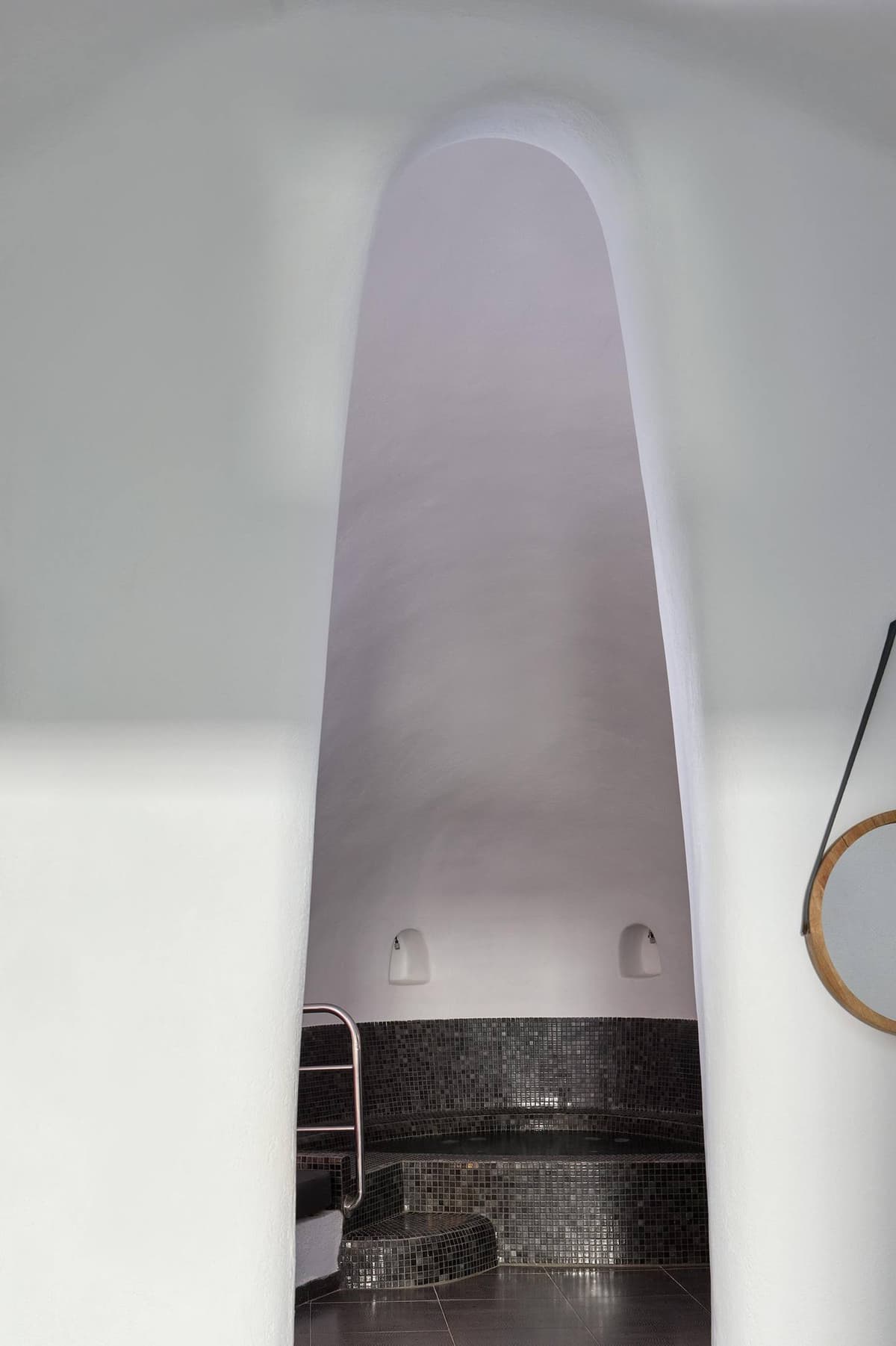
70m² cave suite with heated indoor jacuzzi and arched ceilings.
View room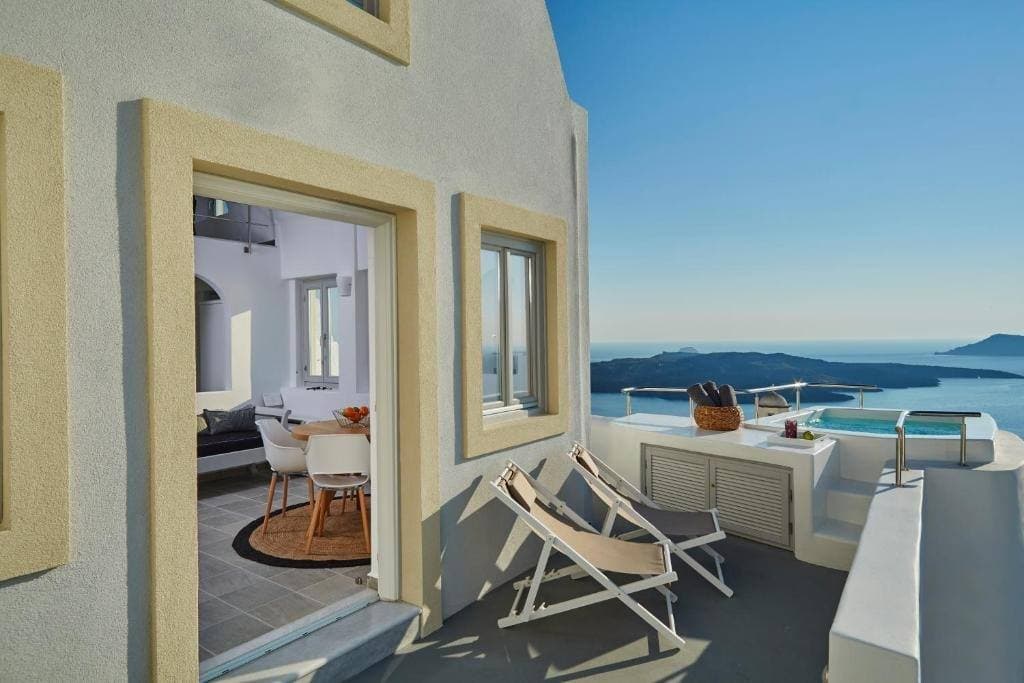
Heated outdoor jacuzzi on your own balcony, with the caldera and the sunset in front of you.
View roomYour Stay Awaits
Experience Santorini from a cave suite perched on the caldera edge in Fira.