
50m²
Σουίτα Μήνα του Μέλιτος
Υπόσκαφη σουίτα με βεράντα προς την καλντέρα, για ζευγάρια και ξεχωριστά ταξίδια.
Δείτε το δωμάτιο
Food & Wine
By Fanis Kafouros, Owner since 2006 · Published · Updated
Most visitors come to Santorini for the sunsets and the caldera views. They leave talking about the wine. Santorini is home to some of the oldest vineyards in the world, producing distinctive wines from volcanic soil.
Quick Answer: Santorini is home to some of the oldest vineyards in the world, producing distinctive wines from volcanic soil, most famously the crisp, mineral-driven Assyrtiko white. Visit 2-3 wineries in a morning to taste across styles, from bone-dry whites to the legendary Vinsanto dessert wine. Small-group tours start at €140 per person and private tours at €500 per group, according to Santorini Wine Adventure's published prices. Or rent a car and design your own route between the island's 15+ wineries. For detailed reviews of each winery with tasting prices and honest picks, read our best wineries in Santorini guide.
For the full picture of what to eat and drink on the island, start with our complete Santorini food and wine guide.
Most people come to Santorini for the sunsets and the caldera views. They leave talking about the wine.
The volcanic soil here, the relentless wind, grape varieties cultivated for more than 3,500 years, all of it produces wines unlike anything else in the Mediterranean. In a Santorini wine tasting you taste the terroir. The salt air. The minerals in the pumice. The heat that concentrates every flavor into something sharper than it has any right to be.
If you're planning your first trip to Santorini or coming back to dig deeper, this guide covers which Santorini wineries deserve your time, what you'll actually taste, how to plan a wine day that fits your trip. And when you're ready to match those wines with food, our best restaurants in Fira guide has you covered.
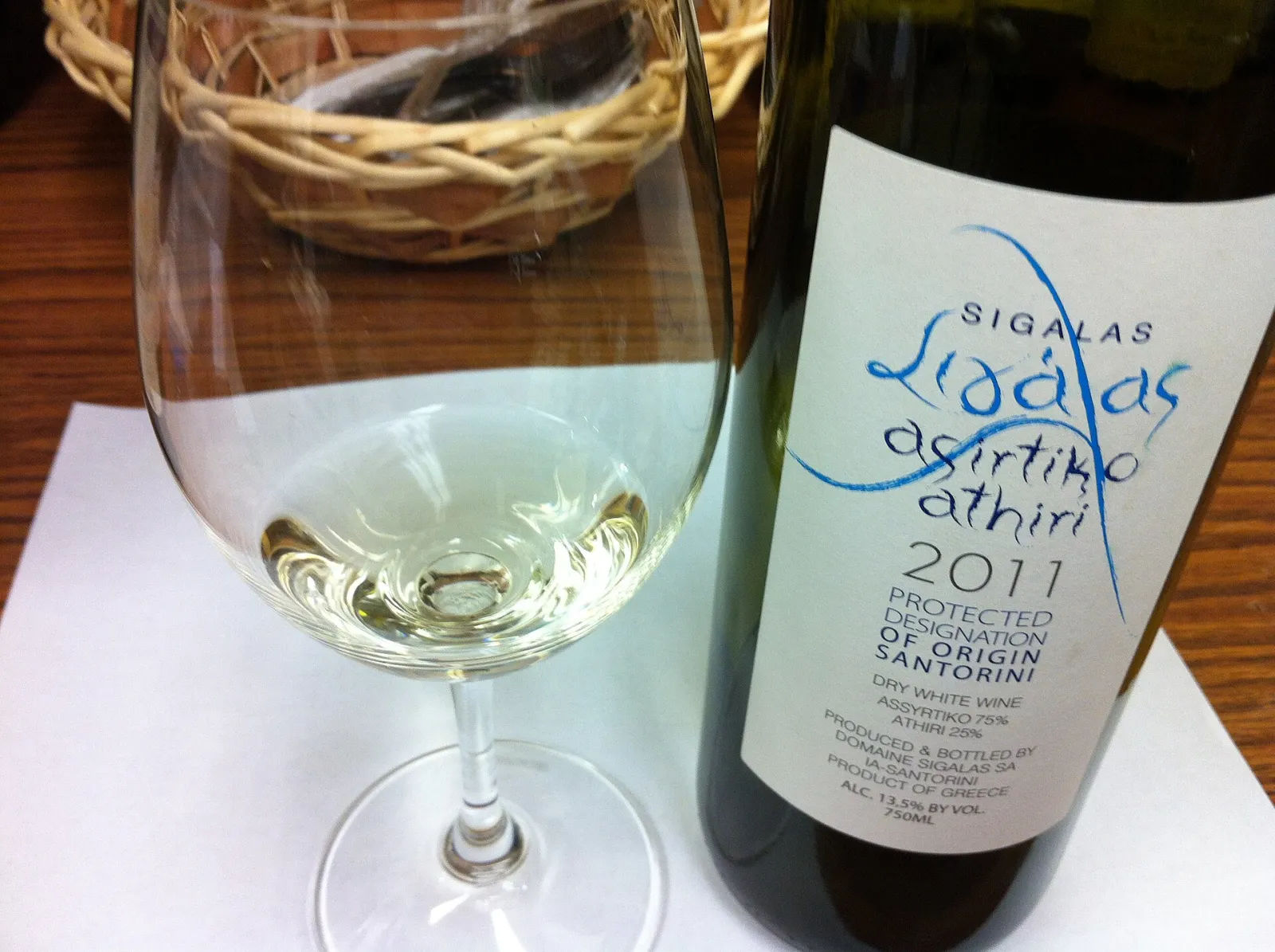 Photo: Agne27, CC BY-SA 3.0, via Wikimedia Commons
Three things, and they all connect.
Volcanic soil. The island is what's left of a massive volcanic eruption roughly 3,600 years ago. Pumice, basite, volcanic ash, poor in organic matter, rich in minerals. Grapes grown here produce wines with a pronounced minerality. That almost-saline, flinty quality that wine people call "terroir in a glass." They're not wrong.
The kouloura vine training. Walk through a Santorini vineyard and forget about the orderly trellised rows of Napa or Bordeaux. Here, vines are trained into low basket-shaped nests called kouloura. Winemakers weave each vine into a tight wreath close to the ground, grape clusters tucked inside. Ancient technique. Protects the fruit from the fierce Aegean winds. Traps moisture from morning sea mist. It barely rains. The vineyards aren't irrigated.
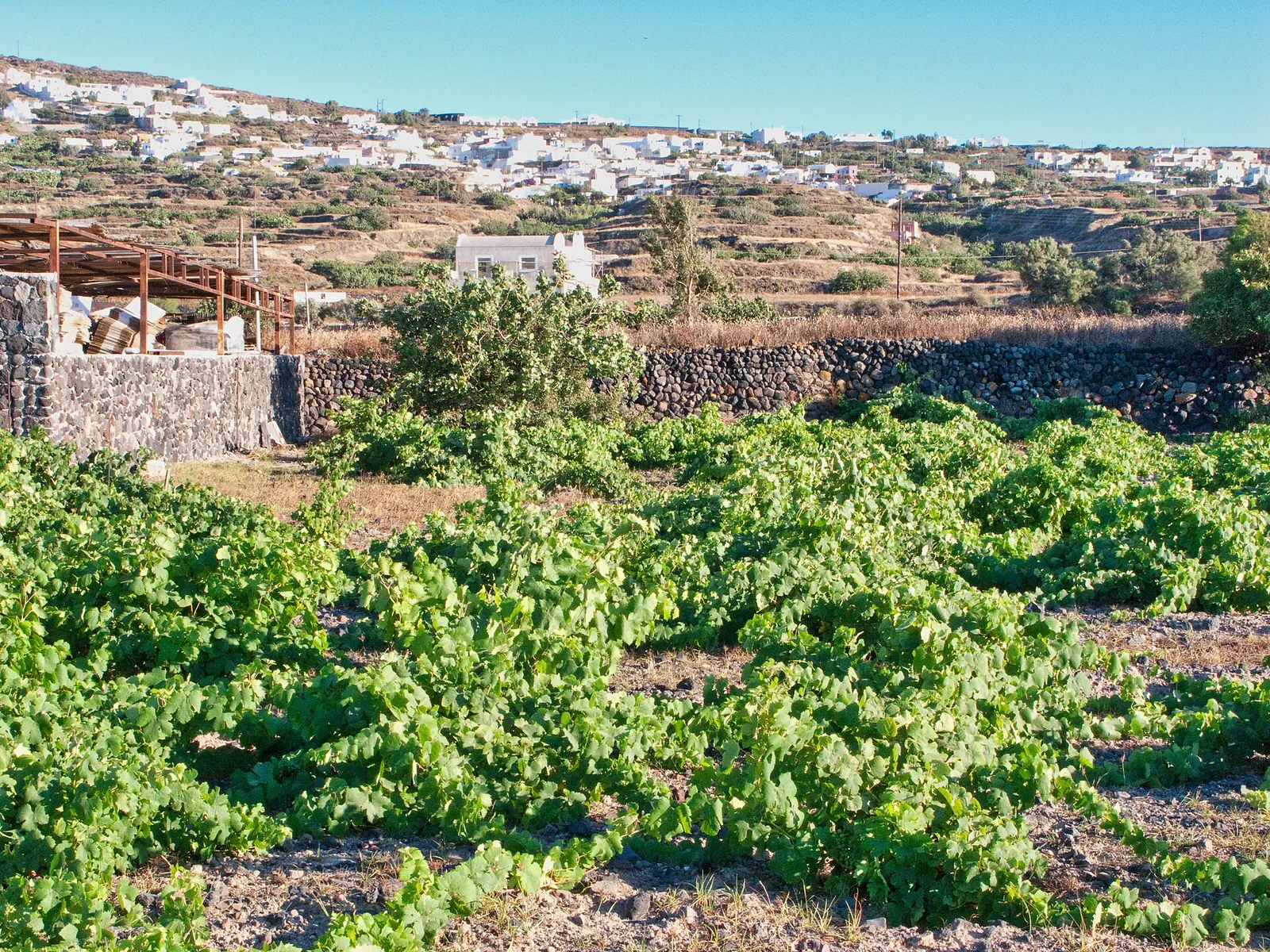 Photo: Treephoto, CC BY-SA 4.0, via Wikimedia Commons
Age. Santorini escaped the phylloxera epidemic that destroyed most of Europe's vineyards in the 19th century. The volcanic soil was inhospitable to the pest. Some vines on this island are over 200 years old, according to Estate Argyros. The winemaking tradition stretches back more than three millennia.
Together they give you high acidity, intense mineral character and concentrated flavors you can't replicate elsewhere.
Every Santorini wine tasting centers around three wines. Knowing them before you arrive makes each sip land differently.
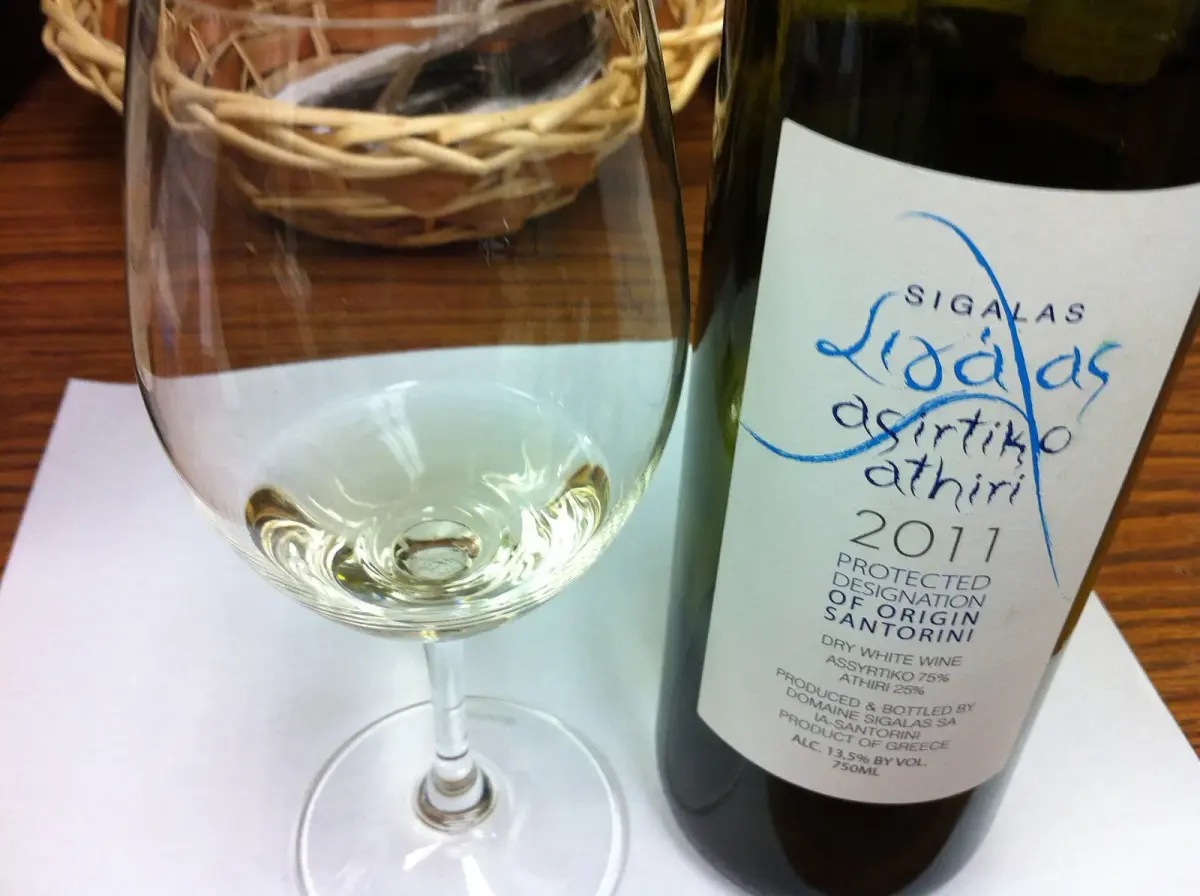
Santorini's flagship grape. One of Greece's most celebrated white varieties. Roughly 75% of the island's production.
What it tastes like: Bone-dry. High acidity. Pronounced citrus, lemon, grapefruit, white stone fruit, and a mineral-saline finish that sticks with you. Some describe it as "liquid stone."
How to drink it: With grilled fish, seafood pasta, or a plate of fresh fava. Serve it well chilled.
Essentially barrel-aged Assyrtiko. The name comes from "nychta" (night), grapes were traditionally harvested and pressed after dark to avoid the daytime heat triggering premature fermentation.
What it tastes like: Fuller-bodied, rounder than standard Assyrtiko. Honey, dried apricot, a subtle smokiness from the oak. Ages well for up to 15 years.
How to drink it: Richer dishes. Roasted chicken. Aged cheeses. Grilled octopus with capers.
Don't confuse this with Italian Vin Santo. Different wines. Santorini's Vinsanto predates the Italian version. Primarily Assyrtiko grapes, sun-dried on reed mats for 10 to 14 days, concentrating the sugars far beyond a normal harvest. Then aged in oak barrels for a minimum of two years. The finest examples sit for 10, 15, even 20 years.
What it tastes like: Rich amber. Caramel, dried fig, raisin, honey, coffee, roasted hazelnut. Intensely sweet, but good Vinsanto keeps enough acidity to stay balanced. Never cloying if it's well made.
How to drink it: Traditionally served as dessert on its own. Or with dark chocolate, baklava, aged hard cheeses. One glass is usually enough. It's meant to be slow.
There are over 15 wineries on the island. We review them one by one, with our honest take on each, in our best wineries in Santorini guide. The short version:
There are two ways to do it, each with clear tradeoffs.
Comparing small-group, private and do-it-yourself tours in detail? Our Santorini wine tour guide covers prices, what's included and how to choose.
Typical cost: from €140 per person on a small-group tour, from €500 per group for a private one (source: Santorini Wine Adventure tour data) Duration: 4-6 hours What's included: Transportation, 2-4 winery visits, guided tastings at each, often a snack or light meal, sometimes a village or viewpoint stop
Pros:
Cons:
Best for: First-time visitors, couples who both want to drink, travelers without rental cars.
Typical cost: about EUR 40-60 a day for a rental car in summer + about EUR 10-55 per tasting Duration: As long as you want
Pros:
Cons:
Best for: Couples where one person is happy driving, repeat visitors who know what they want, anyone who values flexibility over convenience.
Third option: Hire a private driver for 4-6 hours (around EUR 150-250 total, not per person). Flexibility of self-driving, freedom for both of you to taste. We arrange this for guests at Aroma Suites regularly.
Our best wineries guide has the full one-day route we give guests, in a morning and a sunset version. The logic is simple: start inland at Estate Argyros while your palate is fresh, add a smaller family winery such as Gavalas, and finish at a caldera winery. Three stops fill a comfortable half-day.
Morning (10 AM - 12 PM): Fewer crowds, cooler temperatures, palate at its sharpest. When locals and serious wine travelers visit.
Late afternoon / sunset (5-8 PM in summer): Most atmospheric time at caldera-facing wineries like Santo Wines and Venetsanos. Golden light, spectacular views, romantic mood. But more people. Book ahead.
Avoid: 1-4 PM in summer (too hot, peak crowd from morning tour buses returning to port) and the lunch hour at popular wineries when tables fill with diners.
Best months: May, June, September, and early October. Warm weather, open wineries, manageable crowds. July and August: everything open, everything packed. Late August is harvest season, special energy if you don't mind the heat.
For a full seasonal breakdown, see our best time to visit Santorini guide.
Don't drive after tasting. Greek DUI limits (0.05% BAC) are stricter than what most Americans and Brits are used to. Two generous tastings can put you over. Self-driving? Designate a driver or hire one.
Eat before and between wineries. Empty stomach amplifies the alcohol and wrecks your palate. Proper breakfast before you start. Snack between stops. Most wineries offer cheese and charcuterie that serve double duty.
Book ahead in summer. June through September, popular wineries, especially Sigalas and sunset sessions at Santo Wines, book out days or weeks in advance. Reserve when you confirm your Santorini itinerary.
Wear comfortable shoes. Vineyard paths are unpaved. Some wineries involve stairs carved into volcanic rock. Leave the heels at the hotel. (More practical tips in our Santorini travel guide.)
Pace yourself. Three wineries in a half-day is the sweet spot. More than four and your palate fatigues, the experiences blur, you stop tasting the differences.
Use the spit bucket. Professional tasters spit without apology, and wineries expect it. Lets you taste more, stay clear, actually remember what you liked.
Buy at the source. Several Santorini wineries produce small-batch wines unavailable in restaurants or shops. Estate Argyros's Cuvee Monsignori and certain Sigalas bottlings are winery-door only. Taste something you love? Buy it then.
Part of the joy here is matching these wines with local Santorini cuisine.
Assyrtiko pairs with: Grilled white fish, shrimp saganaki, raw oysters, Santorini fava with capers, Greek salad with capers, fried zucchini balls. High acidity and mineral backbone cut through fried dishes and complement seafood brine.
Nykteri pairs with: Grilled octopus, roasted chicken with lemon and oregano, aged graviera cheese, pasta with lobster. Fuller body and oak stand up to richer preparations.
Vinsanto pairs with: Dark chocolate desserts, baklava, walnut cake, aged hard cheeses like kefalotyri, dried fruit and nut platters. In Santorini tradition, Vinsanto is often the dessert itself, a small glass at the end of the meal.
For more on where to eat, our best restaurants in Fira guide covers everything from caldera fine dining to the gyro shops locals line up at.
A wine day fits naturally into most itineraries. In our 3-day Santorini itinerary, we recommend dedicating a morning or afternoon to wineries. One of the most memorable things to do on the island and particularly special for couples and honeymooners.
If you're staying in Fira, most wineries are a 10-15 minute drive, making it easy to combine a wine tour with a catamaran cruise or an afternoon on the caldera path.
At Aroma Suites, we arrange wine tour experiences for all guests, guided caldera winery visits, private tastings with a driver, whatever you're after. Tell us what kind of wine day you want and we handle the bookings, route, and transport. It's one of the most requested experiences from our guests, and the reason is simple: tasting wine while looking at the exact volcanic soil where the grapes grew is something that stays with you.
Book your stay and we'll plan the perfect wine day
Yes, especially if both you and your travel partner want to taste freely without worrying about driving. A small-group wine tour in Santorini starts at €140 per person for four hours, per Santorini Wine Adventure's price list, and typically includes 2-4 wineries, transportation, and commentary that helps you understand what makes these wines different from everything else. Prefer more flexibility? Consider a private driver instead.
Assyrtiko. Dry white wine with intense mineral character, citrus notes, and a saline finish from the volcanic soil. Considered one of the great white grapes of the world. The island is also known for Vinsanto, a sweet dessert wine made from sun-dried grapes and aged in oak for years.
Standard tasting flights run about EUR 10-55 per person, and summer sunset sessions and Sigalas need booking days ahead. Our best wineries guide lists the price and booking advice for each winery. Guided tours with transport start at about €140 per person in a small group, according to Santorini Wine Adventure tour data.
Σχεδιάζετε ταξίδι στη Σαντορίνη;
Αποκτήστε τον οδηγό μας
Τοπικές συμβουλές, κρυμμένα σημεία και αποκλειστική έκπτωση απευθείας κράτησης, κατευθείαν στο inbox σας.
Μείνετε μαζί μας
Έξι δωμάτια και μία ιδιωτική βίλα στην καλντέρα, στο κέντρο της Φηράς. Η απευθείας κράτηση περιλαμβάνει κρασί για διαμονή 3+ νυχτών και δωρεάν μεταφορά από το αεροδρόμιο για 4+ νύχτες.
Υπόσκαφη σουίτα με βεράντα προς την καλντέρα, για ζευγάρια και ξεχωριστά ταξίδια.
Δείτε το δωμάτιο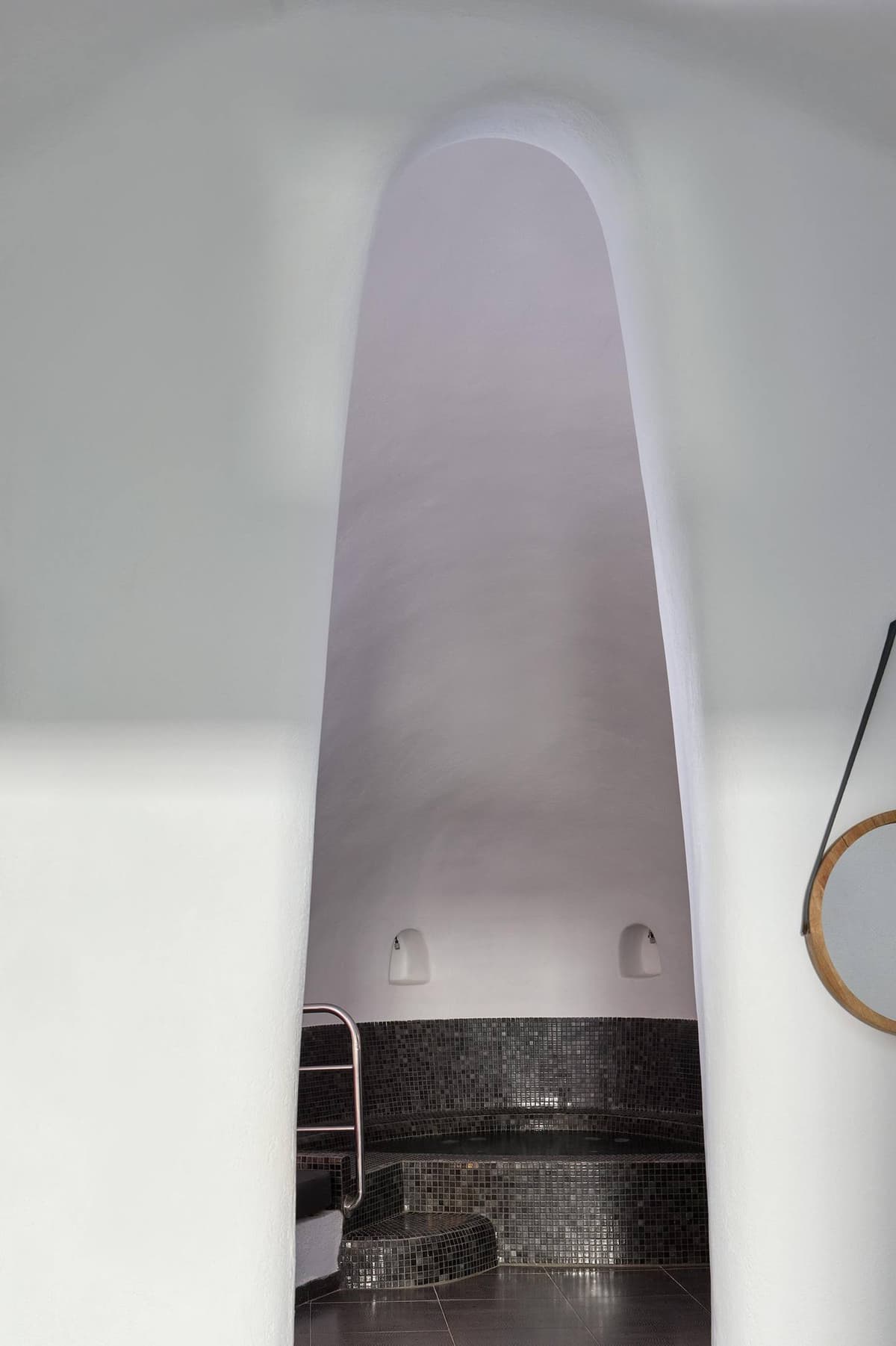
Υπόσκαφη σουίτα 70m² με εσωτερικό θερμαινόμενο τζακούζι και θολωτά ταβάνια.
Δείτε το δωμάτιο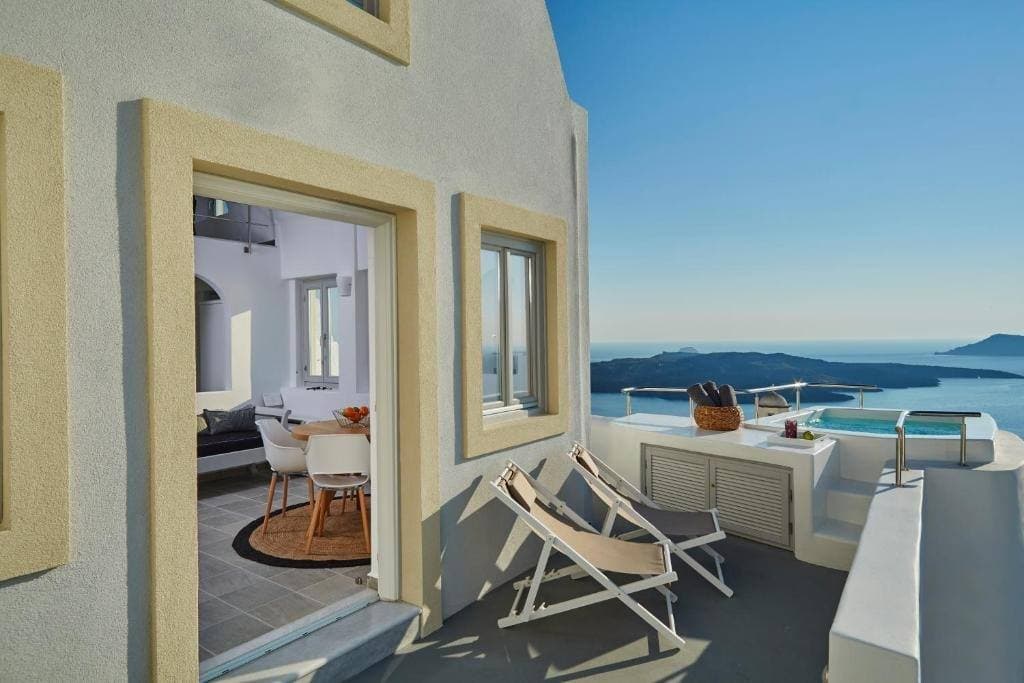
Θερμαινόμενο εξωτερικό τζακούζι στο δικό σας μπαλκόνι, με θέα την καλντέρα και τη δύση.
Δείτε το δωμάτιοYour Stay Awaits
Experience Santorini from a cave suite perched on the caldera edge in Fira.