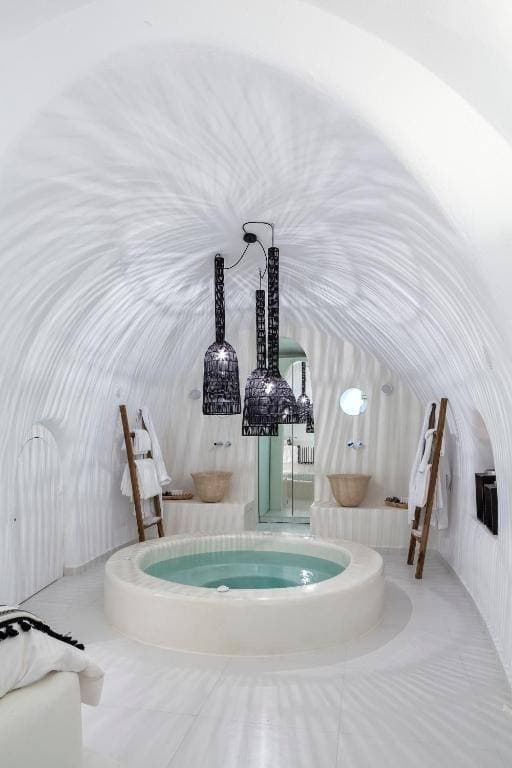
50m²
Honeymoon Suite
Cave suite with caldera-facing veranda, designed for couples and milestone trips.
View room
Where to Stay
By Fanis Kafouros, Owner since 2006 · Published · Updated
A cave hotel in Santorini isn't a gimmick. It's the most authentic way to experience this island: sleeping inside volcanic rock carved by hand centuries before anyone thought to call it a hotel.
Short answer: A Santorini cave hotel is a room hand-carved into the volcanic rock of the caldera cliffs, with thick stone walls that stay naturally cool in summer, curved ceilings, and a terrace opening to the caldera. Well-designed cave rooms, rather than plaster arches faking the look, feel quiet, cool and unique instead of dark or claustrophobic, because light enters from the open caldera-facing front; a small, deep room with a low ceiling can still feel enclosed. Aroma Suites runs real cave suites carved into the cliff in central Fira.
A real cave room is carved from the rock, not plastered to look like it. You feel the difference the moment you step inside and the August heat stays outside.
Fanis Kafouros, owner of Aroma Suites, in Fira since 2006
A cave hotel in Santorini is not a gimmick. It is the original way people lived on this island: rooms hand-carved into the volcanic rock of the caldera, walls a metre thick, ceilings curving overhead. You sleep inside that history. We run Aroma Suites, one such cave hotel in Fira, so we know what makes a real cave hotel different from a painted-white room with arched plaster pretending to be one. The walls curve overhead like the hull of an upturned ship. The plaster is smooth and cool under your fingertips, even when August is pushing 35 degrees outside. Light enters from the front, where your terrace opens to the caldera, and fades to a soft amber glow deeper inside. The questions people always ask when researching where to stay in Santorini: what exactly is a cave hotel? Are they dark? Claustrophobic? Worth the price? All of that, below.
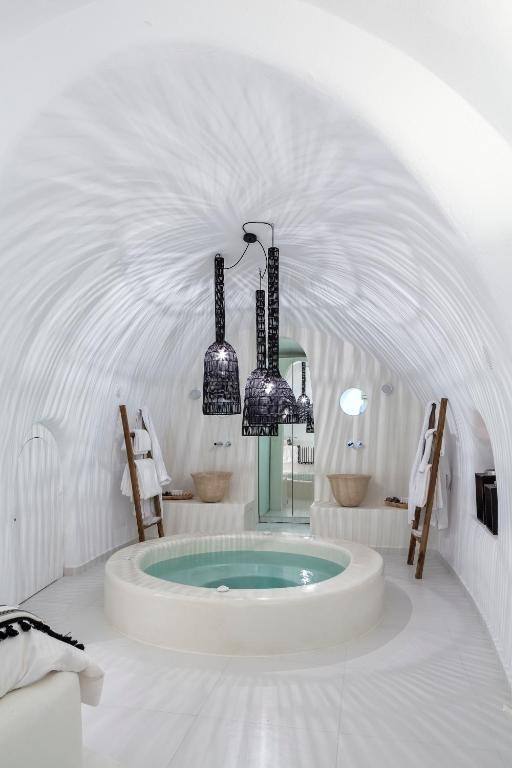
A cave hotel in Santorini is built into the volcanic caldera cliff. Some are traditional dwellings carved directly into the rock. Others faithfully replicate that architecture with the same materials and techniques. They're not rough caverns. They're finished spaces, arched ceilings, white-washed curved walls, cool interiors, fitted with modern comforts: quality linens, climate control, private bathrooms, and often a terrace overlooking the Aegean Sea.
The term "cave hotel" in Greece refers almost exclusively to Santorini. The island's volcanic geology, layers of pumice, ash, and rock deposited by eruptions over millennia, created the conditions for this building tradition. The rock is soft enough to excavate by hand but hardens with air exposure, producing rooms that are structurally sound, beautifully insulated, and remarkably quiet.
Some cave hotels occupy spaces that were residential homes or wine cellars (canava) for generations. Others replicate the cave look with curved plasterwork and arched doorways. Both can be gorgeous. If authenticity matters to you, ask the hotel which type theirs is. Most are happy to tell you.
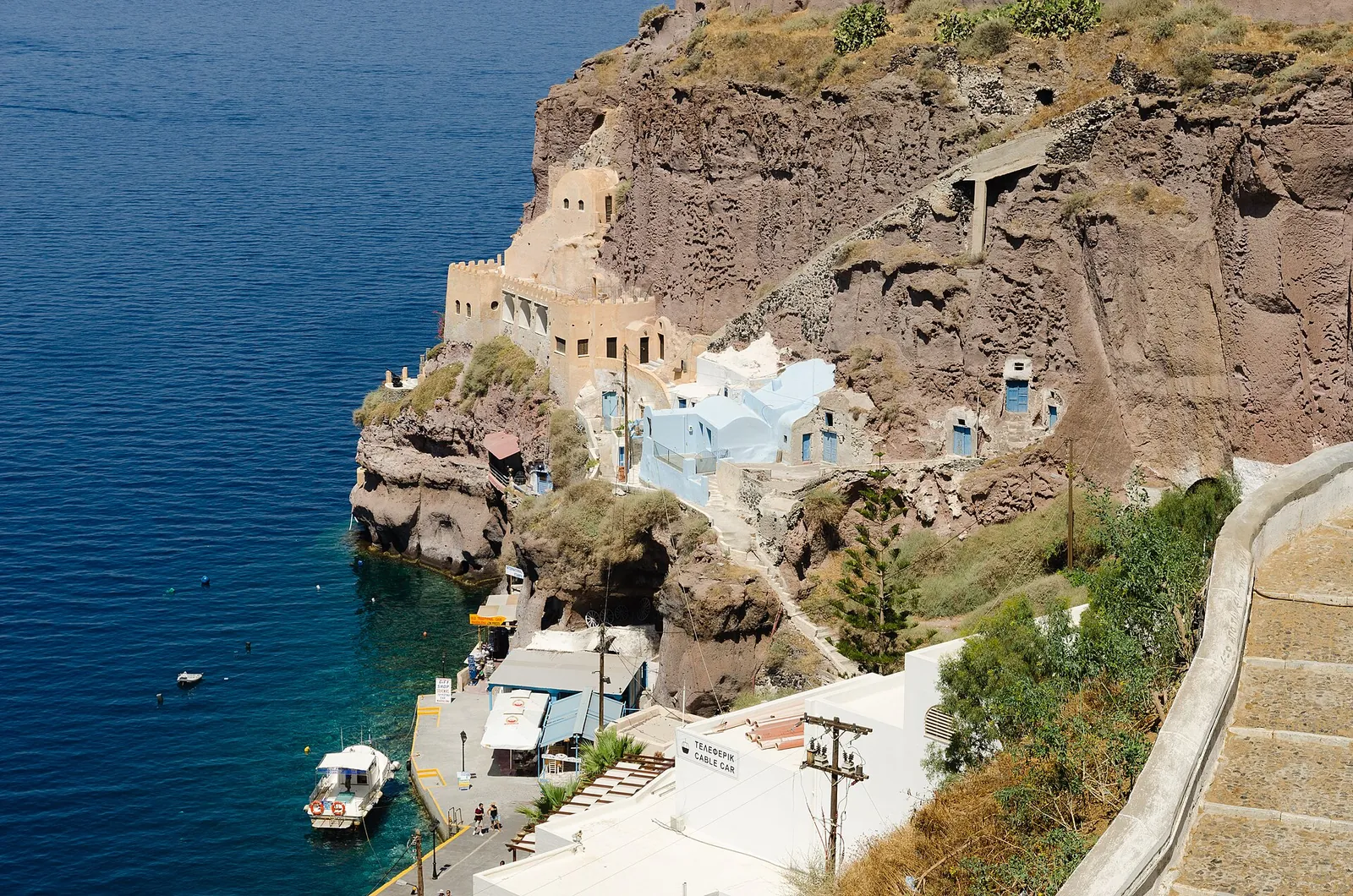 Photo: Norbert Nagel, CC BY-SA 3.0, via Wikimedia Commons
These weren't designed for tourists. This is a building tradition stretching back centuries, born from necessity.
Roughly 3,600 years ago, one of the most violent volcanic eruptions in recorded history blew the center of the island into the sea, creating the caldera. What remained: a crescent of towering cliffs made of compressed volcanic ash, pumice, and rock. Soft enough to carve. Strong enough to last.
For centuries, islanders excavated their homes directly into these cliffs. A cave home stays cool in scorching summer heat without mechanical cooling. It stays warm in winter when Aegean winds cut through conventional walls. And the thick rock blocks the Meltemi, the north wind that sweeps the island mainly in July and August.
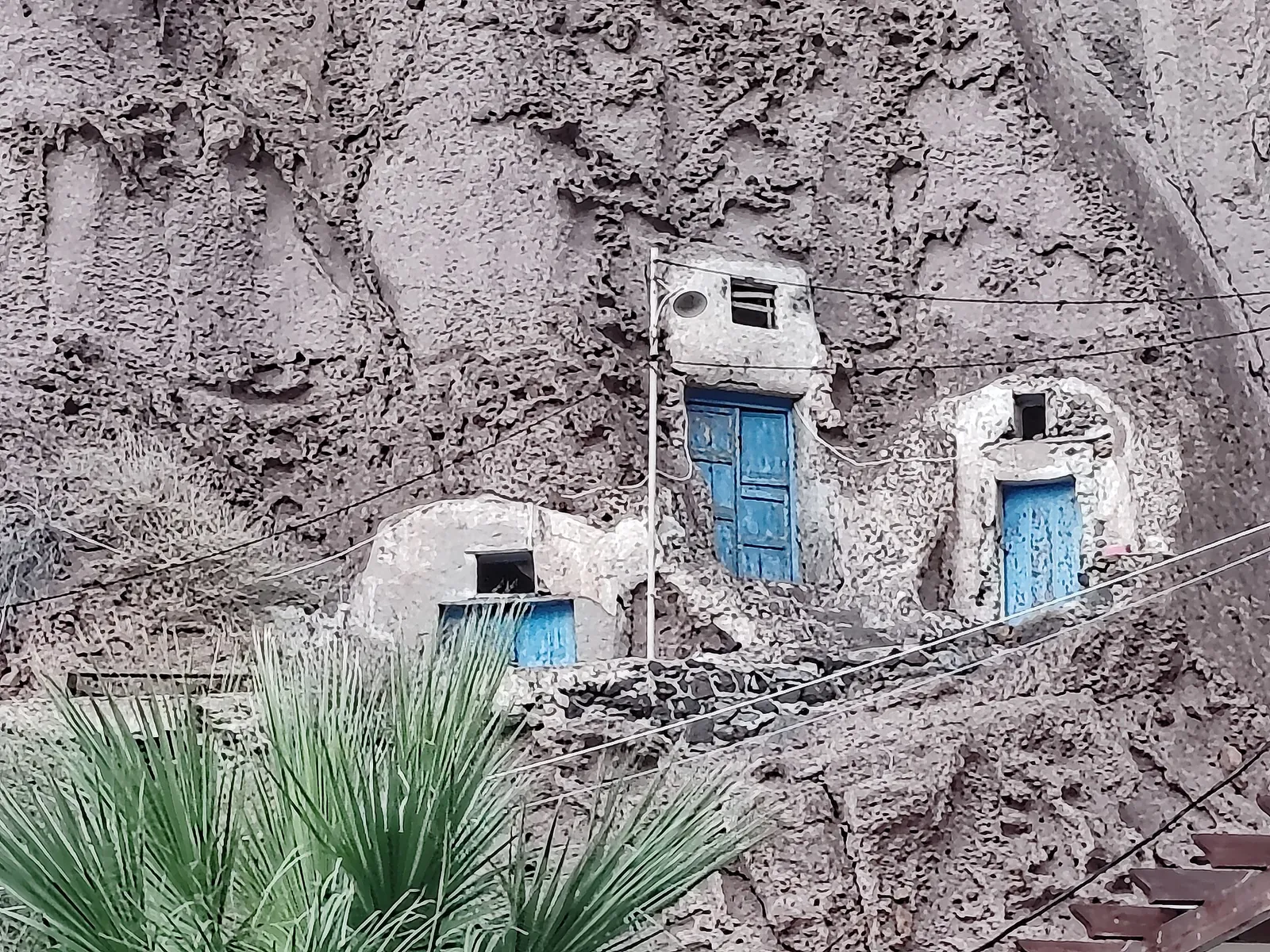 Photo: Pabernosmatao, CC0, via Wikimedia Commons
These cave dwellings, called yposkafa in Greek, were the homes of fishermen, farmers, and winemakers. Walk the caldera path today and you pass dozens of these original structures. Some still in residential use. Others converted into the cave hotels and cave suites in Santorini that visitors now seek out.
When tourism arrived, many traditional homes were restored as guest accommodation. To stay in a cave hotel in Greece is to sleep inside the same volcanic rock that islanders built their lives around for generations.
Reading about cave hotels and sleeping in one? Completely different things.
The temperature. You notice it the second you step inside. Those thick volcanic walls insulate the interior, keeping it markedly cooler than the air outside. In July and August, walking into a cave room feels like stepping into shade that has existed for centuries. Air conditioning is there if you want it. You might not reach for it until afternoon.
The acoustics. Stone absorbs sound in a way plasterboard walls simply cannot. Close the terrace door and the room goes still. That quietness is part of the appeal for couples looking for a break from noise.
The light. Most Santorini cave rooms open on the caldera-facing front. Light enters and creates a gradient, bright at the terrace, soft deeper inside. Well-designed cave suites use this deliberately, with jacuzzis tucked into the shadowed recesses. At sunset, when the caldera light turns gold, the whole interior glows.
The curves. Almost no sharp angles in a genuine cave room. Ceiling arches. Alcoves and niches cut into stone. Built-in bed platforms following the rock's contours. It feels softer and more sculptural than a standard hotel room.
The terrace. Nearly every cave hotel room opens onto a private or semi-private terrace facing the caldera. This is where you'll spend most of your waking hours. For more on what "caldera view" actually means and how to avoid rooms that face sideways, read our Santorini luxury hotels guide.
Honest answer: it depends on the room.
A small, deep cave room with a low ceiling and limited natural light? It can feel enclosed. These rooms exist at the lower end of the price range. If small spaces bother you, avoid them.
But a well-designed cave suite is a different experience entirely. High arched ceilings rising two to three meters. An open layout flowing toward the terrace. Thoughtful lighting that eliminates dark corners. These rooms feel spacious. Generous, even.
What to check in room photos before booking:
Concerns? Contact the hotel directly. Ask about ceiling height and room depth. Any decent property will answer honestly.
Not all cave hotels in Santorini offer the same experience. The category names can be confusing. Here's what they actually mean.
Most affordable option. A single cave-style room, typically 15-25 square meters. Double bed, private bathroom, usually a small terrace. Genuine and atmospheric but compact. Best for travelers who want the cave experience without a big spend and plan to be out exploring most of the day.
Typical price: EUR 100-200 per night
A step up in size. Cave suites in Santorini typically range from 25-45 square meters and may include a separate sitting area, better furnishings, a larger terrace, and sometimes an indoor heated jacuzzi built into a curved alcove. This is the sweet spot for most couples. For an example of what that looks like: our jacuzzi cave suite, 70 square meters with an indoor heated jacuzzi, carved underground into the rock, with the caldera view a short staircase up.
Typical price: EUR 180-400 per night
Top tier. The largest cave-style accommodations, 40-70+ square meters, often with an outdoor heated jacuzzi on a private terrace overlooking the caldera. Separate living areas, premium amenities, the best views on the property. These rooms book out months in advance for honeymoons and special occasions. Comparing luxury hotels in Santorini? Cave villas with jacuzzis sit at the top.
Typical price: EUR 300-600+ per night
Traditional cave dwellings converted into vacation rentals, usually found on Airbnb or local platforms. A cave house in Santorini may include a small kitchen, more living space, and a residential feel. Quality varies enormously. You lose the concierge service, breakfast, and trip-planning help that a hotel provides. Sometimes worth it. Sometimes not.
Typical price: EUR 80-350 per night
We're Aroma Suites, a small cave hotel in the centre of Fira. Six rooms and a private villa on the caldera cliff, including the Double Cave Suite, a Cave Suite with indoor heated jacuzzi, a Honeymoon Suite, and a Private Villa with outdoor heated jacuzzi. Every room is carved into the rock. All of them face the caldera except the Cave Suite with indoor heated jacuzzi, which is underground: you climb a short staircase to its own balcony with the view, and down below it's quiet and private. Rates run EUR 190-200 per night in low season and EUR 250-300 in high season. The rest of this guide is about the wider cave hotel landscape on Santorini; if you want the short answer for Fira, it's us.
All four caldera towns have cave hotels. Each delivers a different experience at a different price.
Best combination of cave experience, central location, and value. Fira is the island's capital and transportation hub. Central bus station, widest selection of restaurants, and you can reach every beach and village without a car. Cave hotels in Fira line the caldera cliff edge, views of the volcano, the sea, and the sunset. Because Fira is less famous than Oia for accommodation, prices run lower: about EUR 120-400 a night against EUR 300-1,000+ in Oia, according to Santorini Secrets' 2026 area guide.
Cave hotel price range in Fira: EUR 100-400 per night Best for: Couples who want the cave experience plus access to the full island. First-time visitors.
Deeper look in our complete Fira guide.
Most photographed. Most expensive. Cave hotels cluster along the northern caldera tip. The trade-off: much higher prices than Fira (about EUR 300-1,000+ a night against EUR 120-400, per the same 2026 guide), 25 minutes by bus to Fira, and summer crowds that can be suffocating.
Cave hotel price range in Oia: EUR 250-700+ per night Best for: Travelers who prioritize the Oia aesthetic and are happy to pay more for it.
Quiet, elevated, small. Highest point of the caldera. Cave hotels here lean toward understated elegance. Handful of restaurants, no nightlife, about a 40-minute walk from Fira.
Cave hotel price range in Imerovigli: EUR 180-500 per night Best for: Couples who want quiet and plan to spend most of their time at the hotel.
Fira's quiet neighbor. About 15 minutes on foot from Fira's center. Cave-style properties with caldera views and a residential atmosphere.
Cave hotel price range in Firostefani: EUR 150-400 per night
Full four-town comparison in our guide to where to stay in Santorini.
Prices vary by town, room type, season, and whether you book through an OTA or directly.
| Traditional Cave Room | Cave Suite | Cave Villa / Jacuzzi | |
|---|---|---|---|
| Fira | EUR 100-180 | EUR 180-300 | EUR 280-400 |
| Firostefani | EUR 120-200 | EUR 200-350 | EUR 300-450 |
| Imerovigli | EUR 140-220 | EUR 220-400 | EUR 350-550 |
| Oia | EUR 180-300 | EUR 300-500 | EUR 450-700+ |
Per night for two guests. The low end of each range is shoulder season; in July and August, caldera-view rooms in Fira start nearer EUR 150. April and late October are usually cheaper still.
Individual properties vary based on location, quality, and demand. The most sought-after rooms, cave suites with outdoor jacuzzis and unobstructed caldera views, command the top of each range. For advice on jacuzzi suite vs. full private pool, our guide to hotels with private pools in Santorini.
Not all cave hotels deliver the same experience. Here's what separates a great stay from a disappointing one.
Caldera view: confirm it's direct. "Caldera view" can mean an unobstructed panorama or a partial, angled sliver of blue between buildings. Ask the hotel: is the view from my terrace direct? Request photos taken from the actual terrace, not wide-angle professional shots that make every room look like a penthouse.
Private terrace. Confirm whether it's private (yours alone) or shared. Private terraces are worth the premium. Every time.
Jacuzzi: indoor vs. outdoor, heated or not. A cave hotel in Santorini with a jacuzzi is one of the most popular searches for good reason. See our complete jacuzzi suite guide for pricing by town and what to ask before booking. Indoor heated jacuzzis feel particularly atmospheric inside a cave alcove. Outdoor jacuzzis with caldera views are hard to beat. But confirm whether it's heated, unheated plunge pools can be uncomfortably cold outside July and August.
Room size and ceiling height. A 30-square-meter suite with high arched ceilings feels like a retreat. A 15-square-meter room with a low ceiling feels like a place to sleep. Different things.
Authentic cave vs. cave-style construction. Both can be excellent. Some of the best cave hotels in Santorini are upfront about their construction type on their websites. Worth asking.
Neither is always better. Depends what you want.
Choose a cave hotel in Santorini if you want the island's original architecture, you like natural materials and curved walls, or this is your first visit and you want the island's own way of building.
Choose a modern hotel if you prefer floor-to-ceiling windows and open floor plans, predictable room layouts, or you're sensitive to enclosed spaces. In Fira, our sister property Uma Ray Suites is a modern boutique option with caldera views and a pool, for travelers who love the location but prefer contemporary design over cave architecture.
If you traveled to Santorini specifically, not just to any Greek island, a cave hotel puts you inside the geology that makes this place what it is. Nothing else does that.
The best cave suites sell out early. Rooms with jacuzzis and unobstructed caldera views go first. A seven-unit boutique cave hotel isn't a 200-room resort. Once it's full, that's it.
July-August: Book three to six months ahead. The most desirable rooms are gone by March.
May, June, September: One to three months ahead.
April and October: Two to four weeks is usually sufficient. Lower rates are common, well below peak.
The smaller the property, the earlier it books out. Cave hotels have limited inventory by nature, there is only so much cliff to build into.
For the full picture on seasonal pricing, see our Santorini travel guide.
A cave hotel is built into the volcanic caldera cliff. Arched ceilings, curved white-washed walls, cool interiors. Many are converted from traditional cave dwellings (yposkafa) carved centuries ago. Modern cave hotels combine this architecture with contemporary comforts: private bathrooms, quality linens, climate control, and terraces with caldera views.
Yes, if you want the experience that defines Santorini. A cave hotel gives you something that simply doesn't exist elsewhere: sleeping inside volcanic rock with the caldera outside your door. The natural insulation and unusual acoustics create an atmosphere no conventional hotel can match.
Fira is the best base for most first-time visitors. Capital of the island, widest restaurant selection, central bus station, and caldera views comparable to any town at lower prices. Full comparison in where to stay in Santorini.
No. Volcanic rock keeps a moderate temperature year-round. In summer, cave rooms feel pleasantly cool. In spring and autumn, the stone holds gentle warmth. All modern cave hotels have climate control.
From about EUR 100 per night for a traditional cave room in Fira in shoulder season (nearer EUR 150 in July and August), up to EUR 700+ for a cave villa with a jacuzzi in Oia. April and late October are usually lower still. Booking directly with the hotel often comes with perks like free transfers or complimentary wine.
The best cave hotels combine genuine hand-carved volcanic rock rather than a modern build dressed to look the part, a caldera or sea view, and a walkable location. You will find them mainly in Oia, Imerovigli, Firostefani, and Fira. In central Fira, Aroma Suites has cave suites carved into the cliff, including a Jacuzzi Cave Suite with an indoor heated jacuzzi, a few minutes' walk from the main square. See the town-by-town section above for where each style is found.
If this guide convinced you that a cave hotel is the right call, and if Fira's combination of caldera views, central location, and honest pricing sounds right, consider Aroma Suites.
We're a small hotel on the caldera cliff in Fira, and every one of our rooms is carved into the rock. The volcano is visible from every room, and all but our underground jacuzzi cave suite open straight onto the caldera and the sunset. Rooms range from intimate doubles to a honeymoon suite and a private villa with an outdoor heated jacuzzi overlooking the caldera. This is the kind of cave hotel in Santorini with a jacuzzi that travelers search for, and the island books out months in advance.
When you book directly, you get:
Check availability and book direct at Aroma Suites - cave suites and caldera-view rooms in Fira.
If a cave hotel isn't your style but you still want the Fira caldera experience, Uma Ray Suites offers modern luxury with a pool. For a private villa experience, Casa di Terra Villa gives couples and small groups their own space on the island.
Questions about cave hotels or planning your Santorini stay? Get in touch. We're happy to help.
Planning a Santorini trip?
Get our insider guide
Local tips, hidden spots, and an exclusive direct booking discount delivered to your inbox.
Stay with us
Six rooms and a private villa on the caldera in central Fira. Direct booking includes complimentary wine on 3+ night stays and free airport transfer on 4+ nights.
Cave suite with caldera-facing veranda, designed for couples and milestone trips.
View room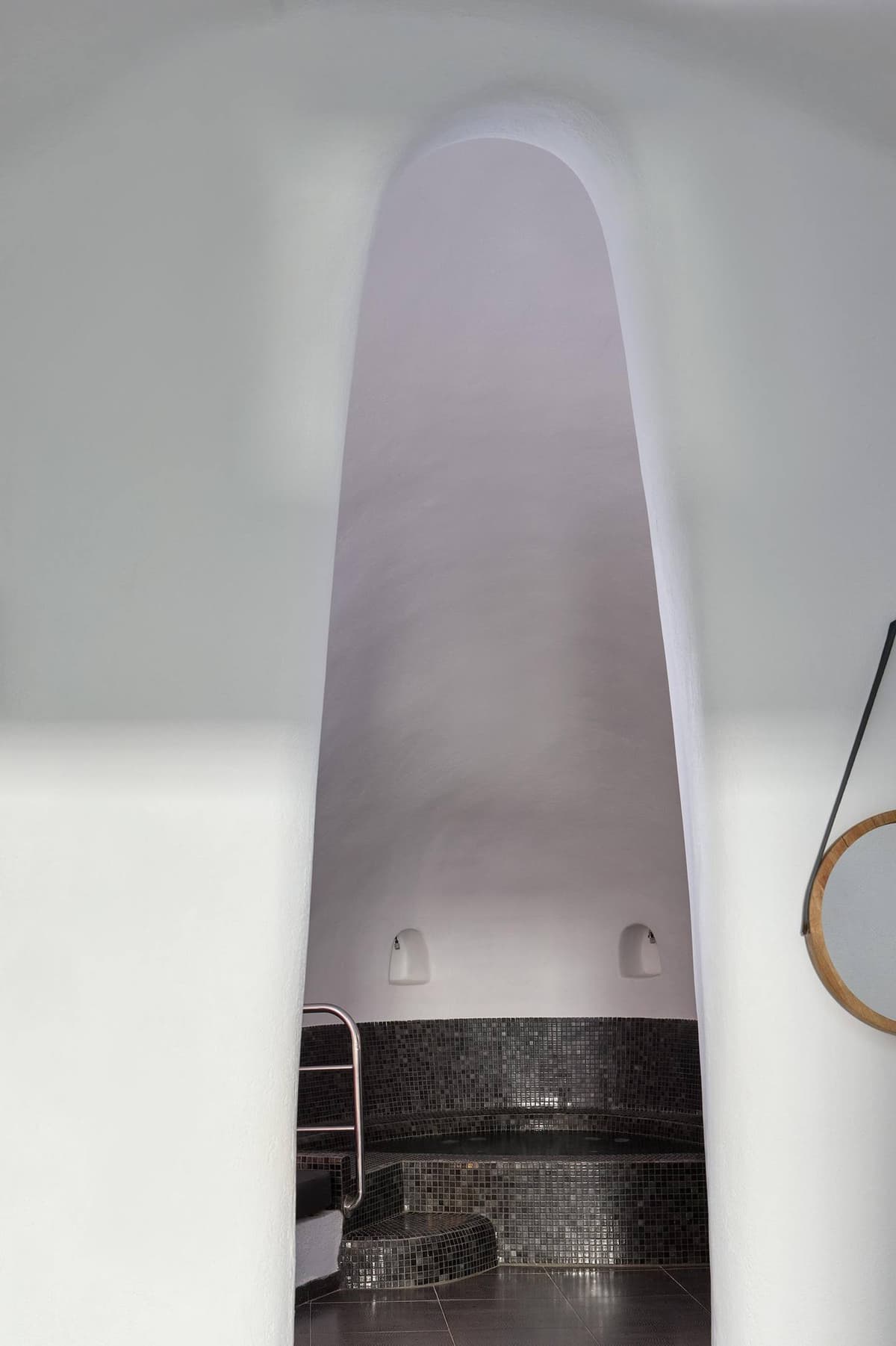
70m² cave suite with heated indoor jacuzzi and arched ceilings.
View room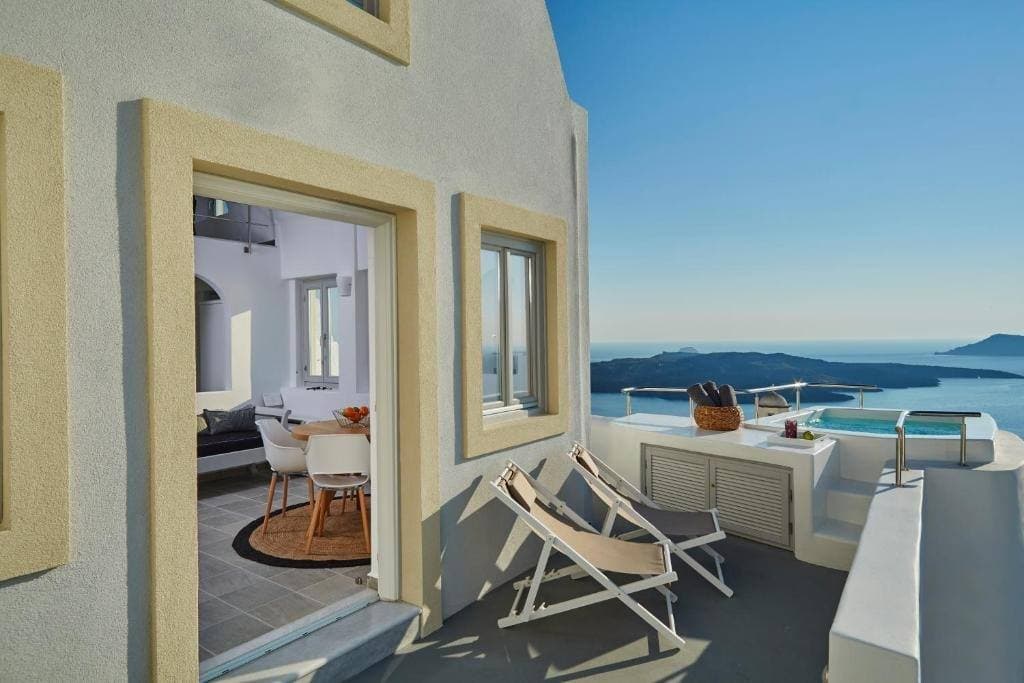
Heated outdoor jacuzzi on your own balcony, with the caldera and the sunset in front of you.
View roomYour Stay Awaits
Experience Santorini from a cave suite perched on the caldera edge in Fira.