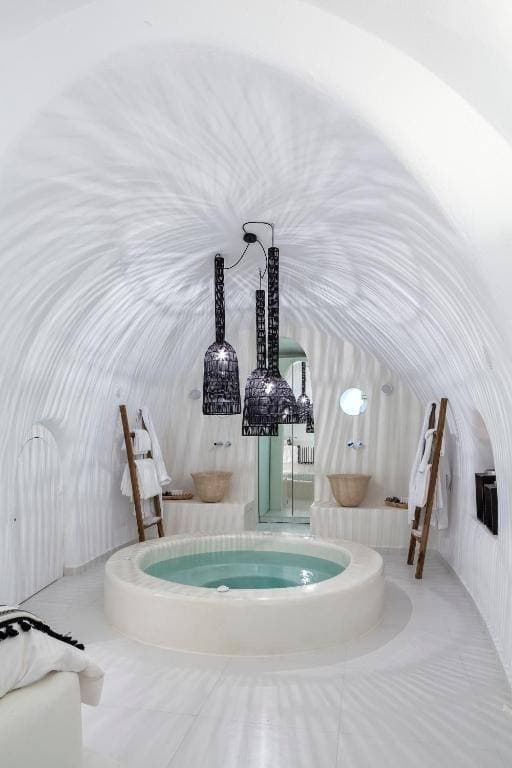
50m²
Honeymoon Suite
Cave suite with caldera-facing veranda, designed for couples and milestone trips.
View room
Travel Guide
By Fanis Kafouros, Owner since 2006 · Published
Is Santorini safe? Yes. The island is open, the official travel advice treats it like the rest of Greece, and the earthquake swarm that sent thousands of people off the island in February 2025 has faded.
Is Santorini safe? Yes. The island is open, the official travel advice treats it like the rest of Greece, and the earthquake swarm that sent thousands of people off the island in February 2025 has faded. That's the short answer. The longer one is worth reading, because a few cliffside paths and harbour areas still have access rules, and Santorini sits on an active volcano that scientists watch closely. We run a small cave hotel in Fira, so yes, we have an interest in you coming. That's why every fact below links to an official or scientific source, with its date, so you can check it yourself. For general trip planning, see our Santorini travel guide.
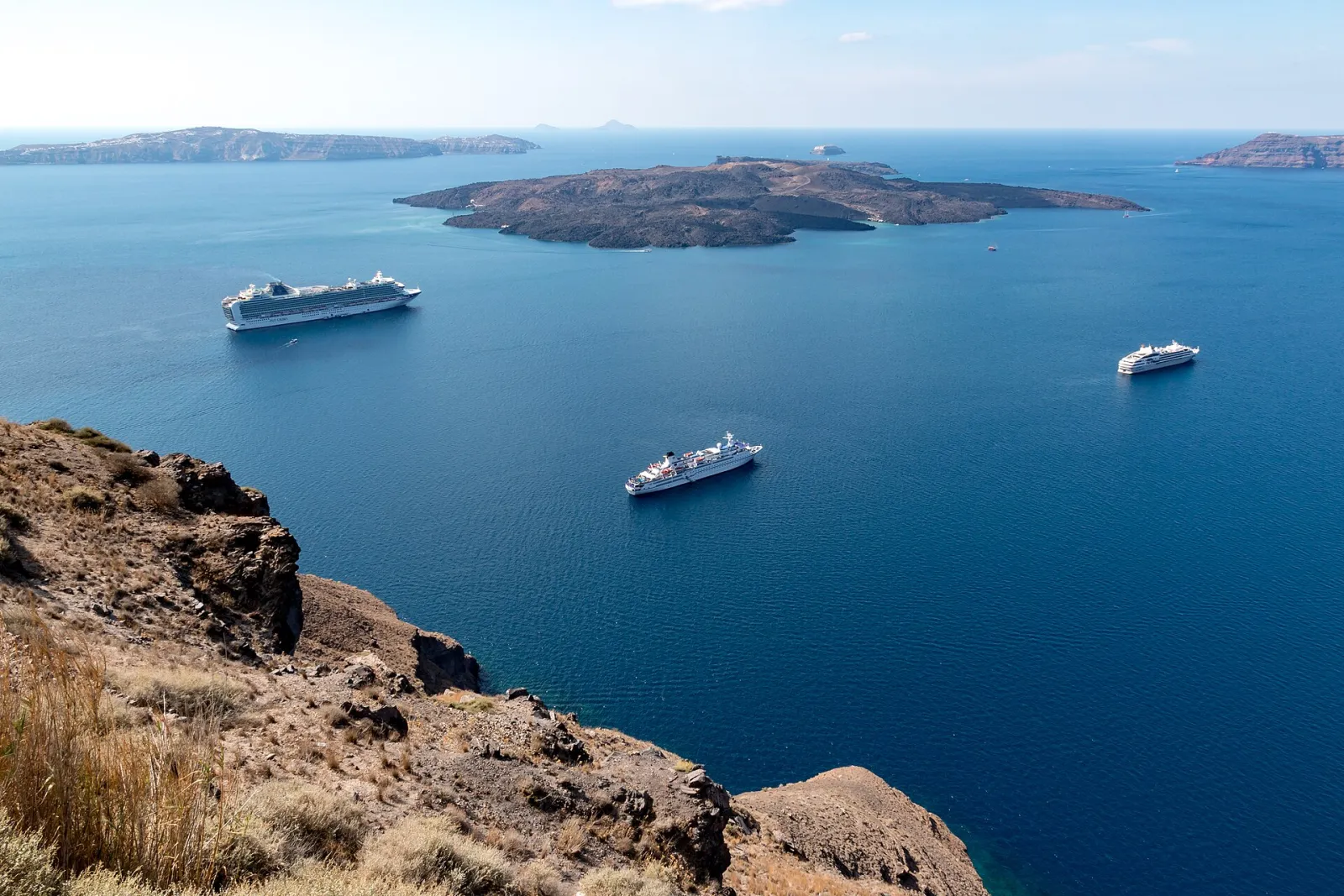
Photo: Dietmar Rabich, CC BY-SA 4.0, via Wikimedia Commons
Yes, by the official measures we can check. The UK government's Greece travel advice was last updated on 11 August 2026, and it carries no Santorini-specific warning. According to its safety and security page, the advice on earthquakes, wildfires and heat covers Greece as a whole and is the same everywhere: know what to do in an earthquake and call 112 in an emergency.
The US State Department publishes its own Greece travel advisory, and it's worth reading before any trip. Check the date at the top of each page before you rely on it, because travel advice changes.
In early 2025 an earthquake swarm struck the sea between Santorini and Amorgos. According to UNESCO's Intergovernmental Oceanographic Commission, data from the National Observatory of Athens showed over 1,200 earthquakes between January 25 and February 7, 2025. The same page says 129 of them were above magnitude 4.0, the strongest was ML 5.2, and most were 10 to 15 km deep (source: UNESCO-IOC).
The quakes were centred east of Anydros, a small islet out at sea between Santorini and Amorgos, not under the villages. People left anyway. According to the UNESCO-IOC page, citing the BBC, more than 11,000 people had left Santorini by February 6, about 7,000 by ferry and 4,000 by air.
Greek authorities declared a state of emergency on Santorini that ran from 6 February 2025 until 3 March 2025, according to New Zealand's official SafeTravel service. During it, the Ministry of Climate Crisis and Civil Protection told people to avoid old buildings, large indoor gatherings and the small harbours below the cliffs, because of the risk of landslides and rockfalls.
The swarm faded through the spring. By May 2025 the Ministry was reviewing which closed areas could reopen, and the Minister visited the island on 11 May 2025 to inspect them, according to the Ministry's press release (in Greek).
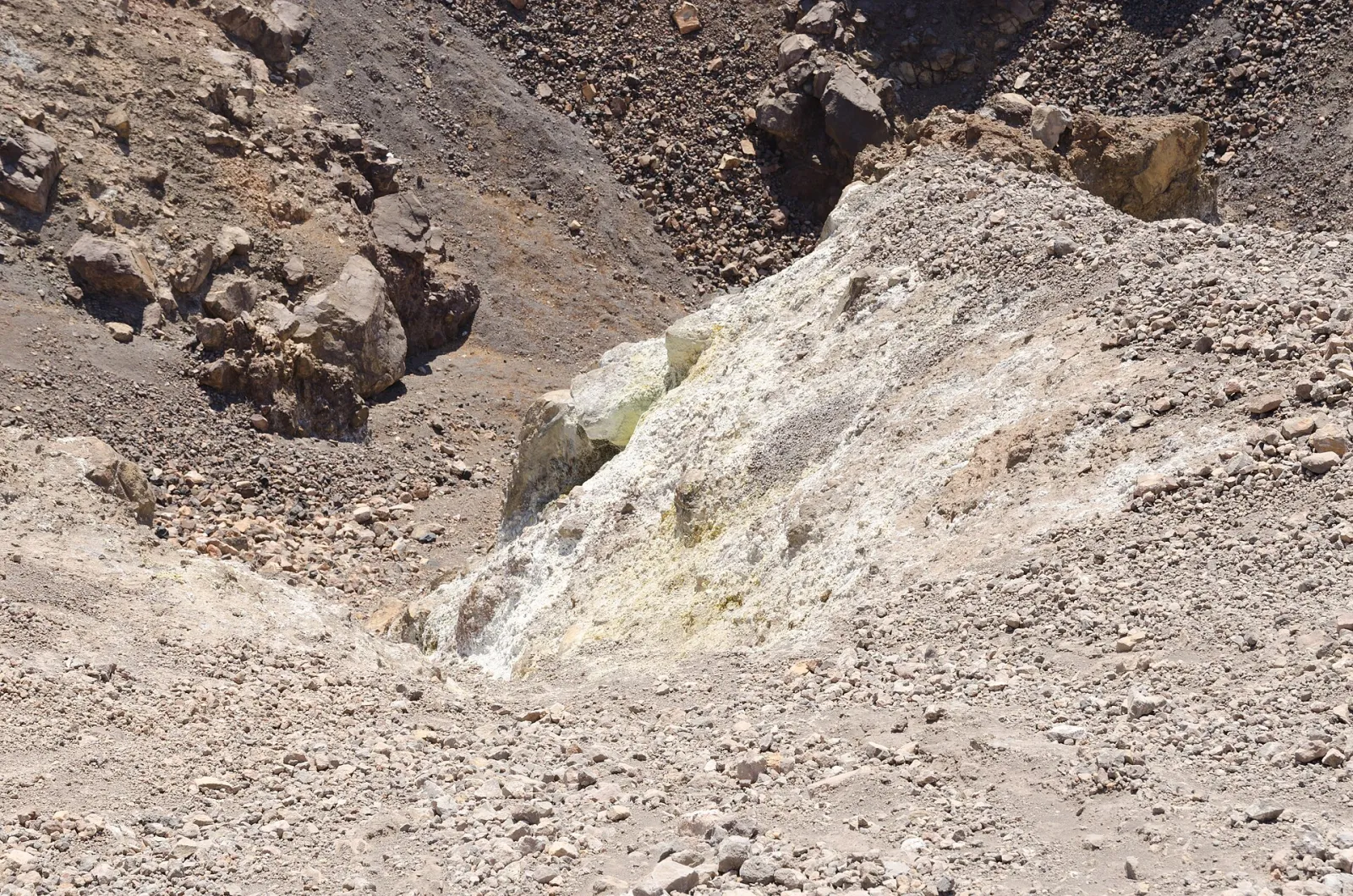
Photo: Norbert Nagel, CC BY-SA 3.0, via Wikimedia Commons
Santorini is an active volcano, and nobody serious will tell you otherwise. The Greek Ministry of Civil Protection states that volcanic risk in Greece is limited to the active volcanoes of Santorini and Nisyros and the area a few tens of kilometres around them.
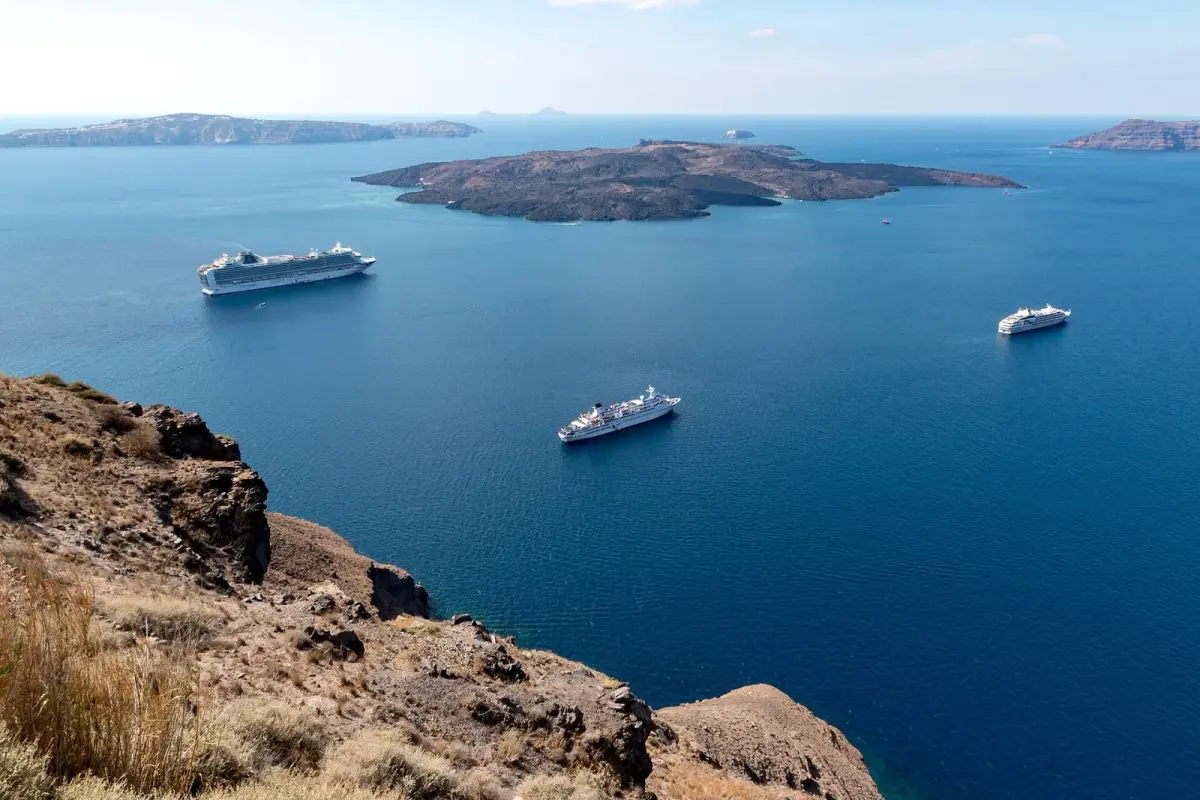
The last eruption was in 1950, according to the Smithsonian Global Volcanism Program. The same record traces how Nea Kameni, the dark island in the middle of the caldera, grew out of a series of eruptions. You can walk across it on a volcano boat tour. The steaming vents and yellow sulfur you'll see there are normal for an active volcano. They're part of why the island is monitored, not a sign that something is about to happen.
Our view, as people who live with it: the volcano is the reason Santorini looks the way it does. Our guide to the Santorini caldera explains how it formed.
A few, and they're specific. In April 2026 a new joint ministerial decision on civil protection measures for Santorini came into force, and the measures apply until 31 March 2027, according to Ta Nea's report of the Ministry's announcement (in Greek). Here's what it means for visitors, from the same report:
The report adds that the measures can be suspended or changed if there's strong seismic or weather activity. Local signs and closures always take priority over anything you read online, including this page.
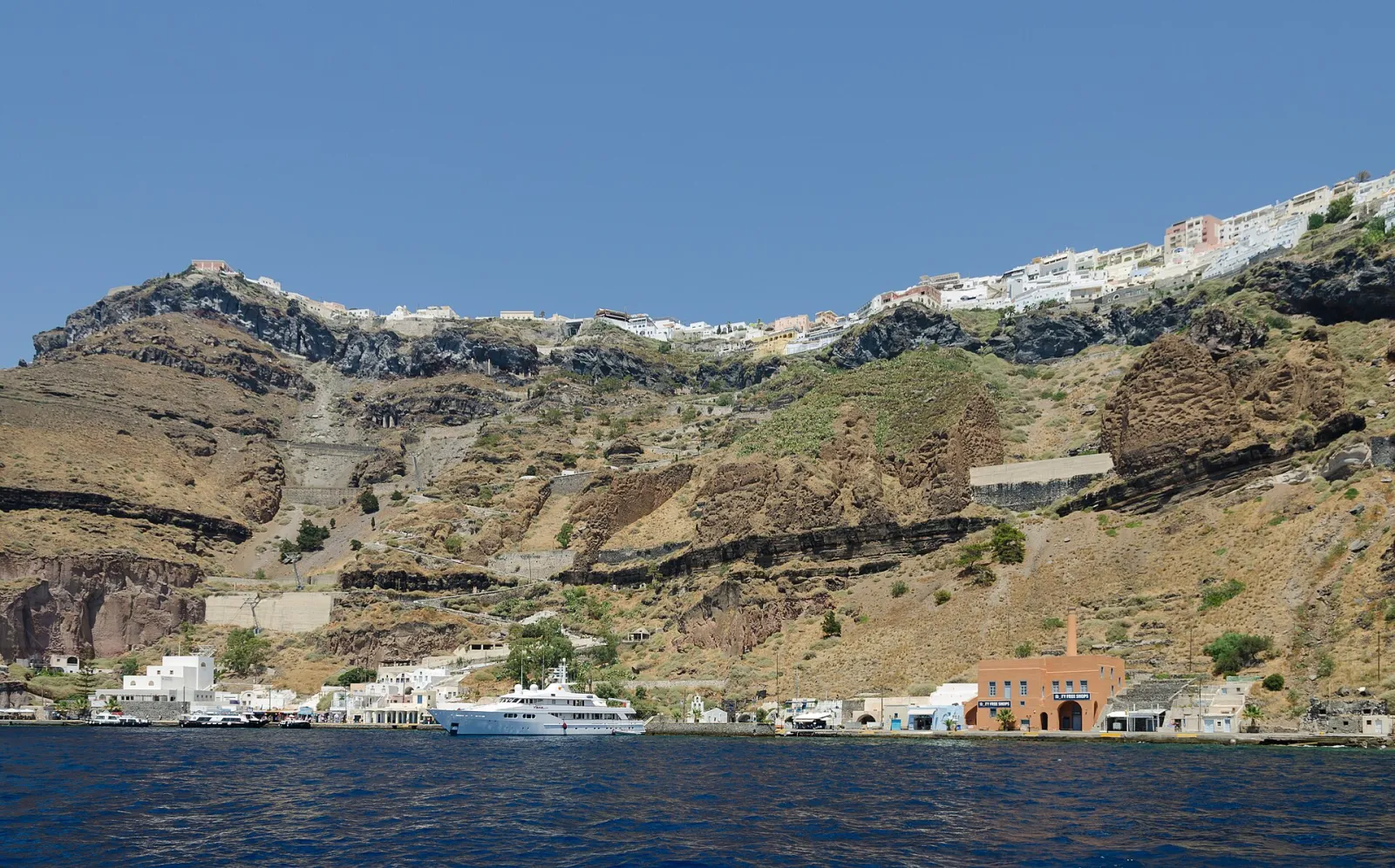
Photo: Norbert Nagel, CC BY-SA 3.0, via Wikimedia Commons
For most visitors, the realistic risks here are small and practical, not geological.
The cliffs and paths. The caldera edge is a long drop, and some walls are low. Stay on marked paths, and don't climb over railings for a photo. The Fira to Oia hike is a lovely walk in the cool part of the day, not at noon.
Driving and ATVs. The roads are narrow and busy in summer. If you've never ridden a quad bike, Santorini is not the place to learn. Our guide to getting around Santorini covers the bus and taxi options.
Sun, heat and wildfires. The UK advice says there's a high risk of wildfires from April to October, and causing one is a criminal offence in Greece, even by accident (source: UK travel advice, safety and security). Carry water, never light a fire outdoors, and don't drop a cigarette.
Emergency alerts. The same UK advice recommends allowing emergency alerts on your phone so Greek authorities can warn you about events near you. In an emergency, call 112 (source: UK travel advice). The Greek government site mysafetyplan.gov.gr shows the nearest emergency assembly point, with the map in Greek.
What to do in an earthquake. The Ministry's earthquake guidance says to take cover under sturdy furniture, such as a table, and hold on to it, and not to go out on the balcony. Once the shaking stops, leave by the stairs, not the lift, and head for an open, safe space.
Yes. Book the way you'd book any Greek island trip: check the official advice before you go, take travel insurance that covers cancellations, and read the local rules once you're here. If you want to keep flexible, book a room with a clear cancellation policy. Ours is free cancellation up to 7 days before arrival when you book direct.
Where you stay matters less than people think for safety. What it changes is the trip. In Fira you're on the bus network, near the cable car, and a walk from the caldera views. Our where to stay in Santorini guide compares the villages, and our first-time Santorini tips cover what's useful to know on arrival.
Aroma Suites is our small hotel on Agiou Mina, on the caldera side of Fira, with rooms from doubles to a cave suite with an indoor heated jacuzzi. We're open from March to October. If you have a question about the island before you book, get in touch and we'll answer it straight.
Planning your dates? Check availability and book direct at Aroma Suites for the best rate we offer.
Nowhere in Greece is free of earthquakes, and Santorini is no exception. The 2025 swarm was centred at sea near Anydros, and the state of emergency ended on 3 March 2025, according to New Zealand's SafeTravel service. Today the island is open, with a few access rules for the harbours and paths below the cliffs.
In 1950, according to the Smithsonian Global Volcanism Program. The eruption was on Nea Kameni, the volcanic island in the middle of the caldera, which visitors now walk across on boat tours.
Yes, and the precautions are the same for every visitor. The UK advice warns that thefts of wallets and bags are common in crowded tourist places in Greece, so keep valuables split up and out of sight (source: UK travel advice, safety and security). Beyond that, watch your step on the cliffs and take care on the roads. Read the State Department's Greece travel advisory before you travel.
Yes. Under the measures in force until 31 March 2027, you can visit Ammoudi and Fira's Old Port, with one marked zone of the port and one coastal path closed, according to Ta Nea's report. Follow the signs on the spot.
Call 112, according to the UK travel advice for Greece, which gives it as the number for any immediate danger.
Planning a Santorini trip?
Get our insider guide
Local tips, hidden spots, and an exclusive direct booking discount delivered to your inbox.
Stay with us
Six rooms and a private villa on the caldera in central Fira. Direct booking includes complimentary wine on 3+ night stays and free airport transfer on 4+ nights.
Cave suite with caldera-facing veranda, designed for couples and milestone trips.
View room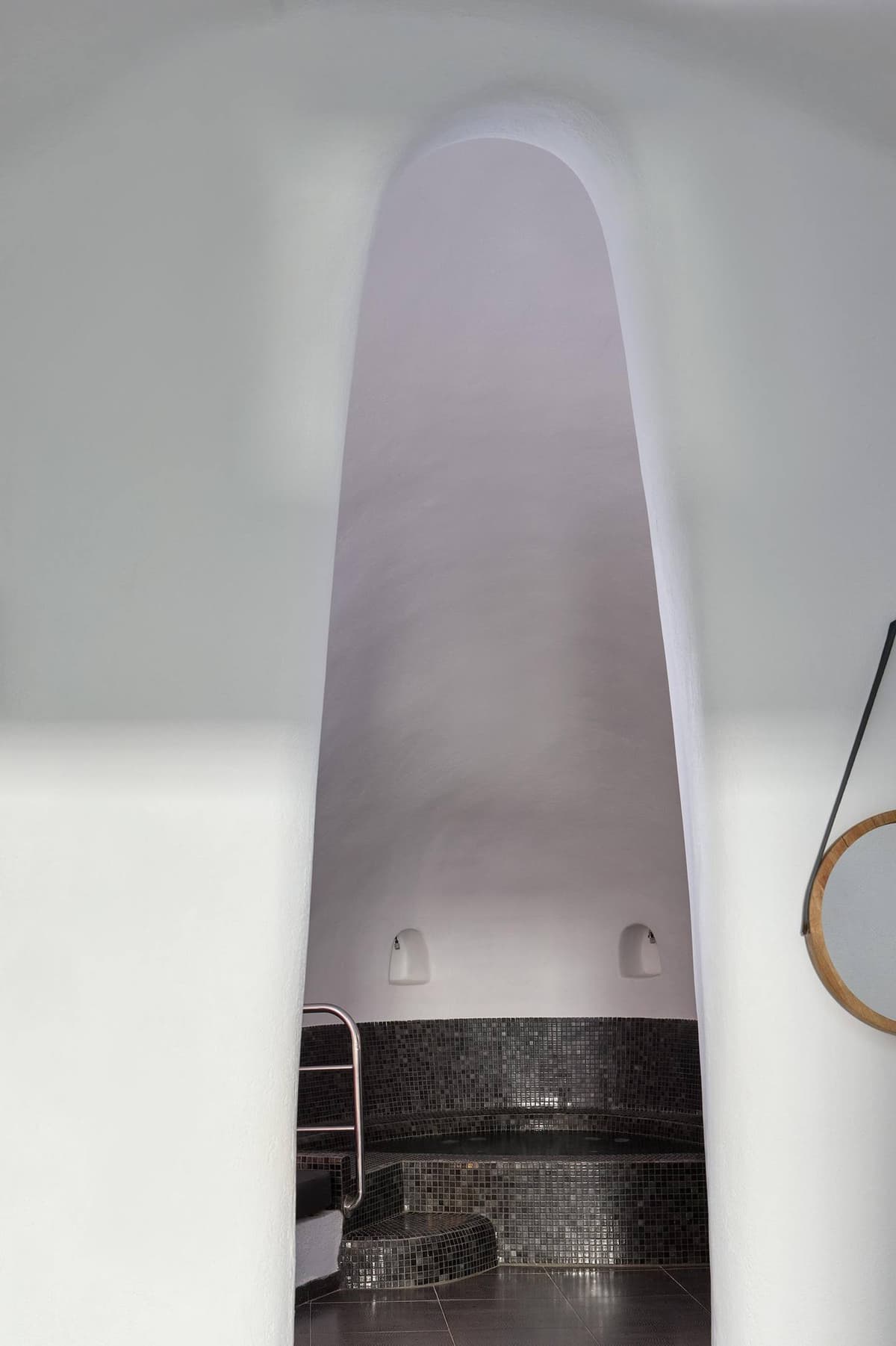
70m² cave suite with heated indoor jacuzzi and arched ceilings.
View room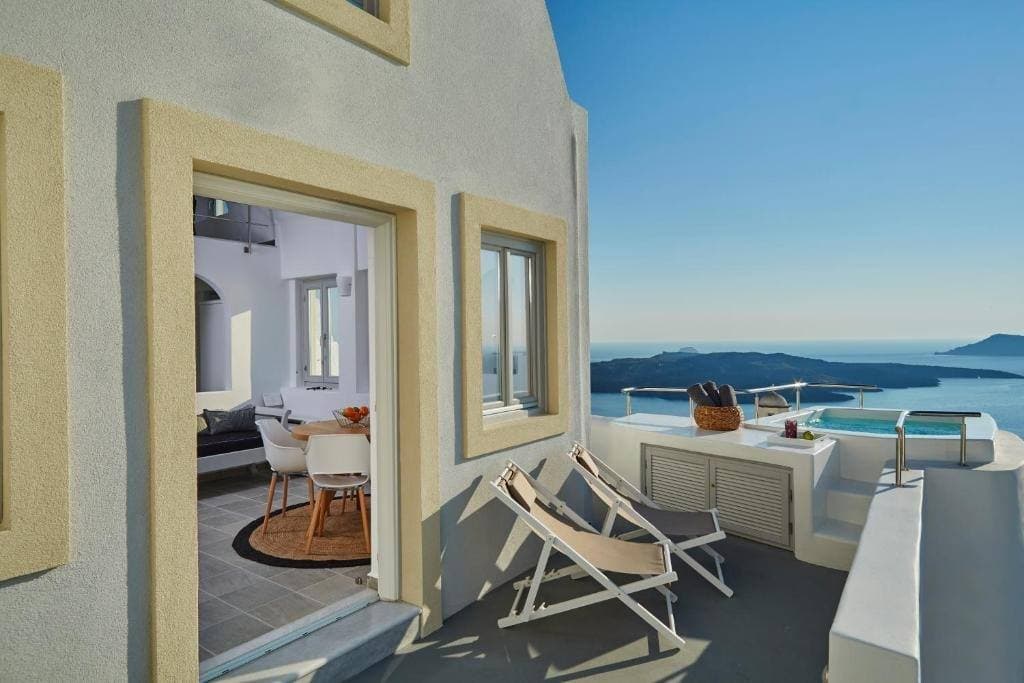
Heated outdoor jacuzzi on your own balcony, with the caldera and the sunset in front of you.
View roomYour Stay Awaits
Experience Santorini from a cave suite perched on the caldera edge in Fira.