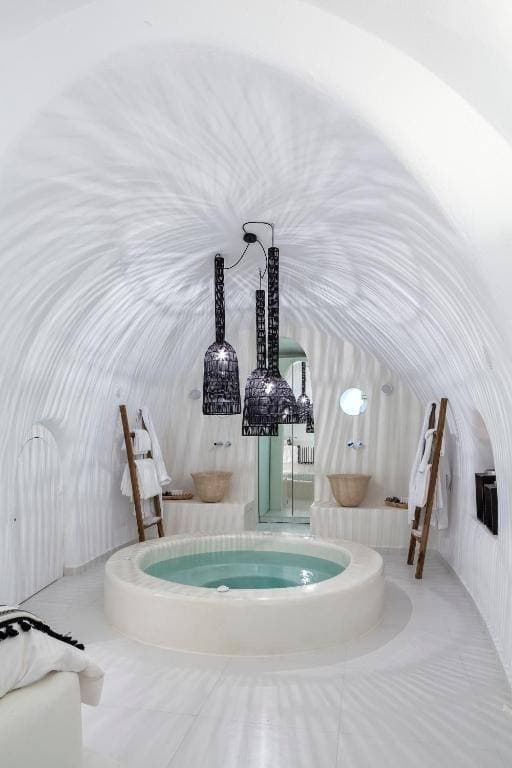
50m²
Honeymoon Suite
Cave suite with caldera-facing veranda, designed for couples and milestone trips.
View room
Villages
By Fanis Kafouros, Owner since 2006 · Published · Updated
You already know what it looks like. White buildings spilling down volcanic cliffs. Blue domes punching against an impossible sky. That sunset everyone posts with the same three-word caption.
Short answer: Yes, Oia is worth a visit, but most travelers are better off seeing it on a day trip than sleeping there. It sits at the northern tip of the caldera with the island's most famous sunset, blue domes and Ammoudi Bay below. It's also the busiest and priciest village, and quiet after dark. Walk the main path early, eat by the water, then pick your sunset spot with care.
You already know what it looks like. White buildings spilling down volcanic cliffs. Blue domes punching against an impossible sky. That sunset everyone posts with the same three-word caption.
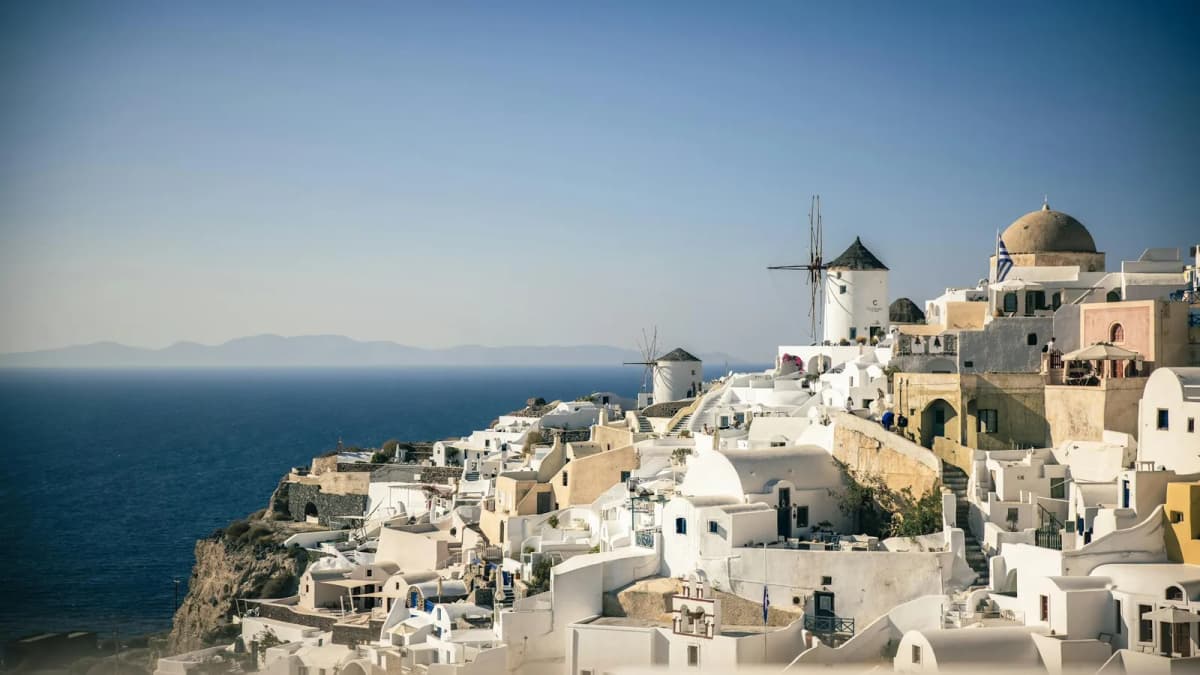
Oia (say it "EE-ah," not "OY-ah") is the most photographed village in all of Santorini's villages. Probably the most photographed in Greece. It sits at the northern tip of the caldera rim, about 11 kilometers from the capital Fira, and in peak season thousands of people pour through it every single day.
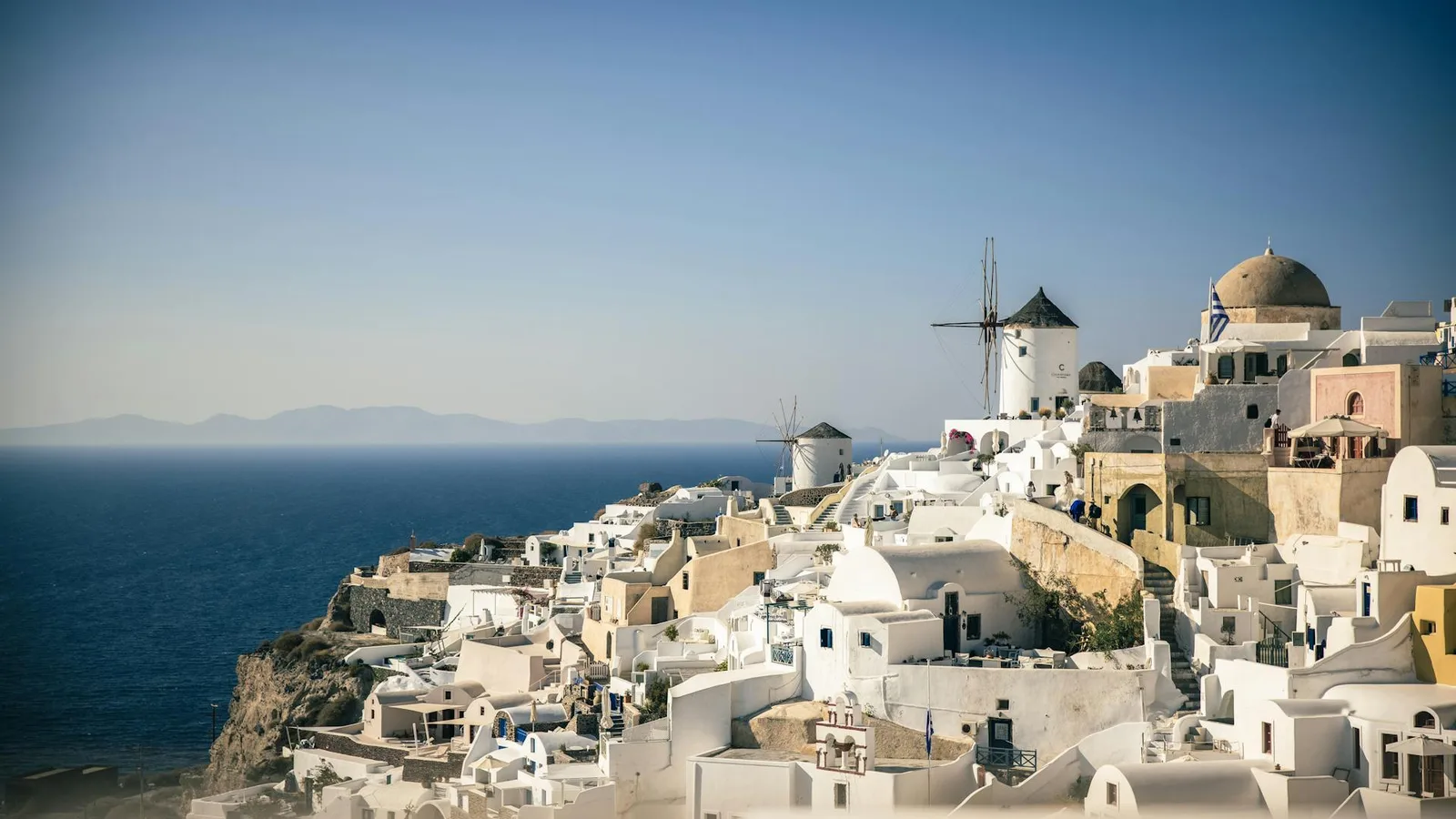
So, is it worth going? Or has Instagram turned it into a beautiful trap?
Somewhere in between. Oia is beautiful in a way photos don't fully capture. The scale of the cliffs. The way afternoon light bends off those white walls. The sheer vertical drop to water so blue it looks edited. But it comes with real problems that most travel blogs won't tell you about. This guide covers both sides.
There's a reason Oia became world-famous, and it wasn't a marketing campaign. The village sits where the caldera curves at its most dramatic point. The volcanic islands of Nea Kameni and Thirassia frame the view. The 19th-century captain's houses have a refinement you won't find in Fira or the beach towns.
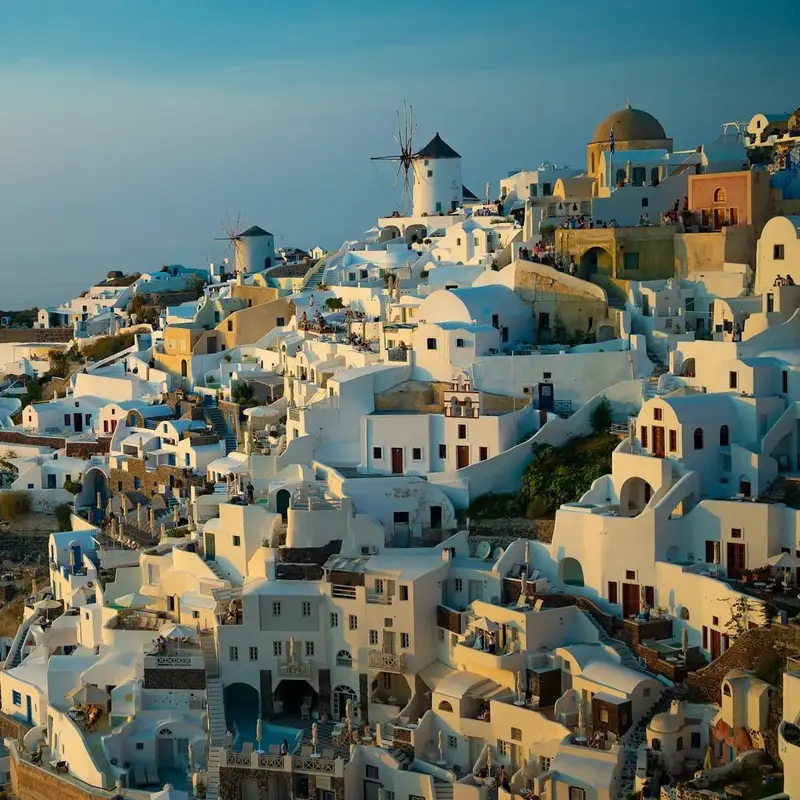
Three things set it apart.
The blue domes. The famous blue-domed churches that define Santorini's image, most of them are here. The most photographed one, the one you've seen on every postcard and travel magazine cover, is the Anastasi Church, its bright blue cupola sitting beside the dome of Agios Spyridon. (The similarly famous Three Bells of Fira, often confused with it, is actually over near Fira and Firostefani, not here in Oia.) You'll find this cluster on the path between the bus station and the main walking street. Two others worth shooting: the small chapel near Lioyerma restaurant and the church near Oia Castle. A heads-up: you can photograph from specific viewpoints on the walkway, but you can't walk up to most of them. Private property, or only accessible from below.
Ammoudi Bay. Roughly 278 steps below the village sits Ammoudi Bay. Tiny fishing port. Red volcanic cliffs. Clear water. A handful of seafood tavernas right on the waterline. This is Oia at its most honest. The walk down is steep but fine. The walk back up in the afternoon heat, that's where things get interesting. More on that below.
The sunset. Hundreds of people gather at the castle ruins (Oia Castle, or the Byzantine Castle of Agios Nikolaos) every evening and watch the sun drop into the Aegean. It is spectacular. But it's also one of the most crowded sunset spots in Greece. If you want quieter sunset spots across the island, they exist. Several are just as beautiful.
Oia in summer is not a peaceful escape. This is what actually happens:
June through September, the crowds are intense. The main walking path is about 1.5 meters wide in many places. During peak hours, roughly 10am to sunset, it fills with tour groups, cruise ship passengers, day-trippers from Fira. Moving through the village feels less like a stroll and more like being on a packed train platform that happens to have a nice view. At the castle, people start claiming sunset spots two hours early. Two hours. For a sunset.
Prices run higher than in Fira. A caldera-view lunch in Oia costs EUR 25-45 per person for basic dishes. In Fira? Same quality, similar view, EUR 16-30. Water bottles, ice cream, souvenirs, everything carries an "Oia tax."
Parking is a real problem. Two small lots at the village edge. In summer, full by 9am. If you're driving, arrive before 8:30 or just take the bus.
No shade on the main path. The caldera walkway is fully exposed. In July and August, the white marble surface can exceed 45C. Bring water. Wear a hat. The walk from one end of the village to the other takes 25-30 minutes, and there is nowhere to hide from the sun.
Those "Instagram spots" have queues. The dreamy photo where someone stands alone on a white staircase? Getting that shot in peak season means waiting in line, sometimes 15-20 minutes, while other people take their turn posing. The only way around this: arrive at sunrise.
When you go changes the whole visit: the same lanes that feel calm before 9am are packed from mid-morning to sunset in summer.
Best for photos and peace: early morning, 7-9am. Nearly empty. Soft, warm light. Shop owners setting up chairs. You can stand at the blue dome viewpoints without a single person in your frame. First bus from Fira leaves around 7am.
Best overall: May, early June, late September, October. Shoulder season. Warm weather (22-28C). Manageable crowds. Restaurants that aren't overwhelmed. You'll still share the sunset with a few hundred people, but it's nothing like the July chaos.
Hardest time: July and August. Thousands of cruise ship passengers daily. Temperatures above 35C. Restaurants require reservations for caldera-view tables. The Oia Castle sunset crowd can hit 500-800 people. Still beautiful, but nothing like the photos suggest.
Quiet but limited: November through March. Most restaurants and shops shut down. The village feels almost abandoned. Architecture and views are the same. You'll have the paths to yourself, but dining options shrink to almost nothing.
Beyond the obvious photo stops, Oia has real depth. These are the things worth your time.
The Byzantine Castle ruins at the western tip offer the most famous sunset viewpoint in Greece. Sun drops into the sea. Sky turns orange, then pink, then purple.
Practical tips: Show up 60-90 minutes before sunset if you want a decent spot (see our Santorini sunset times by month guide, where times range from 6pm in March to 8:40pm in June). The castle area is tiered, higher spots fill first. Standing room is always available further back. After the sun goes down, the crowd scatters fast and the walk back through the village is actually calm.
The roughly 278-step descent to Ammoudi Bay in Santorini takes about 15 minutes going down. Coming back up? Budget 15-20. At the bottom: three tavernas built into red cliffs at the water's edge.
What to eat: Grilled octopus (EUR 14-18) is the signature dish, you'll see them drying on lines outside. Fresh fish by the kilo is the other move. Skip the pasta. You're here for seafood.
Best tavernas: Ammoudi Fish Tavern has the most consistent quality. Sunset Ammoudi gets beautiful caldera light in the late afternoon but charges for the view. Dimitris is the most casual of the three.
Pro tip: Come for lunch, 12-2pm. Not dinner. The sunset crowd makes evening reservations nearly impossible, and climbing 278 steps in the dark is no fun. If you're up for it, there's a swimming platform off the rocks past the restaurants, bring water shoes. For a different angle on the bay and the cliffs, a catamaran cruise around the caldera passes right by Ammoudi Bay at sunset.
Three specific churches make up the iconic Oia blue domes:
You can't enter most of them, they're private chapels. The experience is about the viewpoints, which are marked and easy to find. Planning a professional photoshoot in Santorini? These are the spots your photographer will head to at sunrise.
Oia has the densest concentration of art galleries in the Cyclades. And we don't mean tourist shops selling fridge magnets. Many are serious galleries with established Greek and international artists. The gallery district runs along the main walking path and down some of the side stairs.
Worth visiting: Art Gallery Oia (contemporary Greek art), Galanopoulos Art Gallery (fine-art photography of Cycladic light and architecture, on the Oia pedestrian street since 1986), Laki Gallery (photography and paintings). Most are free to enter and air-conditioned, a welcome break when the heat is crushing. Budget 30-45 minutes if art is your thing.
The Naval Maritime Museum of Oia is housed in a 19th-century captain's house. Before tourism, Oia was one of the wealthiest maritime villages in the Aegean, running a fleet of over 130 ships. That history lives here.
Details: Entry EUR 5. Takes 20-30 minutes. Open daily 10am-2pm and 5-8pm in summer (hours shift in shoulder season). On the main path near the castle end of the village.
The hiking path from Oia to Fira follows the caldera rim for about 10 kilometers. Passes through Firostefani and Imerovigli. Views the entire way. The Oia-to-Imerovigli section, about 6km, is the most dramatic, with the path sometimes narrowing to barely a meter along the cliff edge.
Practical info: Allow 3-4 hours for the full walk. Start from Oia in the morning before 9am so the sun is behind you. Bring at least 1.5 liters of water, 2 in summer. Wear real shoes, the path is rocky in sections. Take the bus back from Fira (EUR 2.20) rather than walking both ways.
Skip the main path for shopping. The side stairs and lower paths have smaller boutiques with better prices. Look for locally made ceramics, volcanic stone jewelry, and Assyrtiko wine from local wineries. The main drag is overpriced souvenirs. The side streets are where you find actual craft.
Caldera-view restaurants in Oia charge heavily, and the food doesn't always match. Here's the honest breakdown.
Pelekanos: Greek-Mediterranean with a caldera terrace. The grilled lamb and seafood risotto stand out. Dinner for two: EUR 80-120. Book 2-3 days ahead in peak season.
Roka: Tucked down a side street, no caldera view, but the food is the best in Oia. Creative Greek dishes, reasonable prices (EUR 40-60 for two). Locals eat here.
Ammoudi Fish Tavern: Down at Ammoudi Bay. Fresh fish, grilled octopus, feet practically in the water. EUR 30-45 per person. The 278-step walk down adds to the charm.
Karma: Indian-Greek fusion on the main path. Good vegetarian options. EUR 20-30 per person.
Lotza: A local taverna with honest prices by Oia standards. Traditional Greek dishes, small terrace. EUR 20-35 per person.
A lot of caldera-view restaurants along the main path charge EUR 30-50 per person for mediocre food and painfully slow service. The tell? Menu with photos of every dish. Waiter standing outside trying to pull you in. Keep walking.
For better value with similar caldera views, the restaurants in Fira are consistently better for the money.
Three options, depending on your time and appetite for adventure:
| Method | Cost | Time | Notes |
|---|---|---|---|
| Public bus (KTEL) | EUR 2.20 | 25 min | Runs every 20-30 min in summer, from Fira bus station |
| Taxi | EUR 25-40 | 15 min | Drivers quote flat prices on this route, so agree the fare before you set off; with only around 35 to 40 taxis serving the whole island, it is best to have your hotel arrange one in advance |
| Caldera walk (hiking) | Free | 3-4 hrs | 10km, spectacular but demanding in summer heat |
Bus details: The KTEL bus runs from about 7am to around 22:00 in summer (check the KTEL timetable), with reduced service in shoulder season. Buy tickets at the Fira bus station. The bus drops you at Oia's parking area, 5-minute walk to the main path.
Our advice: Take the bus. Parking in Oia during summer is nearly impossible, and taxis are scarce.
A lot of visitors assume Oia is the best place to stay in Santorini. It's the most famous, after all. But for most travelers, Fira is a better base. Here's why.
Location. Fira sits in the center of the island. Every bus route starts and ends here. Oia is at the northern tip, getting from Oia to the airport, the port, Perissa beach, or the wineries all means passing through Fira first.
Value. A caldera-view room in Fira usually costs less than a comparable one in Oia. Same caldera rim, same volcano, same Aegean blue. Different price tag.
Dining and nightlife. Fira has many more restaurants and actual bars that stay open past 10pm. Oia mostly shuts down after sunset.
A day trip covers it. Oia is compact. Blue domes, main path, Ammoudi Bay lunch, galleries, sunset, you can do all of it in a single day trip from Fira and miss nothing.
For the full side-by-side comparison, check our Fira vs. Oia breakdown.
Here's how to get the most out of Oia in one day without the worst of the crowds:
7:00am: First bus from Fira (EUR 2.20). The village will be nearly empty.
7:30-9:00am: Walk the caldera path. Photograph the blue domes in morning light. Nobody around.
9:00-10:00am: Browse the art galleries as they open their doors.
10:00-10:30am: Walk down the 278 steps to Ammoudi Bay.
10:30am-12:30pm: Swim off the rocks. Have an early lunch, grilled octopus, fresh fish. The bay is calm and uncrowded before noon.
12:30-1:00pm: Climb back up. Take your time. Water bottle in hand.
1:00-2:00pm: Maritime Museum. Cool off in the galleries.
2:00pm: Bus back to Fira. You've seen the best of Oia and dodged the worst of the crowds entirely.
Alternative: If you want the sunset, stay until about 9pm in summer. But know that by 5pm the village fills dramatically, and the last buses run around 22:00 (check the KTEL timetable).
"EE-ah." Two syllables, emphasis on the first. Not "OY-ah" or "OH-ya." You'll sometimes see it spelled Ia in older references.
Entirely. Mostly pedestrian-only. The main village path runs about 1.5 kilometers from the bus station area to the castle. But the paths are narrow, the steps are steep in places, and there's zero shade. Comfortable walking shoes are fine for the main path. For Ammoudi Bay or the caldera walk, you'll want proper shoes.
A half-day (4-5 hours) covers the main sights: blue domes, caldera walk, galleries, and a meal at Ammoudi Bay or a caldera restaurant. A full day lets you add the sunset, the Maritime Museum, and slower browsing. You don't need more than a day.
Three things. The blue-domed churches, the most photographed in Greece. The sunset at Oia Castle, possibly the most famous sunset viewpoint in Europe. And the caldera views from the main walking path. The village also has the best art gallery scene on Santorini and the fishing port of Ammoudi Bay.
The views and the architecture don't change with the seasons. So yes, if you're on Santorini anyway. But most restaurants, shops, and hotels close November through March. You'll get empty streets and dramatic skies, but limited dining and none of the sunset crowd atmosphere.
For most visitors, Fira. Center of the caldera. Views that match Oia's. Widest restaurant selection on the island. Central bus station for reaching every village and beach. For the detailed comparison, see our guide to where to stay in Santorini.
Oia is one of Santorini's most visited villages and one of the most beautiful places in Greece. With the right timing and expectations, it lives up to every photo you've ever seen. Just don't expect the empty, dreamy village from the postcards, that version exists only before 9am and in the shoulder season. Plan around that, and you'll love it.
If you'd rather sleep somewhere central, Aroma Suites is our small cave hotel on the caldera side of Fira, a bus ride from Oia. Check availability and book direct.
Planning a Santorini trip?
Get our insider guide
Local tips, hidden spots, and an exclusive direct booking discount delivered to your inbox.
Stay with us
Six rooms and a private villa on the caldera in central Fira. Direct booking includes complimentary wine on 3+ night stays and free airport transfer on 4+ nights.
Cave suite with caldera-facing veranda, designed for couples and milestone trips.
View room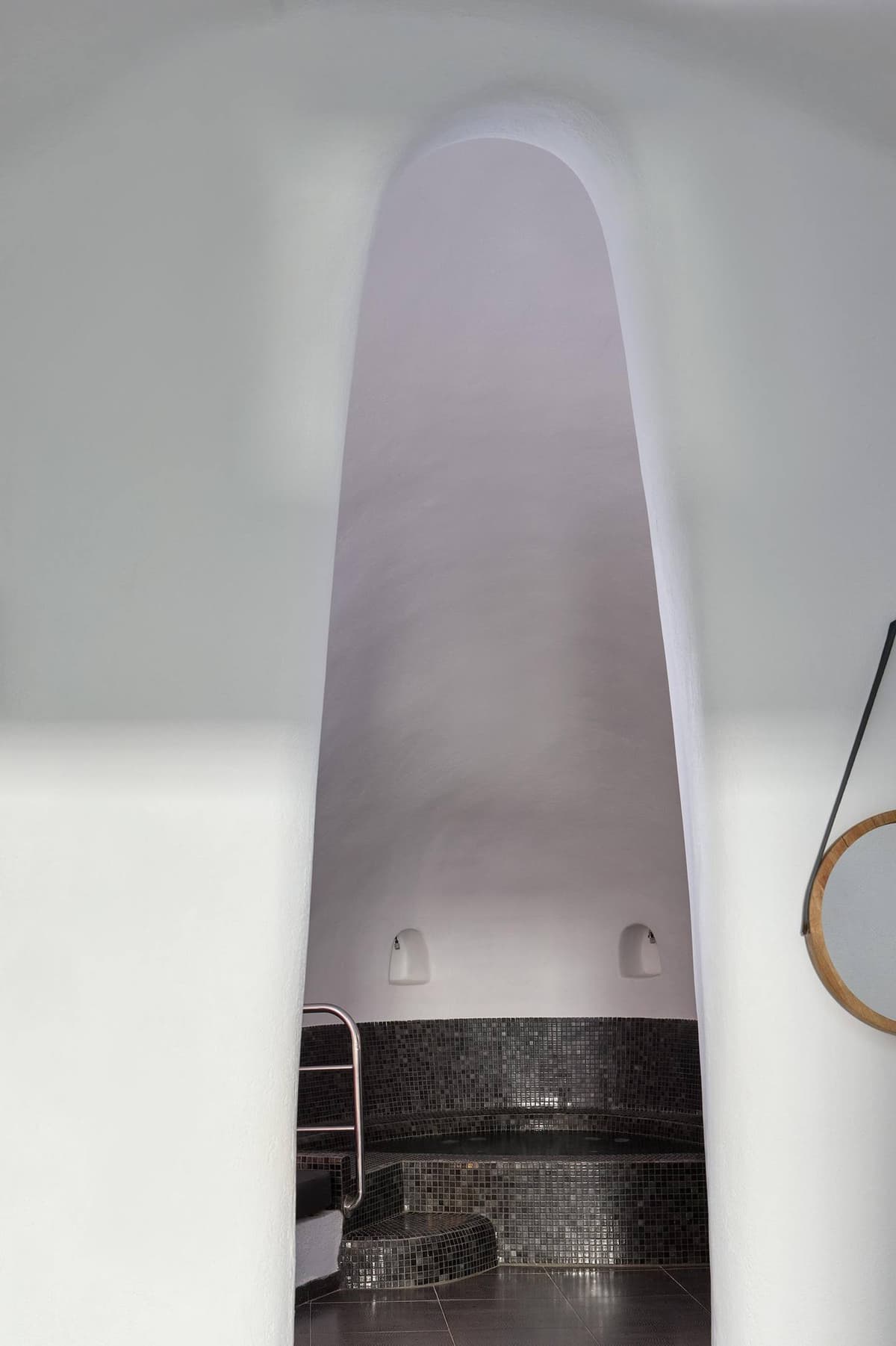
70m² cave suite with heated indoor jacuzzi and arched ceilings.
View room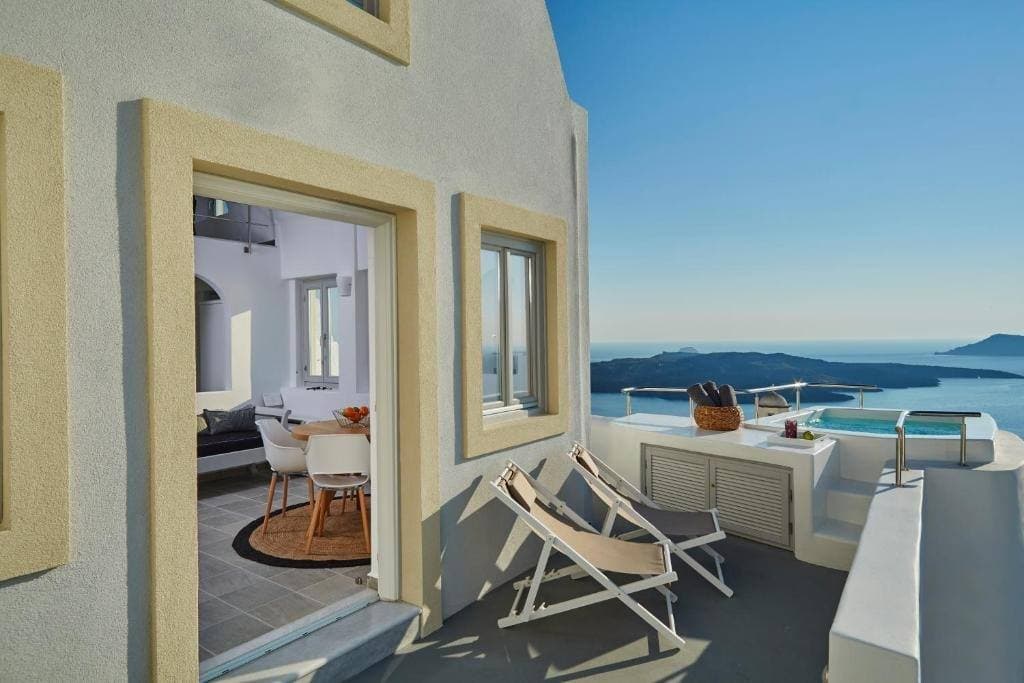
Heated outdoor jacuzzi on your own balcony, with the caldera and the sunset in front of you.
View roomYour Stay Awaits
Experience Santorini from a cave suite perched on the caldera edge in Fira.